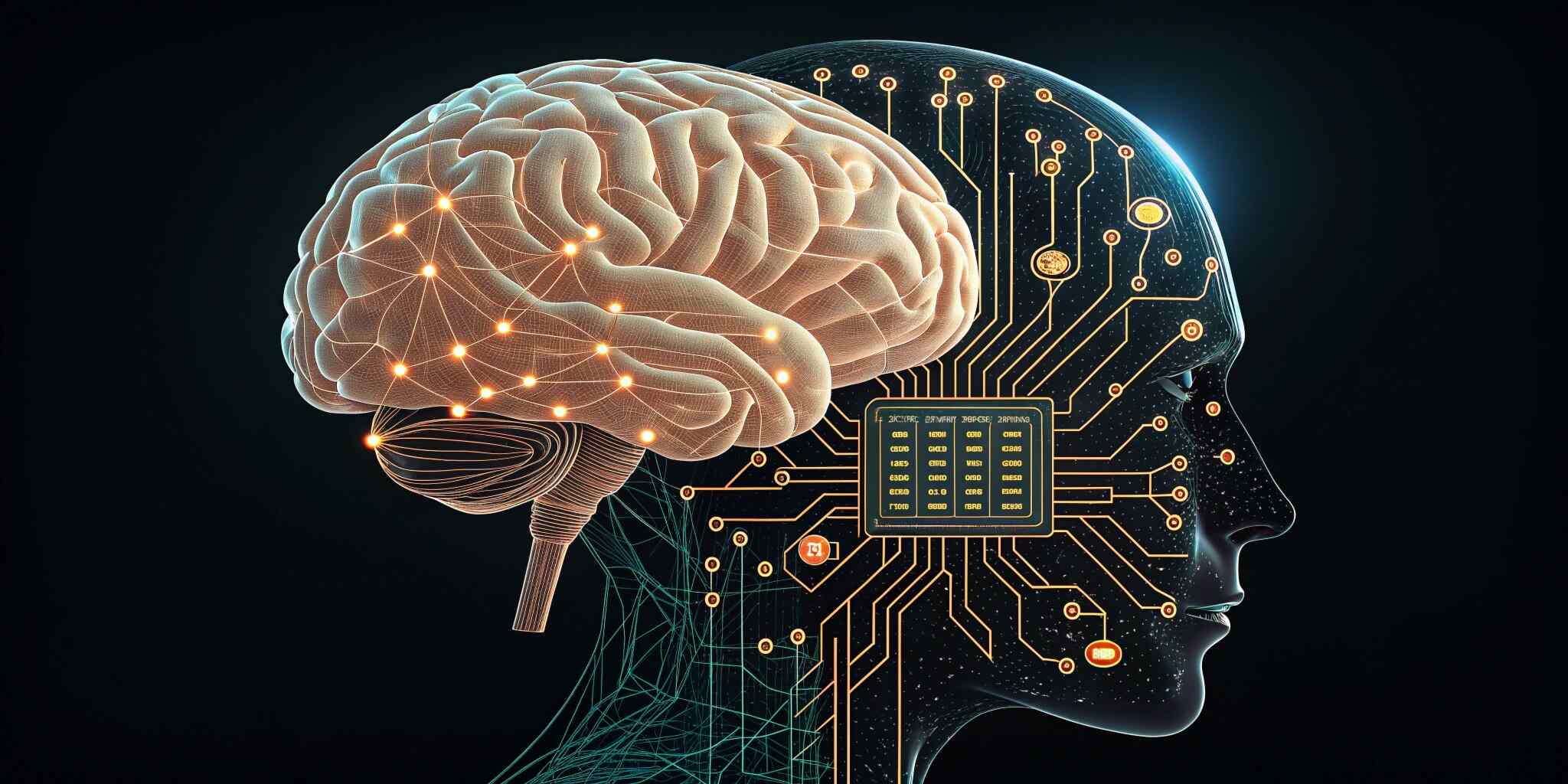
Artificial Intelligence has rapidly transformed multiple industries, but traditional deep learning models face limitations—especially when tasks require reasoning, logical consistency, and full transparency. Neural networks excel at pattern recognition, but they operate as black boxes, struggle with abstract thinking, and often generate hallucinated or inaccurate results. To overcome these challenges, researchers are shifting toward Neuro-Symbolic AI, a hybrid approach that blends the strengths of neural networks and symbolic reasoning systems for more powerful and trustworthy intelligence.
What Is Neuro-Symbolic AI?
Neuro-Symbolic AI integrates two key components:
- Neural Networks — statistical learning, perception, creativity, pattern recognition
- Symbolic AI — logic rules, knowledge graphs, reasoning, structured inference
By unifying learned patterns with explicit rules and representations, Neuro-Symbolic AI can understand context, recall structured knowledge, and reason through complex decisions more like the human brain.
For example, a purely neural AI can recognize images of animals but cannot logically infer relationships such as "All dogs are mammals" unless trained extensively. A Neuro-Symbolic system can make such reasoning instantly.
Why Hybrid Intelligence Matters
Current AI models such as ChatGPT, Bard, and image generators perform extremely well at generating content, identifying objects, and predicting outcomes—but high-stakes domains require accuracy, reasoning, and traceable decision logic.
Neuro-Symbolic AI provides:
- Explainable AI with transparent reasoning paths
- Reduced hallucinations through rule validation
- Better problem-solving combining perception + reasoning
- Faster learning with smaller datasets
- Strong generalization across tasks
- Safety and compliance for regulated industries
This positions the hybrid model as a key building block for Artificial General Intelligence (AGI).
Real-World Applications
Neuro-Symbolic AI is already proving transformative across multiple sectors:
IndustryUse CaseHealthcareDiagnostic reasoning, medical knowledge automationAutonomous SystemsRobotics decision-making & navigationFinance & BankingFraud detection, regulatory complianceManufacturingAutomated quality control & optimizationCybersecurityThreat detection & logical pattern inferenceEducationAdaptive learning systemsLegal IndustryExplainable judgment support systems
How Neuro-Symbolic AI Works
Hybrid AI architecture typically includes:
- Perception layer (Neural) – data input, classification, pattern recognition
- Knowledge layer (Symbolic) – structured rules and logic mapping
- Reasoning engine – inference based on rules and learned insights
- Decision output – interpretable and verifiable results
This solves the weakness of neural networks that rely heavily on large datasets and probabilistic outcomes.
Challenges & Current Limitations
Despite its potential, Neuro-Symbolic AI adoption faces hurdles:
- Complexity in integrating symbolic models with neural architectures
- Higher development cost and specialized expertise requirements
- Limited tools and frameworks for large-scale deployment
- Need for standardized reasoning datasets
However, active research from IBM, MIT, Stanford, DeepMind, and Meta is accelerating growth.
The Future & Industry Impact
By 2030, experts believe Neuro-Symbolic AI will become a standard in mission-critical AI systems such as autonomous robotics, space research, real-time decision control, and national security. It is also expected to drive progress toward AGI, where machines can understand, learn, reason, create, and justify decisions like humans.
Hybrid intelligence could redefine the future of:
- Smart cities
- Human-AI collaborative work
- AI-driven governance
- Personalized education & healthcare
Conclusion
Neuro-Symbolic AI bridges the gap between statistical learning and logical reasoning, enabling smarter, safer, and more interpretable AI models. As industries demand higher reliability, hybrid AI represents the next evolution beyond deep learning and a foundational step toward advanced general intelligence.