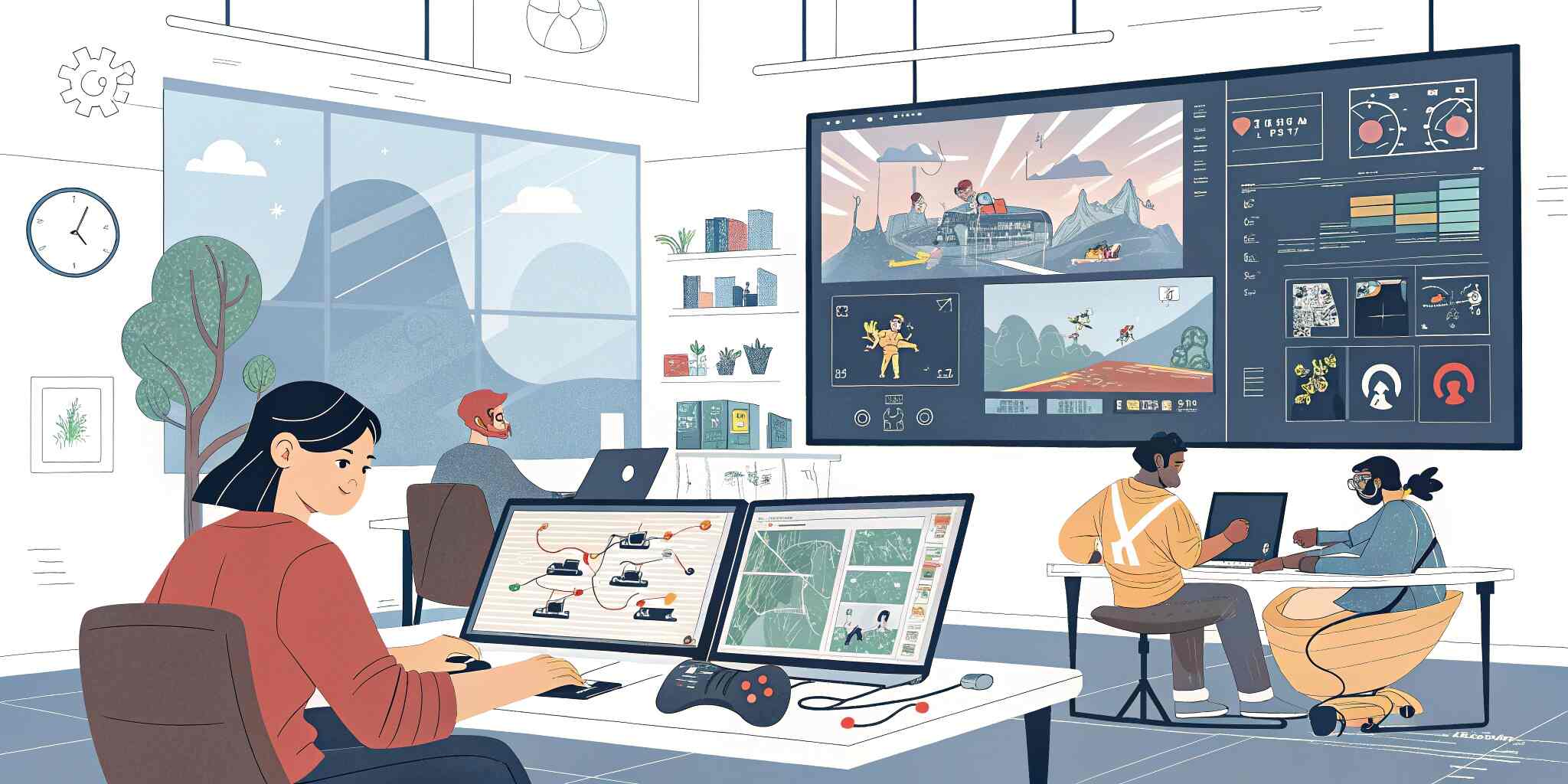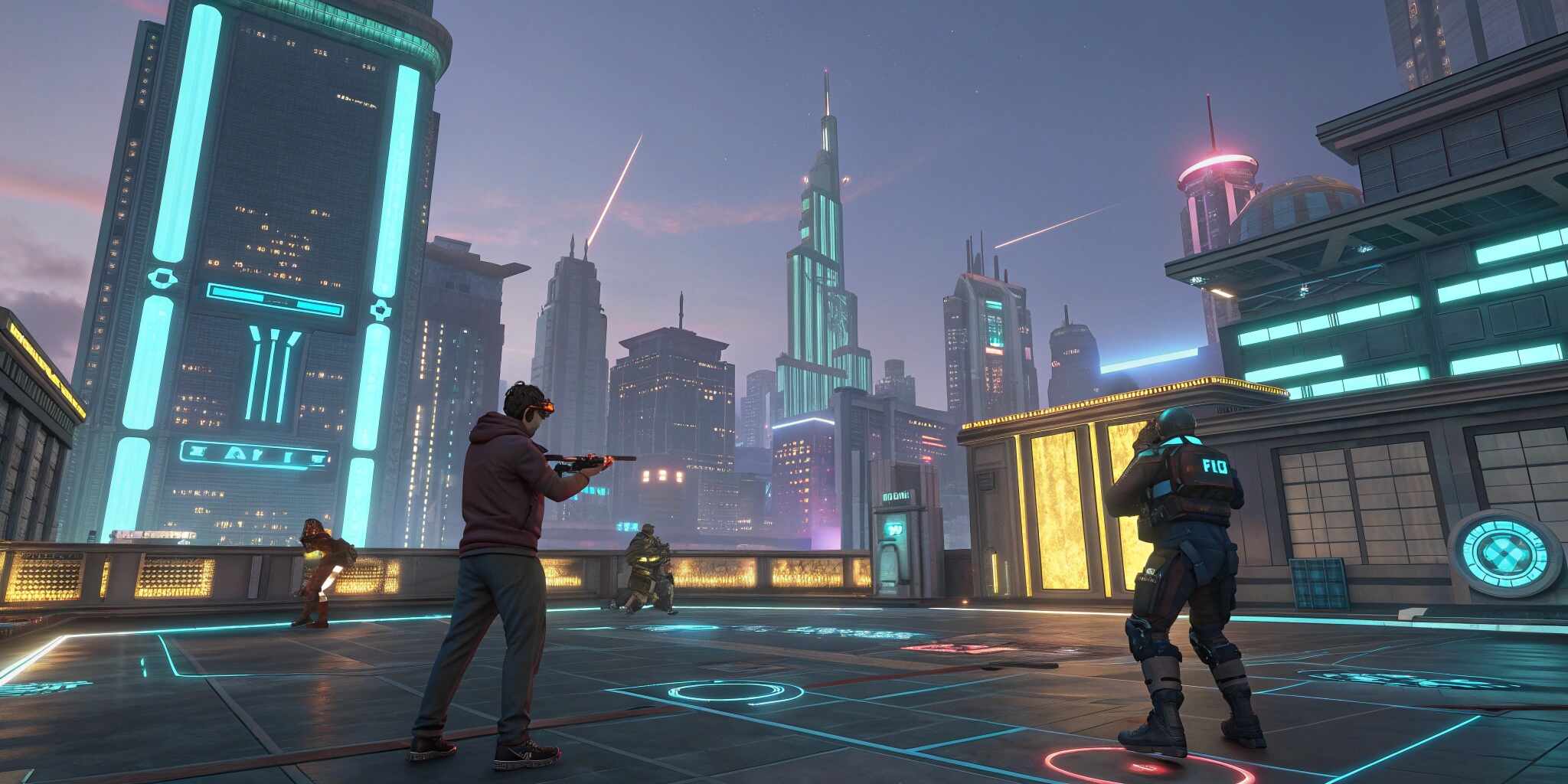
The evolution of open-world game development has always been defined by scale, realism, and player-driven narrative freedom. Procedural generation allowed developers to build vast landscapes, while handcrafted storytelling ensured narrative quality. Today, a groundbreaking shift is happening: the convergence of Neural Radiance Fields (NeRFs) and Large Language Models (LLMs) is enabling a new era of collaborative world building in which environments, stories, and gameplay evolve autonomously.
NeRFs represent 3D scenes using neural networks that encode color and density fields instead of traditional polygon meshes. Their ability to reconstruct rich, highly detailed 3D environments from sparse inputs makes them ideal for generating photorealistic landscapes, structures, and interiors. Meanwhile, LLMs—such as GPT—can generate complex narrative structures, character dialogue, and dynamic quests based on contextual player actions. When these technologies work together, they transform the way worlds are created, experienced, and maintained.
The core concept behind NeRF + LLM collaborative world building is real-time co-generation: LLMs craft environmental logic and narrative intent, while NeRFs render the physical representation of those ideas into explorable spaces. For example, imagine an AI-generated medieval world. The LLM determines that a drought threatens a farming village, generating dialogue, faction conflicts, and quests. The NeRF engine then procedurally generates the environment—dry riverbeds, cracked soil, wilting vegetation, and low-fog lighting—to reflect the narrative state. Instead of static design, the world becomes synchronously alive.
One of the most compelling advantages of this approach is adaptive storytelling. Traditional open-world storytelling is limited by pre-scripted content. LLM-driven systems analyze player behavior, emotional tone, playstyle, and previous decisions, dynamically crafting new story branches. When combined with NeRF-based scene generation, environments change to support player-driven narrative outcomes. Quests are no longer linear tasks but evolving experiences rooted in the world’s state. This moves games toward emergent narrative structures, where every playthrough becomes unique.
Another major benefit is the elimination of costly asset pipelines. Building a AAA open-world game traditionally requires thousands of manually modeled assets, environmental passes, prop placement, and lighting iterations. With NeRF systems trained on real-world scans or procedurally synthesized data, developers can generate entire regions or biomes with minimal manual work. LLMs can create lore, settlements, factions, and resource networks, while NeRFs render dynamic architectural styles and geometric complexity. Teams can shift their focus from asset creation to creative direction.
The collaborative approach is also ideal for live-service games. Instead of developers spending months building map expansions, LLM systems can intelligently forecast player trends and generate new content on demand. NeRF regions can stream in at runtime, similar to how open-world games stream terrain, enabling infinite exploration. Seasonal story arcs could be generated dynamically, not pre-produced.
However, integrating NeRFs and LLMs presents challenges. Real-time NeRF rendering requires powerful hardware and aggressive optimization. Techniques like Instant-NGP, mip-NeRF, and level-of-detail NeRF representations offer potential solutions but remain computationally heavy. Additionally, LLMs must maintain narrative coherence over long play sessions, requiring persistent world memory systems. Ensuring that generated content feels consistent, intentional, and emotionally meaningful is an ongoing area of research.
There are also questions regarding authorship and design control. Developers must establish guardrails that allow LLM creativity while maintaining artistic direction and gameplay balance. Future tools will likely provide hybrid pipelines where human world builders collaborate with AI, shaping core visual themes, biome rules, and narrative tone while AI fills in context at scale.
Looking ahead, the merging of NeRF and LLM technologies signals a major paradigm shift. Games will evolve from static environments into living, intelligent ecosystems. Players may explore worlds that grow, decay, adapt, and respond to them. The boundary between authored narrative and emergent systems will blur, creating experiences that feel closer to genuine alternate realities.
In coming years, fully autonomous open-world games could become possible—worlds without boundaries, with endless stories, reactive environments, and lifelike realism. What procedural generation began decades ago, NeRF + LLM collaboration may finally complete.