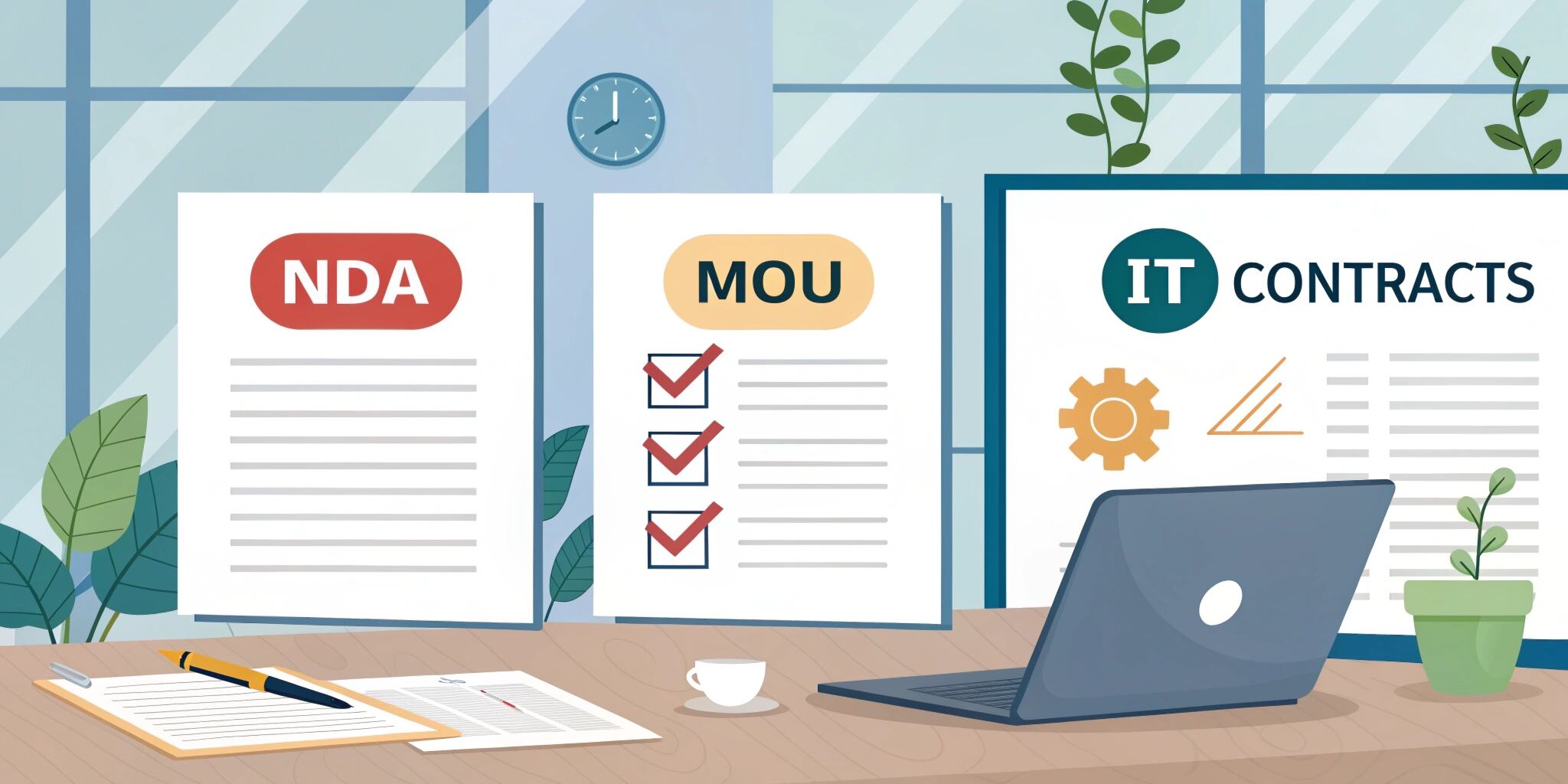
In the IT services industry, closing a deal is not only about price and timeline—it’s also about documentation. Clients often ask for an NDA before sharing details, and once the scope is finalized, contracts and MoUs become essential. For Business Development Executives (BDEs), understanding these documents is critical to avoid confusion, protect the company, and ensure smooth project execution. This blog explains the basics of NDA, MoU, and IT contracts for BDEs in a simple and practical way.
Why Legal Documentation Matters in IT Sales
IT projects involve sensitive information like business ideas, user data, system workflows, pricing, and intellectual property. Without proper agreements, both parties face risks such as misuse of information, payment disputes, or scope misunderstandings.
Proper documentation helps in:
- Building trust with clients
- Protecting confidential information
- Defining clear deliverables and payment terms
- Preventing misunderstandings between sales and tech teams
- Avoiding disputes during or after project delivery
What Is an NDA (Non-Disclosure Agreement)?
An NDA is a legal document that ensures confidentiality. It is usually signed before detailed project discussions begin. Clients share their ideas, business processes, and technical requirements only after NDA confirmation.
When NDA is used:
- Before sharing project concept, designs, or internal workflows
- When clients share sensitive documents or credentials
- During product development discussions
Key NDA clauses BDEs should know:
- Definition of confidential information
- Purpose of sharing information
- Duration of confidentiality (usually 1–5 years)
- Exclusions (public information, already known info)
- Consequences of breach
For BDEs, NDA is mainly a trust-building and safety step. Always involve the management/legal team before final signing.
What Is an MoU (Memorandum of Understanding)?
An MoU is a document that defines mutual understanding between two parties. It is not always as strict as a contract but works as an agreement for collaboration, intent, or partnership.
When MoU is used in IT:
- Long-term partnerships
- Joint ventures or reseller agreements
- Collaboration between companies
- When project scope is not fully final but intent is confirmed
MoU usually includes:
- Roles and responsibilities
- General project expectations
- Timeline intent
- Commercial understanding
- Confidentiality mention
For BDEs, MoU is helpful when the client wants to move forward but needs time for final contract or scope.
What Is an IT Contract / Service Agreement?
An IT contract is the most important document in IT projects. It is legally binding and defines the full project relationship between client and company.
Common names include:
- Software Development Agreement
- IT Service Agreement
- Master Service Agreement (MSA)
- Statement of Work (SOW)
When IT contract is used:
- Before project kickoff
- Before receiving payments
- When final scope and pricing are confirmed
Key Clauses in IT Contracts Every BDE Must Understand
Even if BDEs don’t draft contracts, they must understand basic clauses because clients often ask questions.
Important clauses include:
1. Scope of Work
Defines what will be delivered. Clear scope prevents scope creep and disputes.
2. Timeline and Milestones
Project phases, delivery dates, and review cycles.
3. Payment Terms
Advance payment, milestone payments, billing cycle, late payment charges.
4. Change Request / Scope Change
Explains how additional requirements will be handled and billed.
5. Intellectual Property (IP Rights)
Defines ownership of source code, designs, and final product after payment.
6. Confidentiality and Data Protection
Ensures client data is handled safely.
7. Warranty and Support
Defines post-delivery support, bug fixes, and maintenance terms.
8. Termination Clause
What happens if either party wants to stop the project.
Common Mistakes IT BDEs Should Avoid
New BDEs often make avoidable mistakes such as:
- Sending wrong contract versions
- Promising clauses without approval
- Not clarifying scope properly before contract
- Ignoring payment and milestone structure
- Not informing tech team about legal commitments
A contract is not just paperwork—it defines the project success.
Best Practices for BDEs While Handling NDA/MoU/Contracts
To handle documentation professionally:
- Use standard templates approved by management
- Never edit legal clauses without approval
- Keep all documents stored properly (Google Drive/CRM)
- Share signed copies with accounts + project manager
- Ensure scope matches proposal and discussions
Conclusion
For IT BDEs, understanding NDA, MoU, and IT contracts is a must. These documents protect the company, build client trust, and ensure smooth project delivery. A confident BDE doesn’t just close deals—they close deals safely, clearly, and professionally with the right documentation in place.