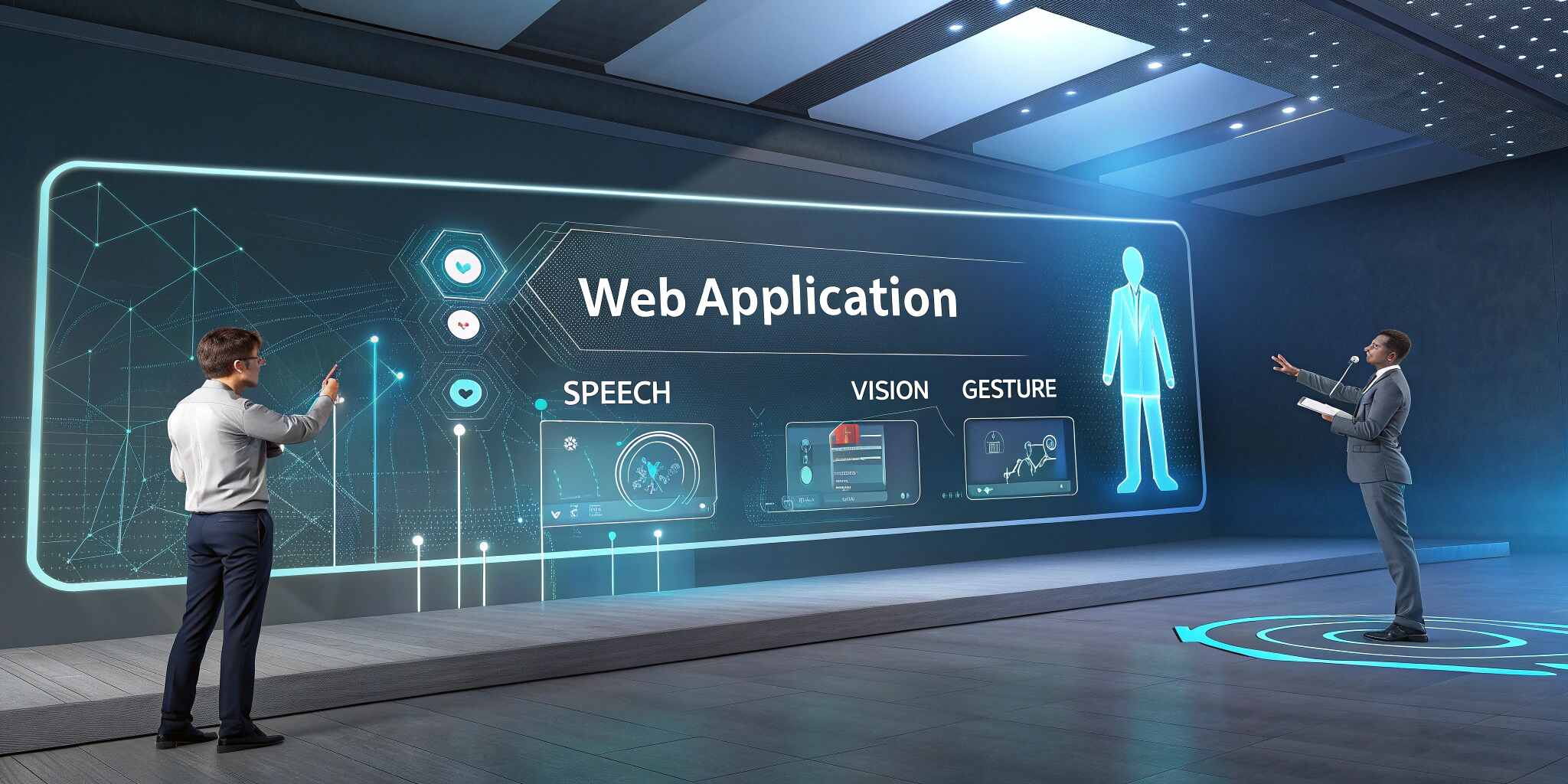
Multimodal user interfaces are quickly becoming one of the most groundbreaking trends in web development as they combine multiple input methods—such as speech, computer vision, gesture tracking, and even emotion detection—to create more natural and intuitive user experiences. Instead of relying solely on clicks, taps, or text input, multimodal UIs enable users to interact with applications the way they communicate in the real world: through voice, facial expressions, hand movements, gaze, and more. As AI models and browser APIs evolve, integrating multimodal interaction is no longer limited to native or specialized systems but is now increasingly possible within standard web applications.
Speech recognition has become one of the most widely adopted modalities thanks to the Web Speech API, cloud-based ASR models, and multilingual voice-processing engines. Web apps can now accept commands, dictate content, trigger navigation, and perform tasks through natural language. This creates smoother experiences, especially for accessibility tools, productivity applications, virtual assistants, and hands-free workflows. When combined with natural language processing models, speech interaction becomes even more powerful by interpreting user intent rather than relying on predefined commands.
Vision-based interaction is another major pillar of multimodal UIs, made possible through WebRTC, WebAssembly, TensorFlow.js, and real-time computer vision models that run directly in the browser. These technologies allow web apps to analyze images, detect objects, recognize facial gestures, track hand movements, and observe user behavior without requiring back-end processing. This opens doors to interactive AR websites, emotion-aware user feedback systems, personalized video conferencing, touchless navigation for kiosks, and immersive e-commerce experiences such as virtual try-ons or product visualization.
Gesture control adds another layer of human-style interaction by enabling users to perform actions through hand signs, swipe motions in the air, head nods, or even pose-based commands. Using models such as MediaPipe Hands or PoseNet, developers can add sophisticated gesture-based inputs directly to browser applications. This modality is especially useful in gaming, fitness apps, smart home interfaces, automotive dashboards, and VR/AR-enabled web experiences. As gesture detection becomes more accurate, web apps will increasingly support touchless and hygienic interfaces—a priority in public-facing digital systems.
The greatest strength of multimodal UIs comes from combining these inputs to create smooth, context-aware interaction flows. For example, a user could speak a command while confirming an action with a hand gesture or a facial expression. A vision system can detect user confusion and trigger a voice-based assistant. An AR shopping app can track gestures while narrating product details through speech synthesis. This fusion of modalities enhances accuracy, reduces cognitive load, and makes web applications adaptable to diverse user needs, environments, and devices.
However, implementing multimodal UIs also brings challenges such as increased processing requirements, model optimization, device compatibility constraints, and privacy concerns. Running computer vision in the browser demands efficient models and edge computing techniques, while collecting multimodal data requires careful handling to maintain user trust and comply with privacy standards. Developers must also design thoughtful multimodal interactions rather than overwhelming users with too many simultaneous inputs.
Despite these challenges, the future of multimodal UIs in web development is extremely promising. With the rise of powerful JavaScript machine learning libraries, browser-level AI capabilities, and generative AI integration, multimodal interfaces will soon become an expected part of modern web experiences. Websites will not only respond to what users click but also how they speak, move, and react—enabling more personalized, emotional, and immersive digital environments.