In modern mobile app development, testing plays a crucial role in ensuring performance, usability, and reliability. However, one of the biggest challenges developers face is dependency on backend APIs. When APIs are incomplete, unstable, or unavailable, it slows down the development and testing process. This is where API mocking becomes a game-changer.
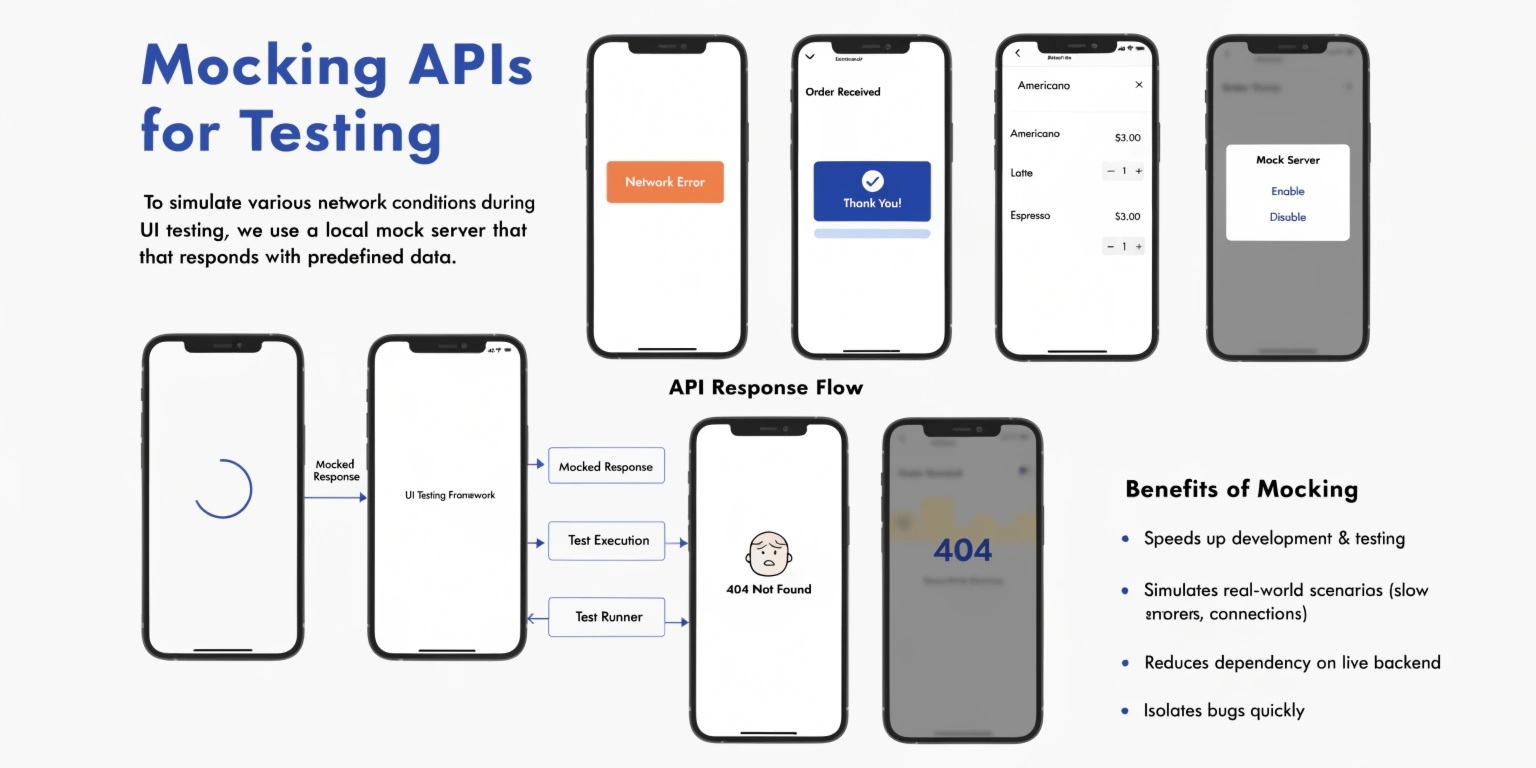
Mocking APIs allows developers to simulate backend responses without relying on real servers. It helps in testing different scenarios, including success responses, failures, and edge cases, ensuring robust app behavior.
What is API Mocking?
API mocking is the practice of creating a simulated version of an API that mimics the behavior of a real backend service. Instead of making actual network calls, the application interacts with a mock server that returns predefined responses.
These responses can include:
- Successful data responses
- Error messages (e.g., 404, 500)
- Delayed responses to test timeouts
- Edge case data for stress testing
This allows developers and testers to validate app functionality independently of backend development.
Why Mock APIs in Mobile App Testing?
1. Eliminates Backend Dependency
Mobile developers often have to wait for backend APIs to be ready. Mocking removes this dependency, allowing parallel development.
2. Faster Testing Cycles
Mock APIs provide instant responses, reducing testing time and improving productivity.
3. Reliable and Consistent Results
Real APIs may change or fail unexpectedly. Mock APIs ensure predictable responses for consistent testing.
4. Simulating Edge Cases
Testing rare scenarios like server failures or slow responses is difficult with real APIs but easy with mocks.
5. Offline Testing
Mock APIs enable testing without internet connectivity, which is useful during development or in restricted environments.
Popular Tools for API Mocking
1. Postman Mock Server
Postman allows developers to create mock servers quickly by defining request-response examples.
2. WireMock
WireMock is a powerful tool for simulating HTTP APIs with advanced configuration and flexibility.
3. Mockoon
Mockoon provides a user-friendly interface for creating local mock APIs with minimal setup.
4. JSON Server
JSON Server allows developers to create a full fake REST API with zero coding using a simple JSON file.
How API Mocking Works in Mobile Apps
API mocking typically involves the following steps:
- Define API Endpoints
- Identify the endpoints your app will interact with.
- Create Mock Responses
- Prepare JSON responses that mimic real API outputs.
- Set Up Mock Server
- Use tools like WireMock or Postman to host the mock APIs.
- Integrate with App
- Replace the real API base URL with the mock server URL.
- Run Tests
- Execute test cases using mock responses to validate app behavior.
Best Practices for API Mocking
1. Keep Mock Data Realistic
Ensure that mock responses closely resemble actual backend data structures.
2. Version Your Mock APIs
Maintain different versions of mock APIs to match backend updates.
3. Automate Mock Integration
Use environment configurations to switch between real and mock APIs easily.
4. Test Multiple Scenarios
Include success, failure, and edge cases in your mock data.
5. Sync with Backend Team
Collaborate with backend developers to keep mock APIs aligned with real endpoints.
Challenges of API Mocking
While API mocking offers many benefits, it also comes with challenges:
- Mismatch with Real APIs: Mock responses may not fully reflect real backend behavior
- Maintenance Overhead: Mock data needs regular updates
- Limited Real-World Testing: Cannot fully replace integration testing
To overcome these challenges, teams should combine API mocking with real API testing in later stages.
Conclusion
API mocking is an essential technique in modern mobile app testing. It empowers developers to work independently, speeds up development cycles, and ensures reliable testing outcomes. By using tools like Postman, WireMock, and Mockoon, teams can simulate backend behavior effectively and deliver high-quality mobile applications.
Incorporating API mocking into your development workflow not only improves efficiency but also enhances the overall quality of your app. As mobile applications continue to grow in complexity, mastering API mocking will become a critical skill for developers and testers alike.