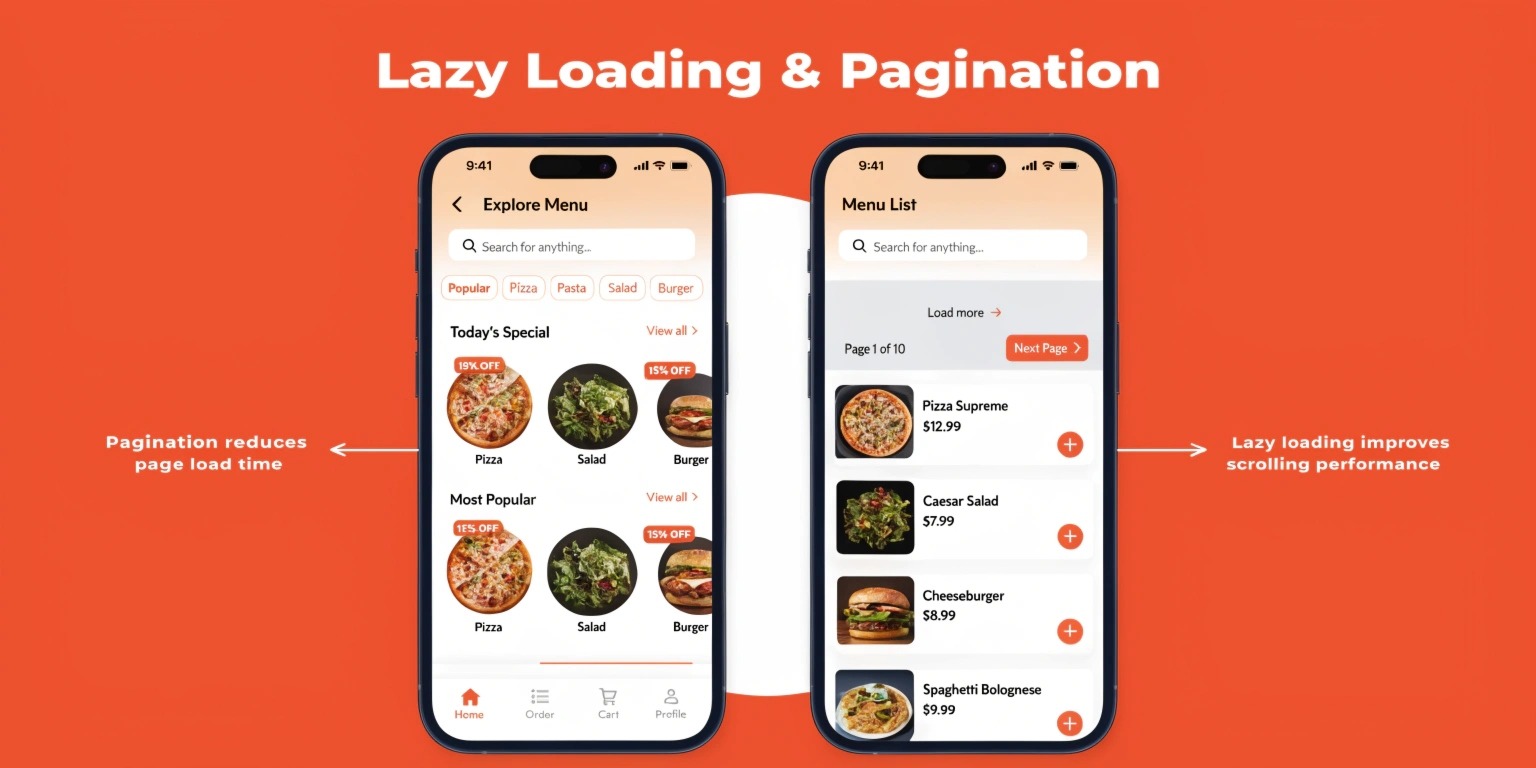
In today’s mobile-first world, users expect apps to be fast, responsive, and efficient. However, as applications grow more complex and data-heavy, performance challenges become inevitable. Two essential techniques that help developers tackle these challenges are lazy loading and pagination. These strategies ensure that apps load data efficiently, reducing memory usage and improving user experience.
What is Lazy Loading?
Lazy loading is a design pattern that delays the loading of resources until they are actually needed. Instead of loading all data upfront when the app starts, only the visible or immediately required content is loaded first. Additional data is fetched as the user interacts with the app, such as scrolling through a list.
For example, in a social media app, images and posts are loaded only when they come into the user’s view. This reduces initial load time and improves app responsiveness.
Benefits of Lazy Loading
- Improved Performance: Reduces initial loading time by loading only necessary data.
- Lower Memory Usage: Minimizes memory consumption by avoiding unnecessary data loading.
- Better User Experience: Ensures smoother scrolling and faster interactions.
- Efficient Network Usage: Loads data only when required, saving bandwidth.
What is Pagination?
Pagination is a technique used to divide large datasets into smaller, manageable chunks (pages). Instead of loading an entire dataset at once, the app loads data page by page, usually triggered by user actions like scrolling or clicking “Next.”
There are different types of pagination:
- Offset-based pagination: Uses page numbers or offsets to fetch data.
- Cursor-based pagination: Uses a pointer (cursor) to fetch the next set of data.
- Key-based pagination: Fetches data based on unique identifiers.
Benefits of Pagination
- Reduced Load Time: Loads only a subset of data at a time.
- Scalability: Handles large datasets efficiently.
- Improved Stability: Prevents crashes caused by excessive data loading.
- Enhanced Navigation: Makes content easier to browse.
Lazy Loading vs Pagination
While both techniques aim to optimize data loading, they serve slightly different purposes:
FeatureLazy LoadingPaginationData LoadingOn demandIn chunks/pagesUser InteractionScroll-basedPage-based or scroll-triggeredUse CaseMedia-heavy appsLarge datasetsComplexityModerateModerate to High
Often, modern apps combine both techniques—for example, using pagination to fetch data in chunks and lazy loading to render items only when visible.
Implementation in Mobile Applications
1. Android (Kotlin/Java):
- Use libraries like Paging 3.
- Implement RecyclerView with endless scrolling.
- Combine with ViewModel and LiveData for efficient data handling.
2. iOS (Swift):
- Use UITableView or UICollectionView with prefetching.
- Implement infinite scrolling using delegate methods.
- Use Combine or async/await for smooth data fetching.
3. API Considerations:
- Always design APIs with pagination support.
- Use parameters like limit, offset, or cursor.
- Ensure consistent and predictable responses.
Best Practices
- Use Skeleton Loaders:
- Display placeholders while content loads to improve perceived performance.
- Optimize API Calls:
- Avoid redundant requests by caching previously fetched data.
- Handle Errors Gracefully:
- Show retry options if data loading fails.
- Prefetch Data:
- Load the next set of data slightly before the user reaches the end.
- Avoid Over-fetching:
- Fetch only the required fields instead of full objects.
- Combine Techniques Smartly:
- Use pagination for backend efficiency and lazy loading for frontend rendering.
Common Challenges
- Data Duplication: Improper pagination logic may load duplicate records.
- Scroll Performance Issues: Poor implementation can cause lag.
- API Rate Limits: Frequent requests can hit server limits.
- State Management: Maintaining scroll position and loaded data can be tricky.
Real-World Examples
- Social Media Apps: Infinite scrolling feeds using lazy loading.
- E-commerce Apps: Product listings with pagination and lazy image loading.
- Streaming Apps: Content thumbnails loaded dynamically.
Conclusion
Lazy loading and pagination are critical techniques for building high-performance mobile applications. By reducing load time, optimizing memory usage, and improving user experience, they help developers create scalable and efficient apps. When implemented correctly, these strategies ensure that users enjoy smooth navigation and fast interactions, even with large datasets.
As mobile applications continue to evolve, mastering these techniques is essential for developers aiming to deliver seamless and high-quality user experiences.