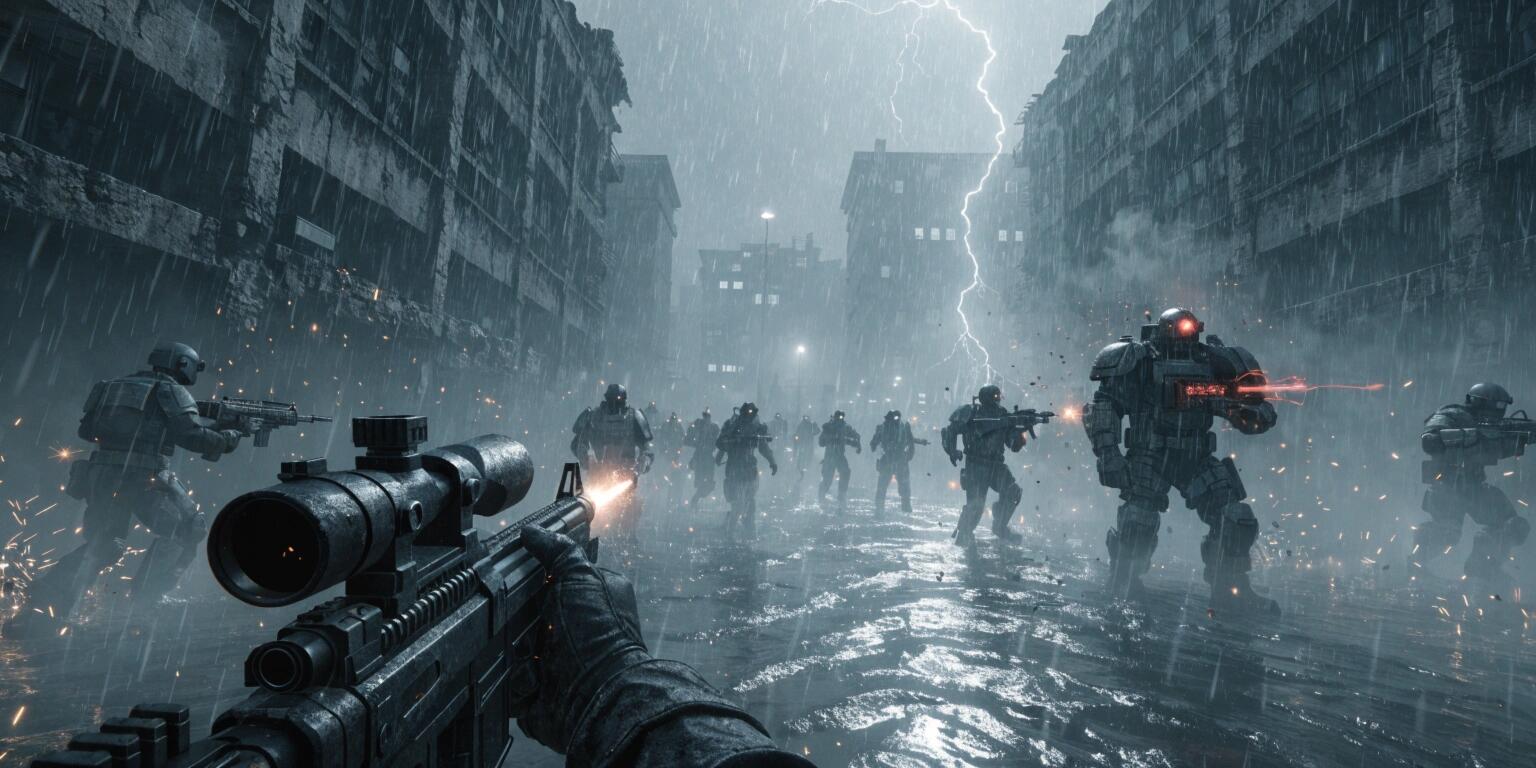
In fast-paced multiplayer games, especially First-Person Shooter (FPS) titles, milliseconds can determine victory or defeat. However, network latency—or “lag”—can disrupt gameplay, causing delays between player actions and server responses. To maintain fairness and responsiveness, developers rely on advanced lag compensation techniques.
Understanding Lag in FPS Games
Lag occurs due to delays in data transmission between a player’s device and the game server. Factors contributing to lag include:
- Internet speed and stability
- Distance from the server
- Server load
- Network congestion
In FPS games, where precise aiming and instant reactions are crucial, even minor delays can significantly impact gameplay.
Why Lag Compensation is Essential
Without lag compensation, players with higher latency would experience:
- Delayed movement and shooting
- Missed hit registrations
- Unfair disadvantages
To address this, developers implement systems that “compensate” for latency, ensuring all players have a balanced experience regardless of their connection quality.
Key Lag Compensation Techniques
1. Client-Side Prediction
Client-side prediction allows the player’s device to immediately simulate actions without waiting for server confirmation.
For example:
- When a player moves or shoots, the action is instantly shown on their screen
- The server later validates and synchronizes the action
This reduces perceived latency and makes gameplay feel responsive.
2. Server Reconciliation
While client-side prediction improves responsiveness, it can lead to discrepancies between the client and server states.
Server reconciliation resolves this by:
- Comparing client actions with server data
- Correcting mismatches
- Updating the client with the authoritative state
This ensures consistency across all players.
3. Lag Compensation (Hit Detection Rewind)
One of the most critical techniques is server-side lag compensation, often called “hit rewind.”
When a player fires:
- The server rewinds the game state to the moment the player took the shot
- It checks if the shot would have hit based on that past state
This ensures fair hit registration, even if there’s a delay in communication.
Popular games like Counter-Strike: Global Offensive use this technique to maintain competitive integrity.
4. Interpolation and Extrapolation
To smooth out movement:
- Interpolation: Displays slightly delayed positions of other players to ensure smooth transitions
- Extrapolation: Predicts future positions when data is missing
These techniques reduce jitter and create a more fluid experience.
5. Tick Rate Optimization
Tick rate refers to how often the server updates the game state.
- Higher tick rates (e.g., 128 ticks per second) provide more accurate updates
- Lower tick rates reduce server load but may affect precision
Games like Valorant use high tick rates to ensure precise gameplay.
Challenges in Lag Compensation
Despite advanced techniques, challenges remain:
- Trade-offs between fairness and responsiveness
- Increased server complexity
- Potential for exploitation (e.g., peeker’s advantage)
- Balancing performance across different network conditions
Developers must carefully design systems to minimize these issues.
Real-World Example
In competitive FPS games, players often experience “peeker’s advantage,” where the player moving around a corner sees the opponent first due to latency differences.
Lag compensation techniques aim to reduce this effect, but completely eliminating it remains a challenge.
Best Practices for Developers
To implement effective lag compensation:
- Use a server-authoritative model
- Optimize network code for efficiency
- Implement prediction and reconciliation carefully
- Monitor latency and adjust dynamically
- Provide players with network settings and diagnostics
These practices help maintain fairness and performance.
Future of Lag Compensation
With advancements in cloud gaming, edge computing, and 5G networks, latency is expected to decrease significantly. However, lag compensation will still play a crucial role in ensuring consistent experiences across global player bases.
Emerging technologies may enable:
- Ultra-low latency servers
- AI-driven network optimization
- Real-time adaptive compensation systems
Conclusion
Lag compensation is a cornerstone of modern FPS game development. By combining techniques like client-side prediction, server reconciliation, and hit rewind, developers create smooth, fair, and responsive multiplayer experiences.
As online gaming continues to grow, mastering these techniques will remain essential for delivering high-quality gameplay. In the end, the goal is simple: ensure that skill—not connection speed—determines the outcome of the game.