Over the past decade, Jamstack has played a significant role in transforming how modern websites are built. Originally introduced as a new architectural approach focused on performance, security, and scalability, Jamstack quickly gained popularity among developers and businesses alike.
However, as web technologies continue to evolve rapidly, many developers are now asking an important question: Is Jamstack still relevant in 2026?
To answer this question, it is essential to understand how Jamstack works, how the ecosystem has evolved, and whether it still offers advantages compared to newer web development approaches.
What is Jamstack?
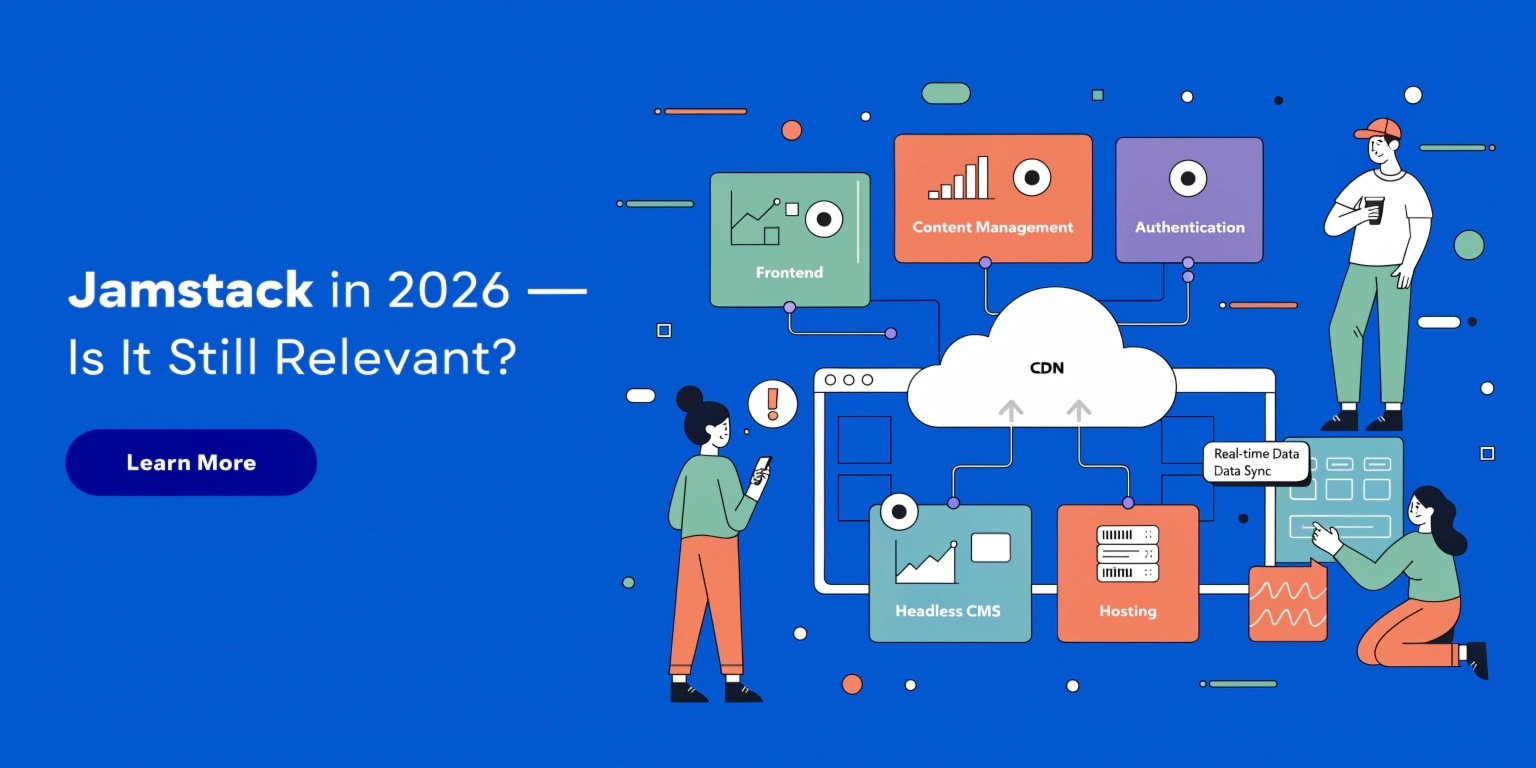
Jamstack stands for JavaScript, APIs, and Markup. It represents a modern web architecture where websites are pre-rendered into static files and served through content delivery networks (CDNs), while dynamic functionality is handled via APIs and serverless functions.
Unlike traditional server-based architectures, Jamstack separates the frontend from the backend. This approach offers several advantages, including faster page loading, improved security, and easier scalability.
Typical Jamstack components include:
- Static site generators
- Headless CMS platforms
- Serverless APIs
- CDN-based hosting
- Modern JavaScript frameworks
This architecture became widely adopted because it solved many performance and scaling challenges associated with traditional monolithic web applications.
Why Jamstack Became Popular
Jamstack gained popularity for several reasons.
1. Exceptional Performance
Since Jamstack sites are pre-built and delivered through CDNs, users experience extremely fast load times. Static files require minimal server processing, which significantly improves website performance.
2. Improved Security
Traditional web applications rely on complex backend servers that may expose vulnerabilities. Jamstack reduces attack surfaces by removing direct database and server interactions from the frontend.
Dynamic functions are handled through secure APIs or serverless platforms.
3. Scalability
Because Jamstack sites rely on CDN infrastructure, they can easily handle large amounts of traffic without requiring expensive server scaling.
This made Jamstack especially attractive for content-heavy websites such as blogs, marketing sites, and documentation platforms.
Challenges Jamstack Faces in 2026
Despite its advantages, Jamstack also has limitations that have become more noticeable as web applications grow more complex.
1. Build Time Issues
Large Jamstack websites can require long build times. When thousands of pages need to be generated during deployment, the build process can become slow and inefficient.
Modern tools have introduced incremental builds, but large-scale projects may still face challenges.
2. Dynamic Application Limitations
Jamstack was originally designed for content-focused websites. Highly dynamic applications such as dashboards, collaborative tools, and real-time platforms may require additional backend infrastructure.
This sometimes reduces the simplicity that Jamstack originally promised.
3. Dependency on APIs
Jamstack applications often rely heavily on third-party APIs for features like authentication, payments, and search.
While this improves flexibility, it can also introduce complexity and potential vendor lock-in.
Evolution of Jamstack
Rather than disappearing, Jamstack has evolved significantly.
Modern frameworks have expanded its capabilities by combining static generation with server-side rendering and edge computing.
For example, modern web frameworks allow developers to:
- Pre-render static pages
- Render dynamic content on the server
- Use edge functions for ultra-fast responses
- Stream content progressively
This hybrid approach addresses many of Jamstack's earlier limitations.
Jamstack vs Modern Full-Stack Frameworks
In 2026, developers often choose between pure Jamstack architectures and newer hybrid frameworks.
Jamstack remains ideal for:
- Marketing websites
- Blogs and documentation platforms
- E-commerce storefronts
- Content-driven platforms
However, highly interactive applications may benefit from full-stack frameworks that support real-time updates and server-side logic more easily.
The key difference is that modern frameworks now allow developers to choose static, server-rendered, or hybrid approaches within the same project.
The Future of Jamstack
Instead of becoming obsolete, Jamstack has merged into the broader ecosystem of modern web architectures.
The core principles of Jamstack—performance, decoupling, and scalability—are still extremely valuable.
Many developers now describe the architecture as “Composable Web Architecture”, where applications are built from independent services, APIs, and modular components.
This approach aligns with modern development trends such as microservices, serverless computing, and edge deployment.
Conclusion
Jamstack remains highly relevant in 2026, but its role has evolved. Rather than being a strict architectural pattern, it has become part of a broader approach to building fast and scalable web applications.
For content-driven websites and performance-focused projects, Jamstack continues to be a powerful solution. Meanwhile, hybrid frameworks now allow developers to combine static and dynamic rendering strategies for maximum flexibility.
Ultimately, the future of web development is not about choosing one architecture over another—it is about selecting the right tools and approaches for each project.