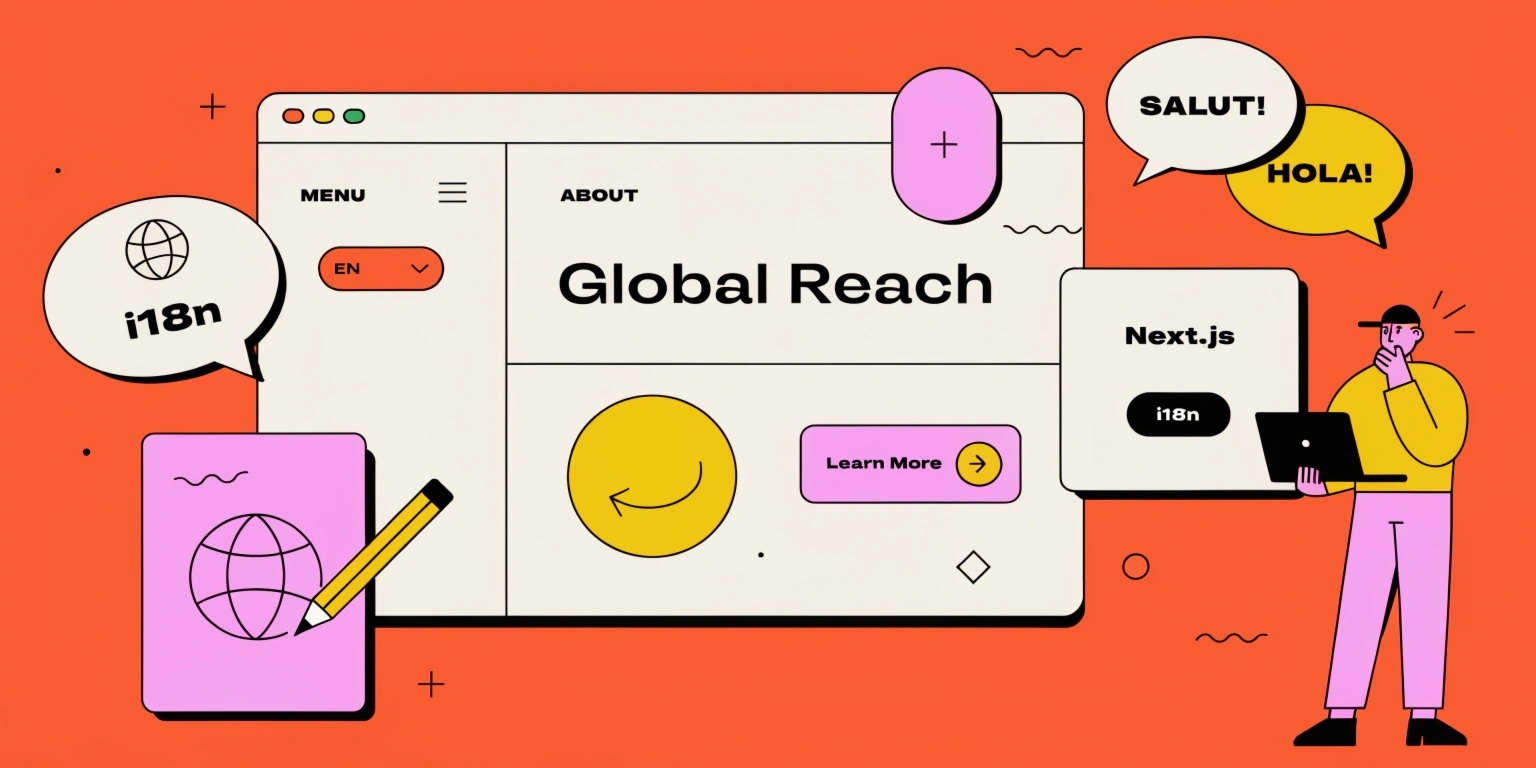
Internationalization enables Next.js applications to serve users in multiple languages and regions. This guide explores i18n implementation, localization strategies, multilingual SEO, language routing, and best practices for creating scalable global web applications.
As businesses expand into international markets, providing a localized user experience becomes essential. Users prefer interacting with websites and applications in their native language, making internationalization (i18n) a critical aspect of modern web development.
Next.js offers powerful built-in features and ecosystem support for creating multilingual applications. Whether you're targeting customers across Europe, Asia, North America, or worldwide, implementing internationalization correctly can significantly improve user engagement, conversion rates, and global reach.
This article explores how internationalization works in Next.js, its benefits, implementation approaches, and best practices for building globally accessible applications.
What is Internationalization (i18n)?
Internationalization, commonly abbreviated as i18n, refers to designing and developing applications that can easily adapt to multiple languages and regional preferences without major code changes.
Internationalization enables applications to support:
- Multiple languages
- Regional date formats
- Currency formats
- Number formatting
- Time zones
- Localized content
- Region-specific preferences
It creates a foundation upon which localization (l10n) can be implemented efficiently.
Why Internationalization Matters
Global users expect digital experiences tailored to their language and culture.
Benefits include:
Improved User Experience
Users are more comfortable navigating websites in their preferred language.
Higher Conversion Rates
Localized content often leads to better engagement and increased sales.
Expanded Market Reach
Businesses can enter new international markets more effectively.
Better Accessibility
Language accessibility makes applications more inclusive.
SEO Advantages
Localized pages can rank in country-specific search results, increasing organic traffic.
Internationalization Support in Next.js
Next.js provides built-in internationalized routing that simplifies multilingual website development.
Key features include:
- Locale-based routing
- Automatic locale detection
- Domain-based localization
- Subpath localization
- Dynamic language switching
- SEO-friendly URLs
Developers can configure supported locales directly in the application settings.
Example Configuration
A typical Next.js configuration may define:
- English (en)
- French (fr)
- German (de)
- Spanish (es)
Each language receives its own route structure, such as:
- /en/products
- /fr/products
- /de/products
This structure helps both users and search engines understand localized content.
Localization Strategies
There are several approaches to implementing localization in Next.js applications.
Static Translation Files
One common method involves storing translations in JSON files.
Example:
English:
- Welcome
- Login
- Contact Us
French:
- Bienvenue
- Connexion
- Contactez-nous
The application dynamically loads the appropriate language file based on user preferences.
Benefits:
- Easy maintenance
- Fast performance
- Version control friendly
Translation Management Platforms
Large projects often use translation management systems to streamline content updates.
Advantages include:
- Collaborative workflows
- Professional translation support
- Automated synchronization
- Consistency across languages
This approach is particularly useful for enterprise-scale applications.
Popular i18n Libraries for Next.js
Although Next.js provides routing support, developers often use additional libraries for translation management.
next-intl
A modern solution designed specifically for Next.js applications.
Features:
- Server-side support
- Client-side translations
- Type safety
- App Router compatibility
i18next
One of the most widely adopted internationalization frameworks.
Benefits:
- Extensive plugin ecosystem
- Flexible configuration
- Multi-platform support
react-intl
A React-focused localization library that supports message formatting and international standards.
These libraries simplify language switching and content management.
SEO Considerations for Multilingual Websites
Internationalization directly impacts search engine optimization.
Important SEO practices include:
hreflang Tags
Search engines use hreflang tags to identify language-specific content.
Example:
- English version
- French version
- German version
This prevents duplicate content issues and improves international rankings.
Localized URLs
Use language-specific URLs whenever possible.
Examples:
- example.com/en/blog
- example.com/fr/blog
Localized URLs improve both user understanding and search engine indexing.
Localized Metadata
Translate:
- Page titles
- Meta descriptions
- Structured data
- Open Graph tags
This improves visibility in regional search results.
Handling Dynamic Content
Many applications rely on dynamic data from APIs, databases, or content management systems.
Challenges include:
- Content synchronization
- Translation consistency
- Regional variations
Solutions often involve:
- Localized CMS content
- Translation APIs
- Language-specific database fields
A scalable architecture ensures efficient content delivery across multiple languages.
Performance Optimization
Supporting multiple languages can increase application complexity.
Optimization strategies include:
Static Generation
Generate localized pages during build time for faster performance.
Incremental Static Regeneration (ISR)
Update translated content without rebuilding the entire application.
Lazy Loading
Load translation files only when needed.
Content Delivery Networks (CDNs)
Serve localized assets from geographically distributed servers.
These techniques improve page speed and user experience.
Best Practices for Next.js Internationalization
To build scalable multilingual applications, consider the following:
- Plan localization early in development
- Separate content from application logic
- Use translation keys instead of hardcoded text
- Support locale-aware formatting
- Test all language versions thoroughly
- Optimize multilingual SEO
- Implement language switchers
- Use fallback languages for missing translations
Following these practices helps maintain consistency as the application grows.
Future of Internationalized Web Applications
The future of internationalization is becoming increasingly intelligent.
Emerging trends include:
- AI-powered translations
- Real-time localization
- Personalized regional content
- Automated translation workflows
- Context-aware language adaptation
As global digital adoption continues to rise, multilingual experiences will become a standard expectation rather than a competitive advantage.
Conclusion
Internationalization in Next.js enables businesses to create seamless experiences for users across different languages and regions. With built-in routing support, powerful localization libraries, and strong SEO capabilities, Next.js provides an excellent foundation for developing multilingual applications.
By implementing effective internationalization strategies, organizations can improve accessibility, increase global reach, enhance customer satisfaction, and unlock new growth opportunities in international markets.
We build scalable web, mobile, and game products for clients worldwide — combining modern frameworks, cloud infrastructure, and best engineering practices.
.jpg)
.jpg)
.jpg)