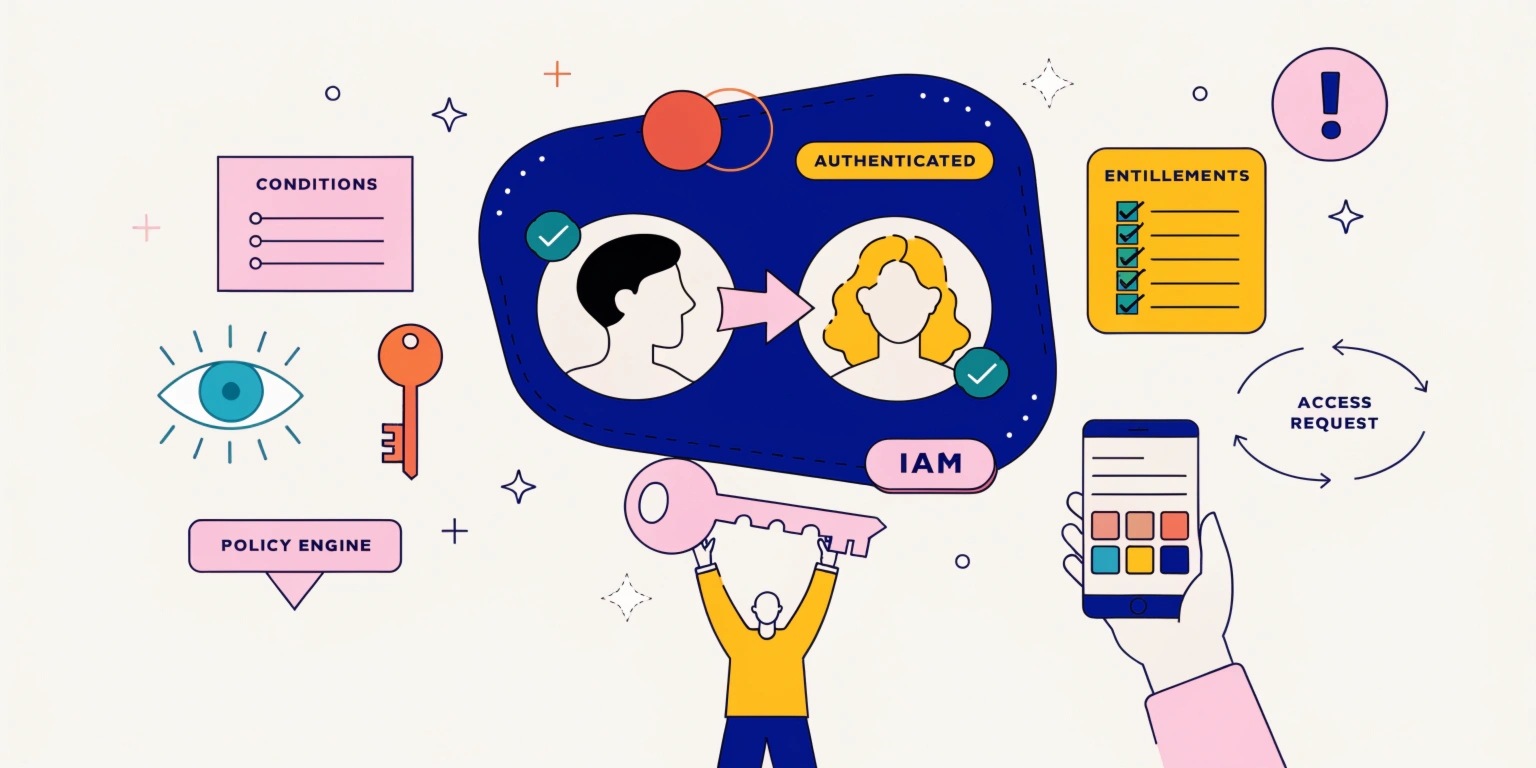
Advanced IAM strategies help organizations secure digital resources through intelligent authentication, authorization, governance, and access controls. Discover key concepts shaping modern enterprise security in cloud-first environments.
Identity & Access Management (IAM) Advanced Concepts: Securing Modern Digital Enterprises
As organizations continue their digital transformation journeys, securing access to applications, systems, and sensitive data has become increasingly complex. Employees, contractors, customers, applications, and devices now access resources across cloud, hybrid, and on-premises environments.
Traditional username-and-password security models are no longer sufficient. This is where Identity and Access Management (IAM) plays a crucial role. IAM provides the framework that ensures the right individuals have appropriate access to the right resources at the right time.
While basic IAM focuses on authentication and authorization, modern enterprises require advanced IAM concepts to address evolving cybersecurity threats and compliance requirements.
Understanding Modern IAM
Identity and Access Management is a collection of policies, technologies, and processes that control digital identities and resource access.
The primary objectives of IAM include:
- User authentication
- Access authorization
- Identity lifecycle management
- Compliance enforcement
- Risk mitigation
- Security monitoring
As organizations adopt cloud-native architectures and remote work models, IAM has evolved into a critical component of enterprise cybersecurity.
Zero Trust Architecture
One of the most significant advancements in IAM is the adoption of Zero Trust Security.
Traditional security models assumed that users inside a corporate network could be trusted. Modern cyberattacks have proven this assumption dangerous.
Zero Trust follows the principle:
"Never Trust, Always Verify."
Under Zero Trust:
- Every access request is verified.
- Users are continuously authenticated.
- Device health is evaluated.
- Contextual risk assessments are performed.
- Least-privilege access is enforced.
Zero Trust significantly reduces the risk of unauthorized access and insider threats.
Privileged Access Management (PAM)
Privileged accounts represent one of the most attractive targets for attackers.
System administrators, database administrators, cloud engineers, and security personnel often possess elevated permissions that can impact critical systems.
Privileged Access Management (PAM) helps secure these accounts through:
- Credential vaulting
- Session monitoring
- Just-in-time access
- Privilege elevation controls
- Audit logging
PAM reduces the attack surface while providing visibility into privileged activities.
Identity Federation
Modern enterprises use numerous applications and platforms.
Managing separate credentials for each system creates security and usability challenges.
Identity Federation enables users to authenticate once and access multiple applications across organizational boundaries.
Popular federation protocols include:
- SAML (Security Assertion Markup Language)
- OAuth 2.0
- OpenID Connect (OIDC)
- WS-Federation
Federation improves user experience while maintaining centralized identity management.
Single Sign-On (SSO)
Single Sign-On allows users to access multiple applications using one authentication process.
Benefits include:
- Improved productivity
- Reduced password fatigue
- Enhanced security
- Simplified user management
- Lower helpdesk costs
SSO is often implemented alongside Identity Federation to create seamless access experiences across enterprise ecosystems.
Multi-Factor Authentication (MFA)
Passwords alone are vulnerable to phishing, credential stuffing, and brute-force attacks.
Multi-Factor Authentication strengthens security by requiring additional verification factors such as:
Something You Know
- Passwords
- PINs
Something You Have
- Smartphones
- Security tokens
- Smart cards
Something You Are
- Fingerprints
- Facial recognition
- Iris scans
Organizations implementing MFA significantly reduce the risk of account compromise.
Adaptive Authentication
Advanced IAM systems now use contextual information to dynamically assess access risk.
Adaptive Authentication evaluates factors such as:
- User location
- Device type
- Network conditions
- Login behavior
- Time of access
- Risk scores
For example:
A login attempt from a trusted office device may require only a password, while access from an unfamiliar country may trigger additional verification steps.
This approach balances security with user convenience.
Role-Based Access Control (RBAC)
RBAC simplifies access management by assigning permissions based on organizational roles.
Examples include:
HR Manager
- Employee records
- Payroll systems
Finance Manager
- Accounting software
- Financial reports
Software Developer
- Development environments
- Source code repositories
RBAC reduces administrative complexity while supporting compliance initiatives.
Attribute-Based Access Control (ABAC)
As organizations become more dynamic, RBAC alone may not provide sufficient flexibility.
Attribute-Based Access Control evaluates multiple attributes when making authorization decisions.
Attributes may include:
- User department
- Job title
- Device type
- Security clearance
- Geographic location
- Data sensitivity level
ABAC enables highly granular access control policies tailored to specific business requirements.
Identity Governance and Administration (IGA)
Managing identities throughout their lifecycle is a major challenge for large enterprises.
Identity Governance and Administration focuses on:
- User provisioning
- Deprovisioning
- Access certification
- Role management
- Policy enforcement
- Compliance reporting
IGA ensures users receive appropriate access while preventing excessive privileges and orphaned accounts.
AI and Machine Learning in IAM
Artificial Intelligence is increasingly transforming IAM capabilities.
AI-powered IAM systems can:
- Detect unusual login patterns
- Identify compromised accounts
- Predict insider threats
- Automate access reviews
- Improve risk scoring
Machine learning algorithms continuously analyze user behavior to strengthen security and reduce false positives.
Challenges in Advanced IAM Implementations
Despite its benefits, advanced IAM adoption presents several challenges:
Complex Integrations
Organizations often operate hundreds of applications requiring identity integration.
Legacy Systems
Older platforms may lack support for modern authentication standards.
User Resistance
Additional security measures can impact user experience if not implemented carefully.
Regulatory Compliance
Organizations must meet standards such as:
- GDPR
- HIPAA
- PCI DSS
- ISO 27001
- SOC 2
A strategic IAM roadmap is essential for overcoming these challenges.
Future of IAM
The future of IAM is moving toward:
- Passwordless authentication
- Decentralized identities
- AI-driven access decisions
- Continuous authentication
- Behavioral biometrics
- Cloud-native identity platforms
As cyber threats become more sophisticated, IAM will continue evolving as the foundation of enterprise security architectures.
Conclusion
Advanced Identity and Access Management concepts are no longer optional for modern enterprises. Technologies such as Zero Trust, PAM, Adaptive Authentication, Federation, RBAC, ABAC, and AI-powered identity analytics help organizations secure critical assets while maintaining operational efficiency.
As businesses expand across cloud environments and remote work ecosystems, investing in advanced IAM strategies enables stronger security, better compliance, improved user experiences, and reduced cyber risk. Organizations that treat identity as the new security perimeter will be better positioned to defend against evolving digital threats.
We build scalable web, mobile, and game products for clients worldwide — combining modern frameworks, cloud infrastructure, and best engineering practices.
.jpg)
.jpg)
.jpg)