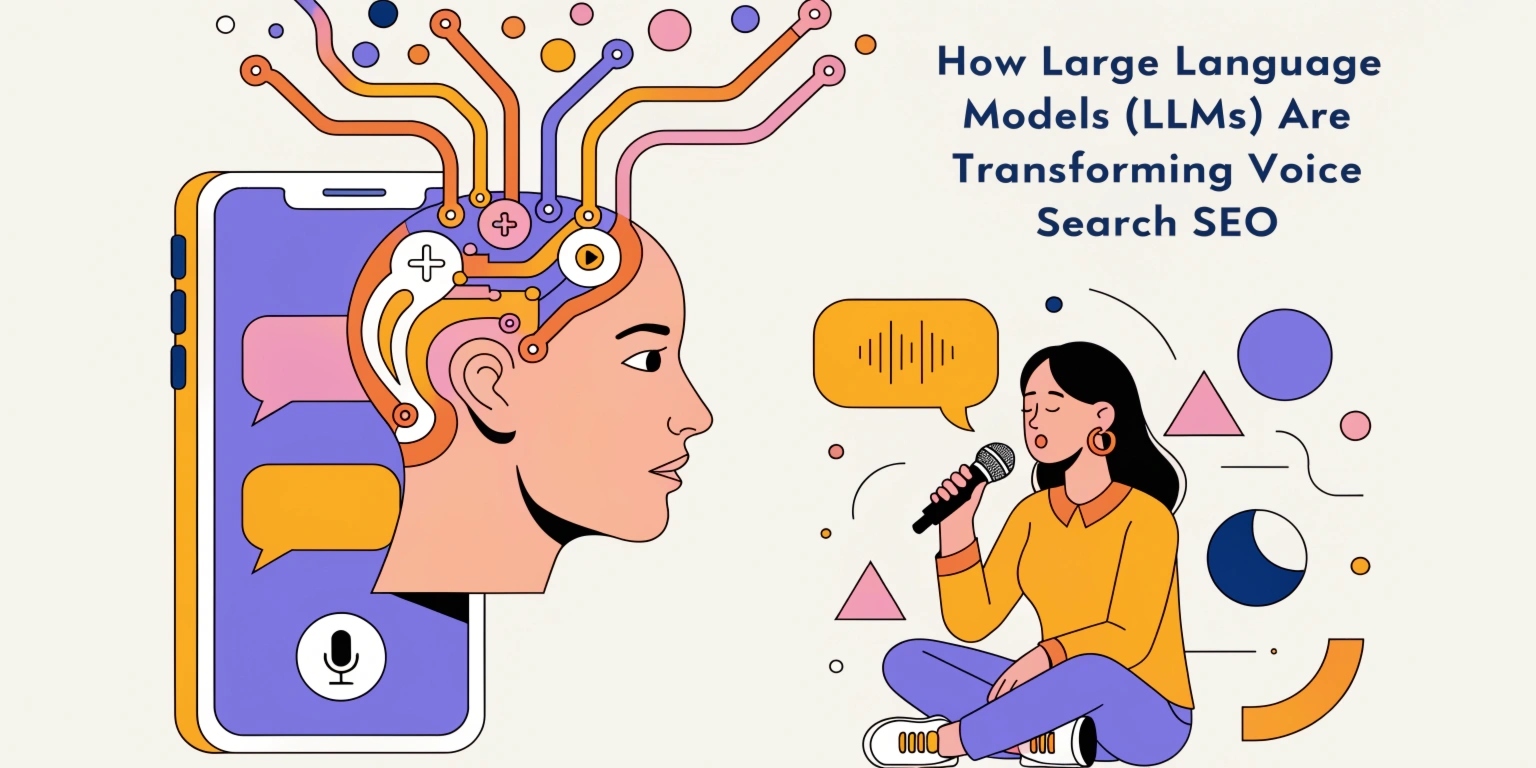
How Large Language Models (LLMs) Are Transforming Voice Search SEO
The rise of Artificial Intelligence has fundamentally changed how users search for information online. Instead of typing short keyword-based queries like "best restaurants Surat," users now ask complete conversational questions such as, "Which is the best family restaurant near me that's open right now?" This shift is largely powered by Large Language Models (LLMs), which have transformed traditional search into intelligent, context-aware conversations.
Voice search has become increasingly popular through devices like smartphones, smart speakers, and virtual assistants including Google Assistant, Siri, Alexa, and AI-powered chatbots. As these technologies continue to evolve, businesses must rethink their SEO strategies to remain visible in search results.
Understanding Large Language Models
Large Language Models are advanced AI systems trained on massive datasets to understand and generate human-like language. Unlike traditional search algorithms that mainly focus on matching keywords, LLMs analyze context, user intent, previous interactions, and semantic meaning before generating responses.
Models such as GPT, Gemini, Claude, and Llama have significantly improved how search engines understand complex questions, making voice search more accurate and personalized.
Why Voice Search Is Growing
Several factors have accelerated the adoption of voice search:
- Increasing smartphone usage
- Smart home devices
- Hands-free searching while driving
- Faster AI-powered responses
- Better speech recognition accuracy
People naturally speak differently than they type. Instead of entering fragmented keywords, users ask detailed questions in conversational language. This creates new opportunities for businesses that optimize their content accordingly.
How LLMs Are Changing Voice Search SEO
1. Better Understanding of User Intent
Traditional SEO focused heavily on exact-match keywords. LLMs now prioritize understanding what users actually mean.
For example:
Typed Search:
"best laptop under 600"
Voice Search:
"What is the best laptop under $600 for programming and gaming?"
Modern AI understands that the user wants recommendations based on budget and specific use cases, rather than simply matching keywords.
2. Conversational Content Performs Better
Websites that answer questions naturally have a higher chance of appearing in AI-generated responses and voice search results.
Instead of creating content filled with repetitive keywords, businesses should write:
- FAQs
- Detailed guides
- How-to articles
- Question-and-answer sections
- Conversational blog posts
Natural language has become a major ranking factor.
3. Semantic SEO Matters More
LLMs understand relationships between words rather than individual keywords.
For instance:
Keywords:
- Voice Search
- Smart Assistant
- AI Search
- Conversational AI
- Natural Language
All relate to a similar topic.
This means websites should cover topics comprehensively instead of targeting isolated keywords.
4. Featured Snippets Become More Valuable
Most voice assistants read information directly from featured snippets or AI-generated summaries.
To increase your chances:
- Answer questions immediately
- Use headings and bullet points
- Keep explanations concise
- Include structured data
- Write clear definitions
This improves visibility for both traditional and AI-driven search.
5. Local SEO Gets Smarter
Many voice searches include local intent.
Examples:
- "Best web development company near me"
- "Nearest coffee shop"
- "Digital marketing agency open today"
LLMs combine search intent, location, business reviews, and relevance to provide personalized recommendations.
Businesses should optimize:
- Google Business Profile
- Location-specific keywords
- Customer reviews
- Business information consistency
Best Practices for LLM-Based Voice Search Optimization
Focus on Natural Language
Write exactly how people speak.
Instead of:
"Digital Marketing Company India"
Use:
"Which digital marketing company helps startups grow online?"
Create FAQ Pages
Frequently Asked Questions naturally align with voice search.
Example:
Q: What is Voice Search SEO?
A: Voice Search SEO is the process of optimizing your website so it appears in spoken search results generated by voice assistants and AI search platforms.
Improve Page Speed
Voice search users expect instant answers.
Optimize:
- Image compression
- Lazy loading
- CDN usage
- Mobile performance
Fast websites rank better and provide a superior user experience.
Use Structured Data
Schema markup helps AI understand:
- Products
- Services
- Reviews
- Events
- FAQs
- Articles
Structured data increases the likelihood of appearing in rich search results.
Build Topical Authority
Instead of publishing random articles, create clusters of related content around a central topic.
Example:
Main Topic:
Voice Search SEO
Supporting Articles:
- Voice Search Ranking Factors
- AI Search Optimization
- Semantic SEO
- LLM Content Strategy
- Featured Snippet Optimization
This signals expertise to search engines.
The Future of SEO with LLMs
Search engines are moving toward answer engines. Instead of displaying a list of websites, AI increasingly provides direct, conversational responses while citing trusted sources.
Businesses that invest in high-quality, informative, and user-focused content will have a stronger chance of being featured in AI-generated answers. SEO is evolving from keyword stuffing to delivering meaningful value and addressing user intent.
Conclusion
Large Language Models are redefining the future of voice search SEO. They emphasize conversational language, semantic relevance, and genuine user value over outdated keyword-focused tactics. As AI-powered search continues to grow, businesses must adapt by creating natural, informative, and authoritative content that answers real questions.
Organizations that embrace LLM-driven SEO today will be better positioned to capture voice search traffic, enhance user engagement, and maintain strong search visibility in the years ahead. Investing in AI-friendly SEO is no longer optional—it is essential for long-term digital success.