Introduction
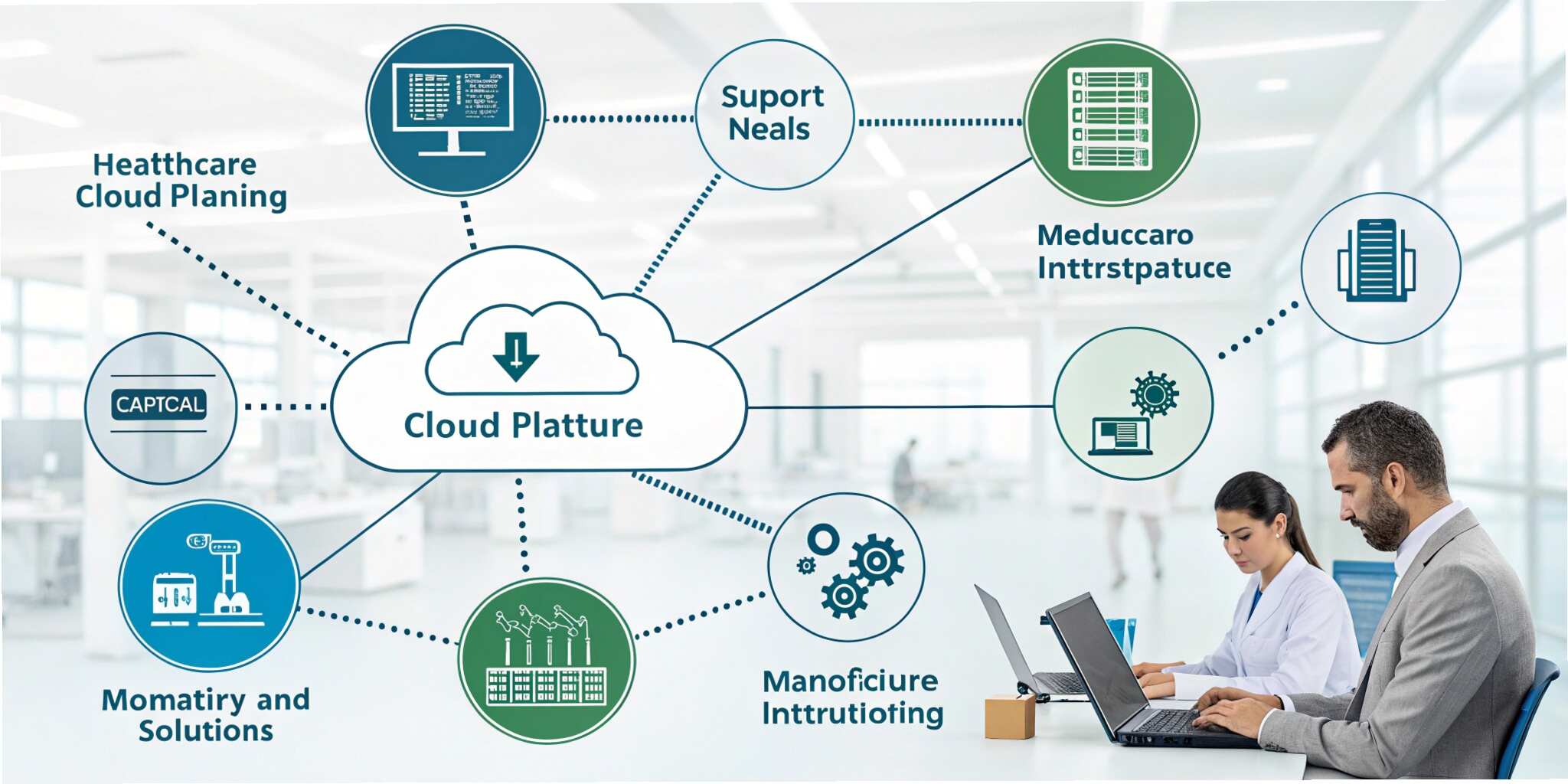
As cloud computing matures, businesses demand more than just generic storage and processing power. Enter industry-specific cloud platforms—custom-tailored solutions designed to meet the distinct challenges, compliance needs, and workflows of different sectors. These platforms go beyond infrastructure to offer built-in regulatory features, specialized analytics, and integration with industry-standard tools.
What Are Industry-Specific Cloud Platforms?
These are cloud services developed with deep knowledge of specific sectors like healthcare, finance, manufacturing, education, and retail. Instead of a one-size-fits-all model, they offer APIs, compliance modules, and data models relevant to each domain.
Key Industries Benefiting from Vertical Clouds
- Healthcare Cloud
- Features: HIPAA compliance, patient data encryption, EHR integration.
- Example: Microsoft Cloud for Healthcare.
- Financial Services Cloud
- Features: Risk analysis tools, fraud detection AI, KYC modules.
- Example: Salesforce Financial Services Cloud, IBM Cloud for Financial Services.
- Retail Cloud
- Features: Omnichannel support, real-time inventory, personalized marketing.
- Example: Google Cloud for Retail.
- Manufacturing Cloud
- Features: IoT integrations, supply chain visibility, predictive maintenance.
- Example: Oracle Cloud SCM, AWS for Manufacturing.
- Education Cloud
- Features: LMS integration, student data privacy, remote learning tools.
- Example: Google for Education, AWS Educate.
Why Businesses Are Adopting Vertical Clouds
Regulatory Compliance
Avoid legal pitfalls by using platforms pre-configured for your industry’s regulations.
Faster Deployment
Pre-built modules allow businesses to go live faster with reduced customization overhead.
Cost Efficiency
Avoid overpaying for features you don’t need, and scale resources based on specific workflows.
Enhanced Innovation
Built-in AI/ML tools tailored for sector-specific use cases accelerate development.
Challenges to Consider
- Vendor Lock-in
- Specialized platforms can create dependencies on specific providers.
- Customization Limitations
- Pre-built tools might limit flexibility compared to general-purpose platforms.
- Training and Adoption
- Employees might need additional training to fully leverage industry-specific features.
The Future Outlook
As digital transformation accelerates, vertical cloud platforms will become a norm, not an exception. Future trends may include more AI-powered industry solutions, blockchain integrations, and industry cloud ecosystems—blurring the lines between SaaS and PaaS.
Conclusion
Industry-specific cloud platforms are not just a trend—they're a strategic response to the complex, regulated, and fast-moving nature of modern business. By leveraging a vertical cloud solution, organizations can unlock smarter workflows, faster deployment, and deeper insights tailored to their operational realities.