Introduction
As mobile applications become increasingly integrated into daily life, users expect more intuitive and convenient ways to interact with digital platforms. Traditional touch-based navigation remains common, but advancements in artificial intelligence, voice recognition, and gesture technology have introduced a new era of hands-free app navigation systems.
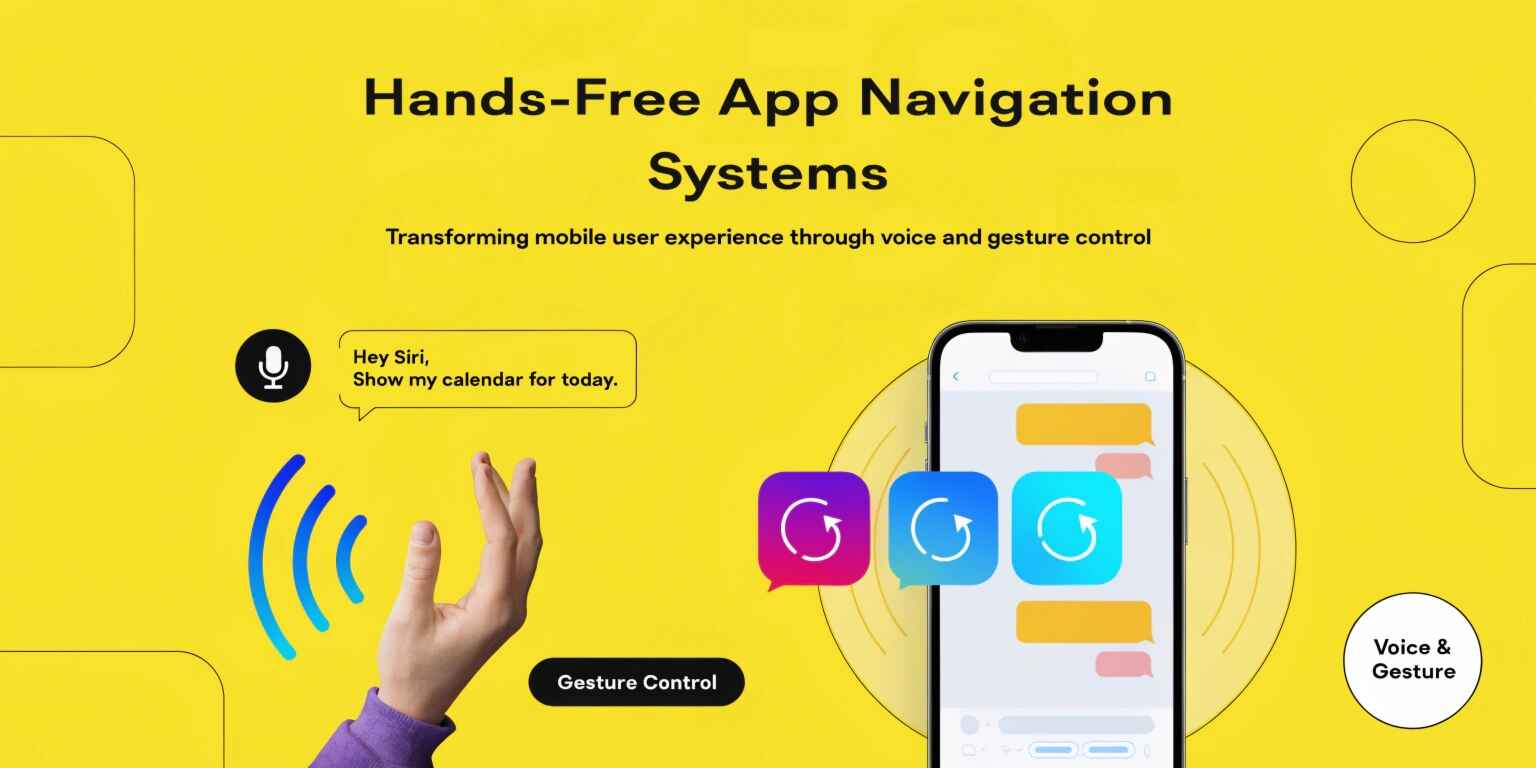
Hands-free navigation enables users to control applications without physically touching their devices. Whether through voice commands, facial recognition, eye tracking, or gesture controls, these technologies provide seamless experiences that improve accessibility, efficiency, and user satisfaction.
What Are Hands-Free App Navigation Systems?
Hands-free app navigation systems allow users to perform actions, navigate screens, and interact with application features without direct physical contact. These systems utilize advanced technologies such as:
- Voice Recognition
- Natural Language Processing (NLP)
- Gesture Detection
- Eye Tracking
- Facial Recognition
- Artificial Intelligence (AI)
- Motion Sensors
The primary objective is to simplify user interaction while making applications accessible to a broader audience, including individuals with physical disabilities or mobility limitations.
Key Technologies Behind Hands-Free Navigation
1. Voice Recognition Technology
Voice recognition allows applications to understand and process spoken commands. Popular voice assistants have demonstrated how users can perform tasks simply by speaking naturally.
Examples include:
- Opening application features
- Sending messages
- Searching content
- Managing settings
- Completing transactions
Modern AI-driven voice recognition systems continue to improve accuracy by understanding context, accents, and conversational language.
2. Gesture Recognition
Gesture-based navigation uses cameras and sensors to detect hand movements or body gestures. Users can swipe, point, or perform specific motions to navigate app interfaces.
Benefits include:
- Reduced physical contact
- Faster interaction
- Enhanced user engagement
- Improved accessibility
Gesture controls are increasingly popular in gaming, healthcare, and smart home applications.
3. Eye Tracking Technology
Eye tracking monitors a user's gaze to determine intended actions. This technology is particularly valuable for users with limited mobility and is becoming more sophisticated through AI integration.
Applications include:
- Reading assistance
- Accessibility tools
- Navigation control
- Interactive content experiences
4. Artificial Intelligence and Machine Learning
AI enhances hands-free systems by learning user behavior and preferences. Machine learning algorithms improve command recognition, predict actions, and personalize interactions over time.
AI-powered systems can:
- Understand user intent
- Reduce navigation steps
- Offer personalized suggestions
- Improve command accuracy
Benefits of Hands-Free App Navigation
Improved Accessibility
One of the most significant advantages is accessibility. Users with disabilities can navigate applications independently, promoting digital inclusion and equal access to technology.
Enhanced User Experience
Hands-free interactions reduce friction and simplify complex processes. Users can complete tasks more efficiently while multitasking or when physical interaction is inconvenient.
Increased Safety
In environments such as driving or industrial operations, hands-free controls minimize distractions and support safer interactions with digital systems.
Greater Convenience
Voice and gesture-based navigation provide quick access to features without requiring users to tap through multiple screens.
Future-Ready Applications
Organizations that adopt hands-free technologies position themselves at the forefront of innovation and meet evolving consumer expectations.
Industry Applications
Healthcare
Medical applications use voice commands and touch-free interfaces to help healthcare professionals access patient information while maintaining hygiene standards.
Automotive
Navigation apps, vehicle controls, and infotainment systems increasingly rely on voice-driven interactions to improve driver safety.
E-Commerce
Voice-enabled shopping experiences allow customers to search products, place orders, and track deliveries more efficiently.
Education
Hands-free learning applications improve accessibility for students with disabilities and support interactive educational experiences.
Smart Home Integration
Mobile applications connected to smart devices enable users to control lighting, security systems, appliances, and entertainment systems through voice commands.
Challenges in Implementation
Despite its advantages, hands-free navigation presents several challenges:
- Privacy concerns related to voice and camera data
- Recognition accuracy across different languages and accents
- Environmental factors such as background noise
- Increased development complexity
- Hardware compatibility requirements
Developers must carefully address these challenges through robust security measures, extensive testing, and user-centered design practices.
Future of Hands-Free Navigation
The future of hands-free app navigation is closely tied to advances in artificial intelligence and wearable technology. Emerging innovations such as augmented reality (AR), virtual reality (VR), brain-computer interfaces, and contextual AI will create even more immersive and intelligent user experiences.
As technology continues to evolve, touchless interactions will become a standard feature rather than a premium enhancement. Businesses investing in these capabilities today will be better positioned to meet future user expectations and remain competitive in the digital landscape.
Conclusion
Hands-free app navigation systems are redefining how users interact with mobile applications. Through voice recognition, gesture controls, AI-powered intelligence, and accessibility-focused design, developers can create more inclusive, efficient, and engaging digital experiences.
As consumer demand for convenience and accessibility grows, integrating hands-free navigation capabilities will become an essential strategy for modern app development. Organizations that embrace these innovations can deliver superior user experiences while preparing for the next generation of mobile technology.