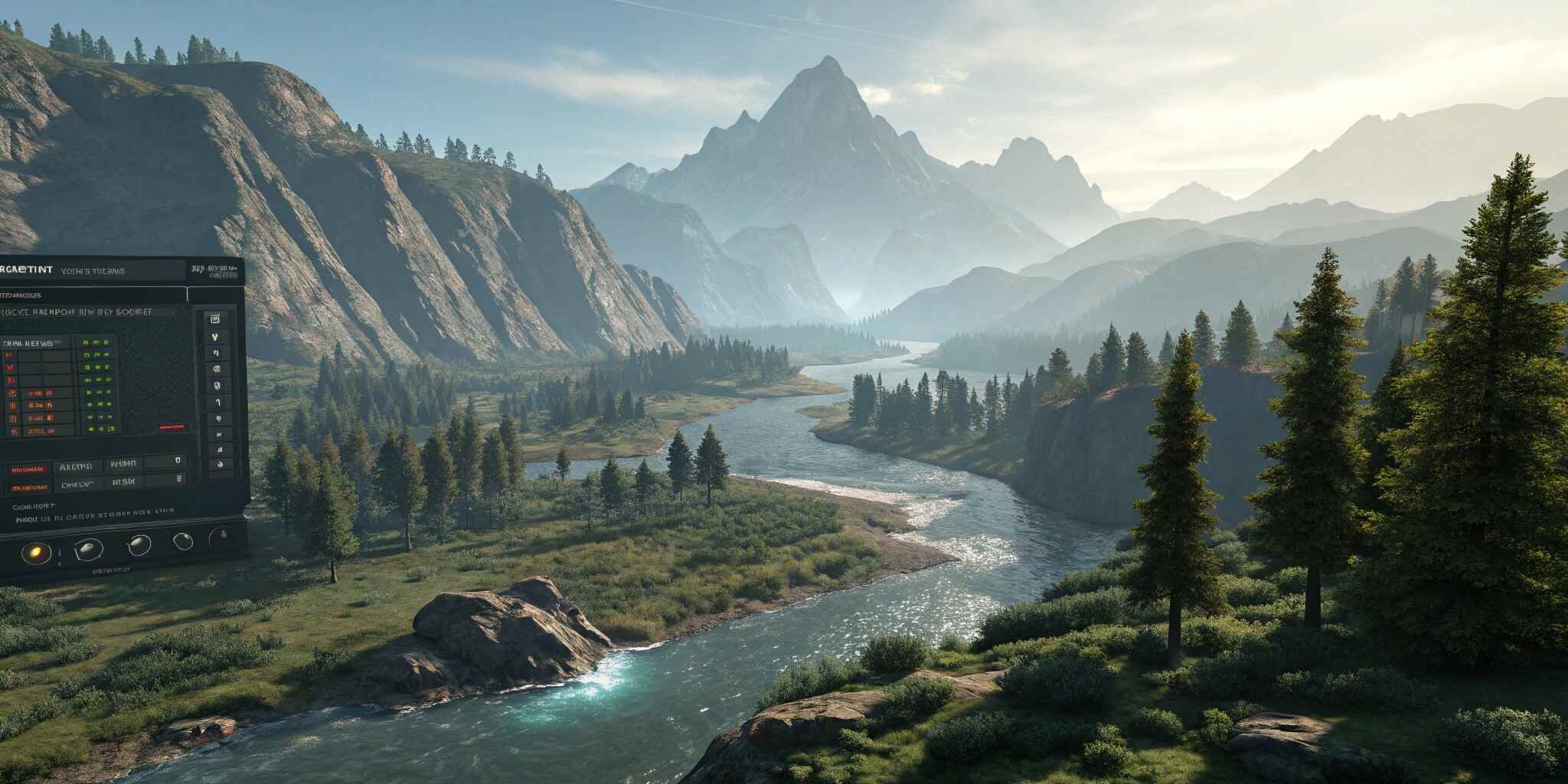
Procedural world generation is a cornerstone of modern open-world and sandbox games, enabling developers to build massive environments without manually handcrafting every detail. But realism requires more than random height maps—it depends on natural terrain shaping forces such as erosion, weathering, sediment transport, and geological dynamics. Traditionally, erosion simulation is computationally expensive, often too slow for real-time generation. However, with the rise of GPU-optimized erosion models, procedural terrain is entering a new era of performance and realism.
The Importance of Realistic Erosion in Procedural Worlds
Natural terrain is shaped over thousands of years by physical forces, leaving behind rivers, valleys, cliffs, canyons, and mountain ranges. Simple noise-based terrain systems can generate variation, but they lack the organic realism players subconsciously expect. Erosion simulation adds credibility by:
- Creating believable shapes and geological formations
- Forming natural water flow paths like rivers and lakes
- Adding sediment buildup and weather effects
- Supporting dynamic terrain that evolves over time
Games like Minecraft, Horizon Zero Dawn, and Death Stranding demonstrate how terrain realism elevates immersion and world believability.
Why GPU Acceleration Matters
CPU-based erosion simulation is slow because erosion involves iterative calculations across millions of terrain cells. GPUs, designed for massive parallelism, can process thousands of erosion calculations simultaneously. This enables:
- Real-time erosion simulation for gameplay
- Larger map sizes without performance sacrifice
- Dynamic updates based on weather or player actions
- Procedural world generation during runtime rather than pre-processing
Where a CPU might process erosion across terrain grids sequentially, a GPU executes operations across grid cells in parallel, drastically reducing compute time.
Types of Erosion Models Enhanced by GPU Optimization
Several erosion processes benefit from GPU acceleration:
1. Hydraulic Erosion
Simulates the effect of flowing water carving paths, transporting sediment, and creating river systems. GPU models calculate water movement and erosion simultaneously across thousands of grid points per frame.
2. Thermal Erosion
Models slope instability and gravity-driven material breakdown, forming smooth gradients and avalanche-like movement.
3. Sediment Transport
Simulates how soil and rock move through fluid or gravity, building layers and natural deposits.
4. Weather and Climate-Based Erosion
Dynamic wind, rainfall, freezing, and thawing cycles create realistic long-term terrain evolution.
Combining these processes results in procedural landscapes that replicate real geological history.
Real-Time Erosion for Gameplay
GPU-powered erosion unlocks new interactive possibilities, including:
- Terrain deforming in response to explosions, construction, or digging
- Rivers forming dynamically and affecting navigation routes
- Weather systems changing environment shape over time
- Persistent world ecosystems and environment evolution
This transforms static maps into living environments where every playthrough is unique.
Performance Advantages and Optimization Techniques
GPU-driven erosion models achieve performance efficiency through:
- Compute shaders and parallel kernels
- Height-field data structures
- Level-of-detail rendering for distant terrain
- Asynchronous compute execution for real-time gameplay operations
Developers often pair GPU erosion with tools like Houdini, Unreal Engine’s compute shaders, Unity GPU-based terrain tools, or custom CUDA/OpenCL pipelines.
Future Applications in Game Development
As AI and GPU compute advance, erosion modeling will expand into:
- AI-driven erosion prediction models
- Integration with climate simulation tools
- Hybrid procedural + artist-guided terrain systems
- Real-time metaverse-scale world building
Massive persistent online worlds may soon evolve continuously based on player behavior and natural simulation systems.