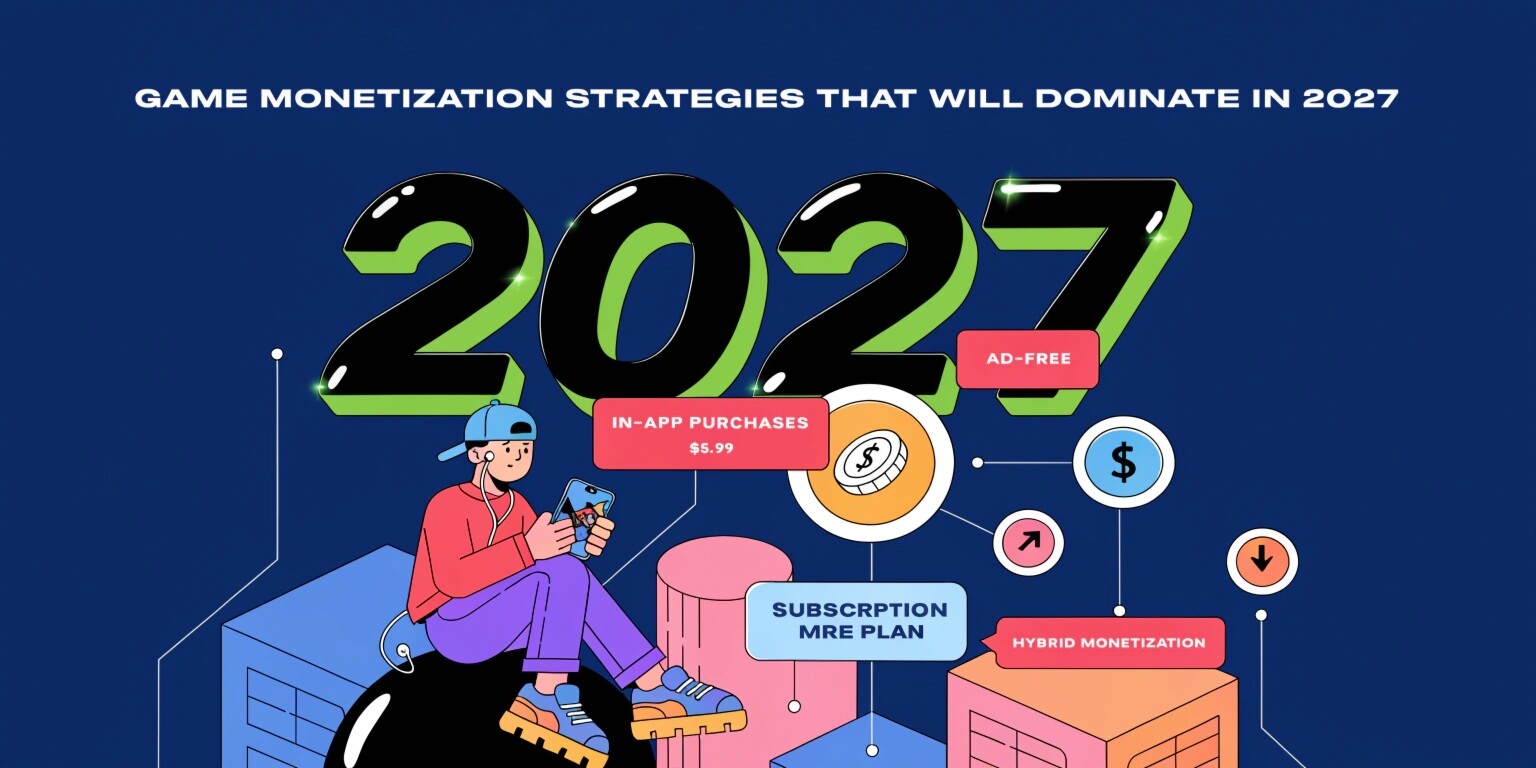
The gaming industry continues to evolve at an unprecedented pace. With advancements in artificial intelligence, cloud gaming, immersive experiences, and changing player expectations, developers are rethinking how games generate revenue. Traditional monetization models such as one-time purchases are gradually giving way to more dynamic, player-centric approaches that focus on long-term engagement and recurring revenue.
As we move toward 2027, successful game monetization will depend on balancing profitability with player satisfaction. Developers who understand emerging trends and adapt their monetization strategies accordingly will be well-positioned to thrive in an increasingly competitive market.
This article explores the game monetization strategies expected to dominate in 2027 and shape the future of the gaming industry.
The Evolution of Game Monetization
Over the years, game monetization has evolved significantly.
The industry has transitioned through several phases:
- Premium game purchases
- Downloadable content (DLC)
- Free-to-play models
- In-app purchases
- Battle passes
- Subscription services
The future will focus on creating personalized, value-driven experiences that encourage voluntary spending while maintaining player trust and engagement.
AI-Powered Personalized Monetization
Artificial Intelligence is expected to play a major role in game monetization by 2027.
Instead of offering the same promotions to every player, AI systems will analyze player behavior, preferences, progression patterns, and engagement levels to deliver highly personalized offers.
Benefits of AI-Powered Monetization
- Personalized item recommendations
- Dynamic pricing models
- Customized reward systems
- Improved player retention
- Increased conversion rates
By presenting relevant offers at the right time, developers can improve revenue without negatively impacting the player experience.
Battle Passes Will Continue to Evolve
Battle passes have become one of the most successful monetization models in modern gaming.
By 2027, battle passes are expected to become more adaptive and player-focused.
Future Battle Pass Features
- Personalized progression paths
- AI-generated challenges
- Flexible reward selection
- Cross-game progression systems
- Seasonal content integration
Players appreciate battle passes because they provide clear value and reward active participation rather than encouraging excessive spending.
This model is likely to remain a cornerstone of free-to-play game monetization.
Subscription-Based Gaming Will Expand
Subscription services have already transformed industries such as entertainment and software.
Gaming is following the same trajectory.
Subscription-based monetization provides predictable recurring revenue while offering players access to exclusive content and premium features.
Popular Subscription Benefits
- Exclusive in-game rewards
- Premium content access
- Ad-free experiences
- Early access to updates
- VIP community privileges
As cloud gaming and digital distribution continue to grow, subscription models are expected to become increasingly important revenue drivers.
In-Game Advertising Will Become More Intelligent
Advertising remains a significant monetization channel, especially in mobile gaming.
However, traditional intrusive ads often harm player engagement.
In 2027, AI-driven advertising systems will make ads more relevant and less disruptive.
Emerging Advertising Trends
- Rewarded video ads
- Interactive advertisements
- Contextual advertising
- Native in-game brand integrations
- Personalized ad experiences
These approaches allow developers to generate revenue while preserving gameplay quality.
When implemented correctly, players often perceive rewarded advertisements as beneficial rather than intrusive.
Creator Economies and User-Generated Content
One of the most exciting monetization opportunities involves creator-driven ecosystems.
Games increasingly empower players to create content, customizations, levels, skins, and virtual experiences.
Developers can monetize these ecosystems through:
- Marketplace commissions
- Content creator partnerships
- Premium publishing tools
- Revenue-sharing programs
This model creates value for both players and developers while fostering strong gaming communities.
By 2027, creator economies are expected to become a major component of game revenue generation.
Virtual Goods and Digital Ownership
Virtual goods remain one of the most profitable monetization strategies in gaming.
Players willingly purchase:
- Character skins
- Cosmetic upgrades
- Emotes
- Custom avatars
- Weapon designs
- Collectibles
Future virtual economies will place greater emphasis on personalization and self-expression.
Rather than focusing solely on competitive advantages, successful games will offer digital items that enhance identity, creativity, and social status within gaming communities.
Cross-Platform Monetization Opportunities
Modern gamers frequently play across multiple devices, including:
- Smartphones
- Tablets
- PCs
- Consoles
- Cloud gaming platforms
Cross-platform ecosystems create new monetization possibilities.
Players increasingly expect purchases, rewards, and progression to carry across devices seamlessly.
Developers who create unified monetization experiences can increase engagement and lifetime customer value.
Cross-platform accessibility will become a key competitive advantage in 2027.
Community-Driven Monetization
Gaming communities are becoming more influential than ever.
Future monetization models will increasingly reward community participation.
Examples include:
- Community challenges
- Social achievements
- Guild progression systems
- Referral rewards
- Fan engagement programs
These systems encourage long-term engagement while creating additional revenue opportunities through social interactions and collaborative gameplay.
Data-Driven Monetization Optimization
Advanced analytics will become central to monetization strategies.
Developers will leverage real-time data to understand:
- Spending behaviors
- Retention patterns
- Player satisfaction
- Engagement metrics
- Purchase triggers
Data-driven insights allow developers to continuously refine their monetization systems while ensuring a positive player experience.
Organizations that effectively combine analytics with AI will gain a significant competitive advantage.
Ethical and Player-Centric Monetization
One of the biggest shifts expected by 2027 is the growing importance of ethical monetization.
Players are increasingly demanding transparency and fairness.
Successful developers will focus on:
- Clear pricing structures
- Optional purchases
- Value-based transactions
- Fair progression systems
- Transparent reward mechanisms
Games that prioritize player trust are likely to achieve stronger retention, higher lifetime value, and better community support.
Ethical monetization is no longer simply a best practice—it is becoming a business necessity.
Emerging Technologies Supporting Monetization
Several technologies will influence future monetization models:
Artificial Intelligence
AI will optimize offers, pricing, engagement, and content personalization.
Cloud Gaming
Cloud platforms will support subscription growth and broader accessibility.
Augmented and Virtual Reality
Immersive experiences will create new opportunities for virtual goods and premium content.
Real-Time Analytics
Advanced monitoring tools will provide actionable monetization insights instantly.
Together, these technologies will enable more sophisticated and player-friendly revenue models.
Conclusion
The future of game monetization in 2027 will be driven by personalization, engagement, and player value. AI-powered recommendations, evolved battle passes, subscription services, intelligent advertising, creator economies, and virtual goods will become increasingly important revenue streams.
Developers who embrace these trends while maintaining transparency and fairness will be best positioned for long-term success. Rather than focusing solely on maximizing short-term revenue, the most successful gaming companies will build monetization systems that enhance the player experience and foster lasting relationships with their communities.
As the gaming industry continues to innovate, monetization strategies that prioritize both business growth and player satisfaction will define the next generation of successful games.