In today’s competitive business landscape, generating leads alone is no longer enough to ensure sustainable growth. Modern businesses must also focus on how quickly and efficiently leads move through the sales pipeline. This is where Funnel Velocity Optimization has become an essential strategy for SaaS companies, IT service providers, digital businesses, and B2B organizations.
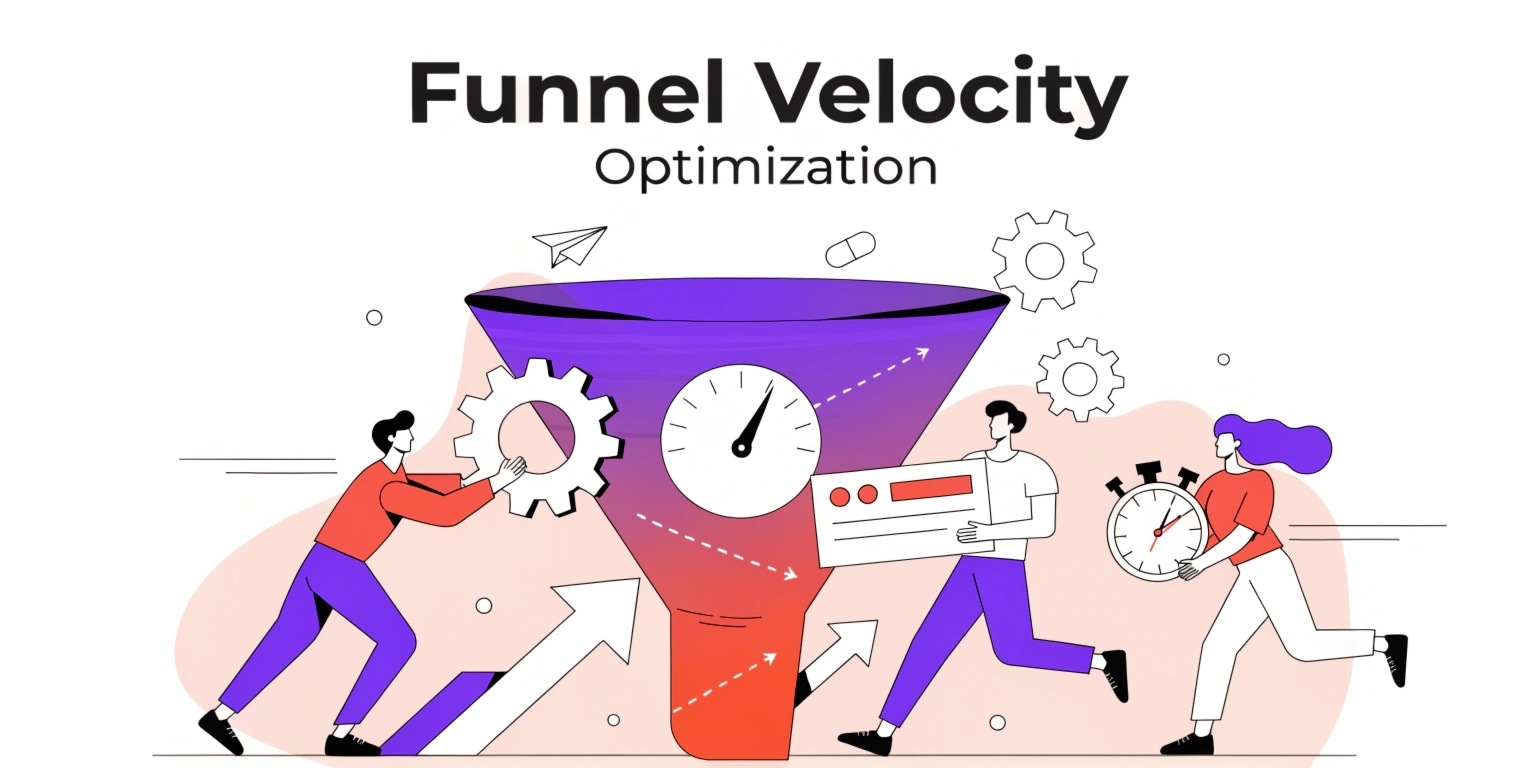
Funnel Velocity Optimization refers to improving the speed and efficiency at which prospects move through different stages of the sales funnel, from initial awareness to final conversion.
The faster high-quality leads progress through the funnel, the faster businesses can generate revenue.
However, many organizations experience:
- Slow lead progression
- Long sales cycles
- Low conversion rates
- Poor follow-up systems
- Funnel bottlenecks
- Misaligned marketing and sales teams
These inefficiencies reduce revenue potential and increase customer acquisition costs.
By optimizing funnel velocity, businesses can accelerate decision-making, improve customer experiences, and increase overall sales efficiency.
What is Funnel Velocity?
Funnel velocity measures how quickly leads move through the sales and marketing funnel.
It combines multiple factors such as:
- Number of leads
- Conversion rates
- Average deal value
- Sales cycle length
A simplified sales velocity formula is:
The formula highlights an important business principle:
- Faster deal movement improves revenue generation.
Improving velocity means reducing friction across the buyer journey.
Why Funnel Velocity Matters
Modern buyers expect:
- Faster responses
- Personalized communication
- Seamless experiences
- Efficient onboarding
Slow sales processes can cause:
- Lost opportunities
- Reduced customer trust
- Higher churn risk
- Lower conversion rates
Funnel velocity optimization helps businesses:
- Close deals faster
- Improve sales productivity
- Increase revenue predictability
- Reduce operational inefficiencies
For SaaS and IT companies with recurring revenue models, accelerating funnel velocity significantly impacts long-term growth.
Understanding Funnel Stages
Most sales funnels contain several stages:
- Awareness
- Interest
- Consideration
- Evaluation
- Decision
- Conversion
Each stage introduces potential delays or drop-off points.
Common funnel bottlenecks include:
- Poor lead qualification
- Delayed follow-ups
- Complicated onboarding
- Weak nurturing campaigns
- Unclear value propositions
Optimizing velocity requires identifying and improving these friction points.
Lead Qualification and Funnel Speed
One of the biggest causes of slow funnels is poor lead qualification.
Sales teams often waste time pursuing low-quality prospects with:
- Limited budgets
- Weak buying intent
- No decision-making authority
Effective qualification frameworks such as:
- BANT (Budget, Authority, Need, Timeline)
- MEDDIC
- CHAMP
help prioritize high-intent leads.
Better lead qualification improves:
- Sales efficiency
- Conversion quality
- Funnel progression speed
Importance of Response Time
Response speed significantly impacts conversion rates.
Studies consistently show that faster responses improve:
- Customer engagement
- Meeting bookings
- Sales conversions
Delays reduce prospect interest and increase the chances of losing opportunities to competitors.
Businesses increasingly use:
- AI chatbots
- Automated workflows
- CRM notifications
- Real-time lead routing
to accelerate response times.
Personalization and Funnel Optimization
Modern buyers expect personalized experiences throughout the customer journey.
Generic communication slows conversion because it fails to address specific customer pain points.
Personalized outreach improves:
- Engagement rates
- Trust building
- Decision-making speed
Effective personalization may include:
- Industry-specific messaging
- Role-based communication
- Behavioral targeting
- Customized product demonstrations
Personalized experiences reduce friction during the sales process.
Role of Marketing Automation
Marketing automation plays a major role in funnel velocity optimization.
Automation platforms help businesses:
- Nurture leads automatically
- Score prospects intelligently
- Trigger follow-up workflows
- Deliver targeted content
- Improve segmentation
Popular platforms include:
- HubSpot
- Salesforce
- Marketo
Automation reduces manual delays and improves funnel consistency.
Data Analytics and Funnel Visibility
Analytics are critical for identifying funnel inefficiencies.
Businesses should track:
- Lead-to-opportunity conversion rates
- Average sales cycle duration
- Funnel drop-off rates
- Customer acquisition costs
- Revenue attribution
Data visibility helps organizations identify:
- Bottlenecks
- Delayed stages
- Underperforming channels
- Weak messaging strategies
Continuous analysis supports long-term funnel optimization.
AI and Predictive Funnel Optimization
Artificial intelligence is increasingly transforming sales funnel management.
AI-powered systems can:
- Predict lead conversion probability
- Prioritize high-value prospects
- Automate outreach timing
- Analyze customer intent
- Recommend next actions
AI improves decision-making and operational efficiency.
Modern revenue teams increasingly rely on predictive analytics to accelerate funnel movement.
Customer Experience and Funnel Speed
Customer experience directly impacts funnel velocity.
Complicated processes create friction.
Common conversion obstacles include:
- Confusing pricing structures
- Long onboarding procedures
- Complex demos
- Delayed approvals
- Poor communication
Simplifying customer interactions improves:
- Decision speed
- Customer satisfaction
- Conversion rates
Businesses that create smooth buyer journeys typically achieve stronger funnel performance.
Sales and Marketing Alignment
Misalignment between marketing and sales teams often slows the funnel.
Problems may include:
- Poor lead handoffs
- Inconsistent messaging
- Conflicting goals
- Inaccurate lead scoring
Revenue operations (RevOps) frameworks increasingly help organizations align teams around shared performance goals.
Aligned teams improve:
- Lead quality
- Communication consistency
- Pipeline visibility
- Revenue forecasting
Funnel Velocity in SaaS Businesses
SaaS companies depend heavily on:
- Recurring revenue
- Subscription growth
- Customer retention
Long sales cycles can significantly delay revenue realization.
Funnel optimization helps SaaS businesses:
- Reduce acquisition costs
- Improve onboarding speed
- Accelerate time-to-value
- Increase expansion opportunities
Faster customer activation often improves retention and lifetime value.
Common Funnel Velocity Challenges
Complex Decision-Making
Enterprise sales often involve multiple stakeholders.
Long Approval Processes
Procurement and compliance delays slow conversions.
Weak Follow-Up Systems
Inconsistent communication reduces engagement.
Poor CRM Management
Disorganized data reduces visibility and efficiency.
Lack of Automation
Manual workflows create unnecessary delays.
Businesses must continuously optimize operational processes to maintain competitive funnel performance.
Best Practices for Funnel Velocity Optimization
Improve Lead Qualification
Focus on high-intent prospects.
Automate Repetitive Processes
Reduce manual operational delays.
Shorten Response Times
Engage leads quickly.
Optimize Customer Journeys
Simplify interactions and onboarding.
Use Predictive Analytics
Leverage AI-driven insights for smarter prioritization.
Align Revenue Teams
Ensure consistent communication and shared goals.
Future of Funnel Velocity Optimization
The future of funnel optimization will likely include:
- AI-powered revenue intelligence
- Autonomous sales workflows
- Real-time customer intent analysis
- Hyper-personalized engagement
- Predictive conversion forecasting
As digital competition increases, businesses that improve sales efficiency and customer experiences will gain significant advantages.
Conclusion
Funnel Velocity Optimization is becoming a critical growth strategy for modern IT companies, SaaS businesses, and B2B organizations. By improving how quickly and efficiently leads move through the customer journey, businesses can accelerate revenue generation, improve customer experiences, and reduce operational inefficiencies.
Organizations that combine automation, analytics, AI, personalization, and strong sales alignment will build faster, smarter, and more scalable revenue systems in the evolving digital economy.