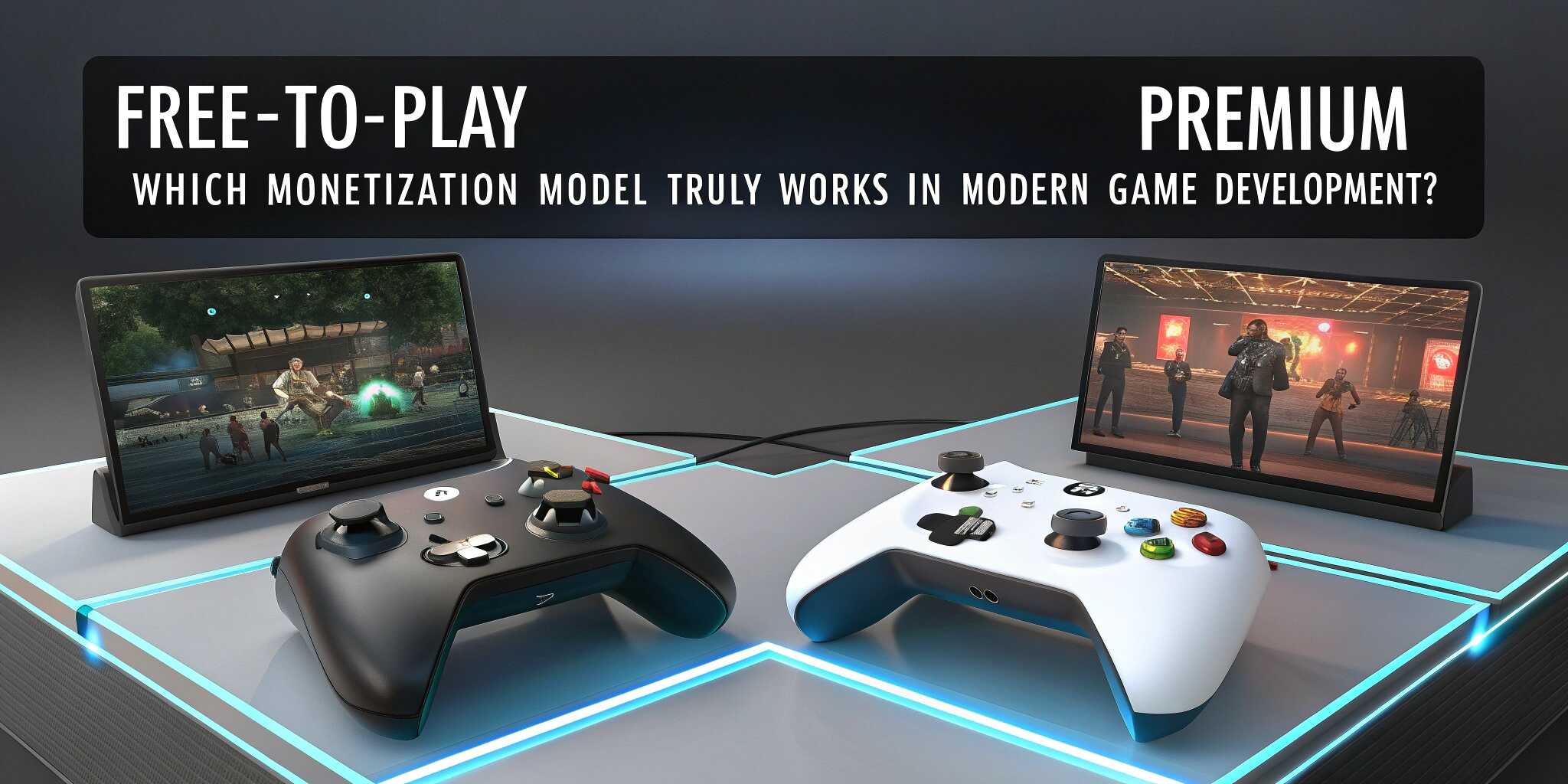
Monetization defines not only how a game earns money, but also how it shapes player behavior, retention, and long-term community health. Today, the debate between Free-to-Play (F2P) and Premium pricing remains at the forefront of game development strategy. Both models have seen tremendous success—titles like Genshin Impact, Fortnite, and Candy Crush dominate the F2P space, while premium games like Elden Ring, Minecraft, and The Witcher 3 continue to prove that players are still willing to pay upfront for quality. Yet the question persists: which model truly works best?
To answer this, developers need to look beyond surface-level trends and understand how psychological design, market positioning, content cadence, and long-term sustainability contribute to a monetization model’s success. In this in-depth analysis, we explore the strengths, weaknesses, and ideal use cases of both revenue approaches.
Understanding Free-to-Play: Accessibility + Engagement
Free-to-Play games thrive on one core principle: remove friction at the entry point. By eliminating the cost barrier, developers can reach massive audiences instantly across mobile, PC, and console platforms. This model succeeds particularly well in markets like India, Brazil, China, Southeast Asia, and Latin America, where players prefer free entry but are willing to spend over time.
F2P relies on a funnel-based strategy. Millions may download the game, but only 2–5% become paying users. These "whales"—players willing to spend heavily—often subsidize the majority of revenue. Although controversial, this structure has shaped the design of most modern mobile and online games.
To succeed, F2P games must maintain long-term player engagement. This often requires constant updates, seasonal events, time-limited rewards, progression systems, and a well-balanced economy. Games like Fortnite or Clash of Clans thrive because they introduce new content regularly, keeping players invested for years.
However, the model also comes with challenges. Developers must ensure that microtransactions feel optional rather than exploitative. When a game is perceived as "pay-to-win," communities quickly lose trust—and retention drops dramatically. Balancing fairness with monetization is the tightrope every F2P studio must walk.
Strengths of Free-to-Play
The F2P model offers numerous advantages, especially for studios seeking reach and long-term engagement:
- Massive Audience Potential
- The zero-cost barrier allows millions to try the game instantly, increasing virality and accelerating growth.
- Higher Lifetime Revenue Possibilities
- Successful F2P titles often earn far more than premium games over time through microtransactions and live-service events.
- Flexible Monetization Streams
- Developers can earn through cosmetics, battle passes, consumables, subscriptions, and season-based content.
- Player-Driven Spending
- Since purchases are optional, developers can encourage players to pay only when they are emotionally invested.
Weaknesses of Free-to-Play
The F2P model also introduces significant risks:
- High Development and Live-Service Cost
- Constant content creation requires a large team and ongoing resources.
- Complex Economy Balancing
- Maintaining fairness while monetizing progression is challenging and crucial for player trust.
- Low Conversion Rate
- Only a small fraction of users ever spend money.
- Risk of “Pay-to-Win” Perception
- One poorly designed update can harm the game's reputation permanently.
Understanding Premium Games: Quality + Upfront Value
Premium games follow a simple transaction: players pay once, and receive a complete, polished experience. This model has defined gaming for decades, especially in PC and console markets. Premium players expect depth, narrative richness, and high production quality in exchange for their investment.
For developers, premium pricing offers predictable earnings, straightforward marketing, and clearer scope management. The game’s success isn’t tied to years of ongoing updates. Popular titles like Hades, Stardew Valley, and Elden Ring prove that players value well-designed, complete experiences enough to pay upfront—even with thousands of free alternatives available.
However, premium gaming comes with its own challenges. Players may hesitate to spend without a demo or strong reviews. Studios must invest heavily in development quality because premium buyers expect polish. And once the game is purchased, generating recurring revenue becomes more difficult unless expansions, DLCs, or sequels are created.
Strengths of Premium Games
- Predictable Revenue Model
- Developers earn directly from each purchase without worrying about conversion rates.
- Simplified Design Philosophy
- No need for in-game monetization systems or complex economies.
- Higher Trust Among Players
- Premium games often feel fair and transparent, with no microtransaction pressure.
- Better Market Fit for Narrative and Indie Games
- Story-driven and artistic titles thrive under this model.
Weaknesses of Premium Games
- Limited Revenue Ceiling
- Earnings plateau once everyone has purchased the game.
- High Marketing Dependence
- A premium game must convince players upfront before they can experience it.
- No Built-In Recurring Income
- Additional content is required to extend revenue.
- Harder to Compete in Mobile Markets
- Most mobile players expect free entry.
Which Monetization Model Works Best?
The answer depends on several factors:
1. Audience and Platform
- Mobile: Free-to-play dominates.
- PC/Console: Premium and hybrid models work well.
- Emerging markets: F2P wins due to affordability.
2. Game Genre
- F2P-friendly genres: Battle royale, RPG, strategy, casual, multiplayer.
- Premium-friendly genres: Narrative adventure, indie creativity, puzzle, platformers.
3. Budget and Team Size
- Large teams: F2P live service development is feasible.
- Indie studios: Premium allows more focus on artistry and polish.
4. Long-Term Vision
- Long-term ecosystems: F2P is superior.
- One-time crafted experiences: Premium excels.
Hybrid Models: A Middle Ground
Many modern games combine both approaches, such as:
- Low-cost entry with cosmetic purchases
- Premium base game with battle passes
- Free demo + paid full version
This hybrid approach captures the strengths of both systems while minimizing weaknesses.