One of the most critical decisions for IT companies—especially service-based firms—is choosing the right pricing model. Whether you're working with startups, enterprises, or international clients, the choice between fixed-price and hourly projects directly impacts profitability, project delivery, and client satisfaction.
While both models have their advantages, selecting the wrong one can lead to scope creep, revenue loss, or strained client relationships. So, which one should your IT company choose?
Understanding Fixed-Price Projects
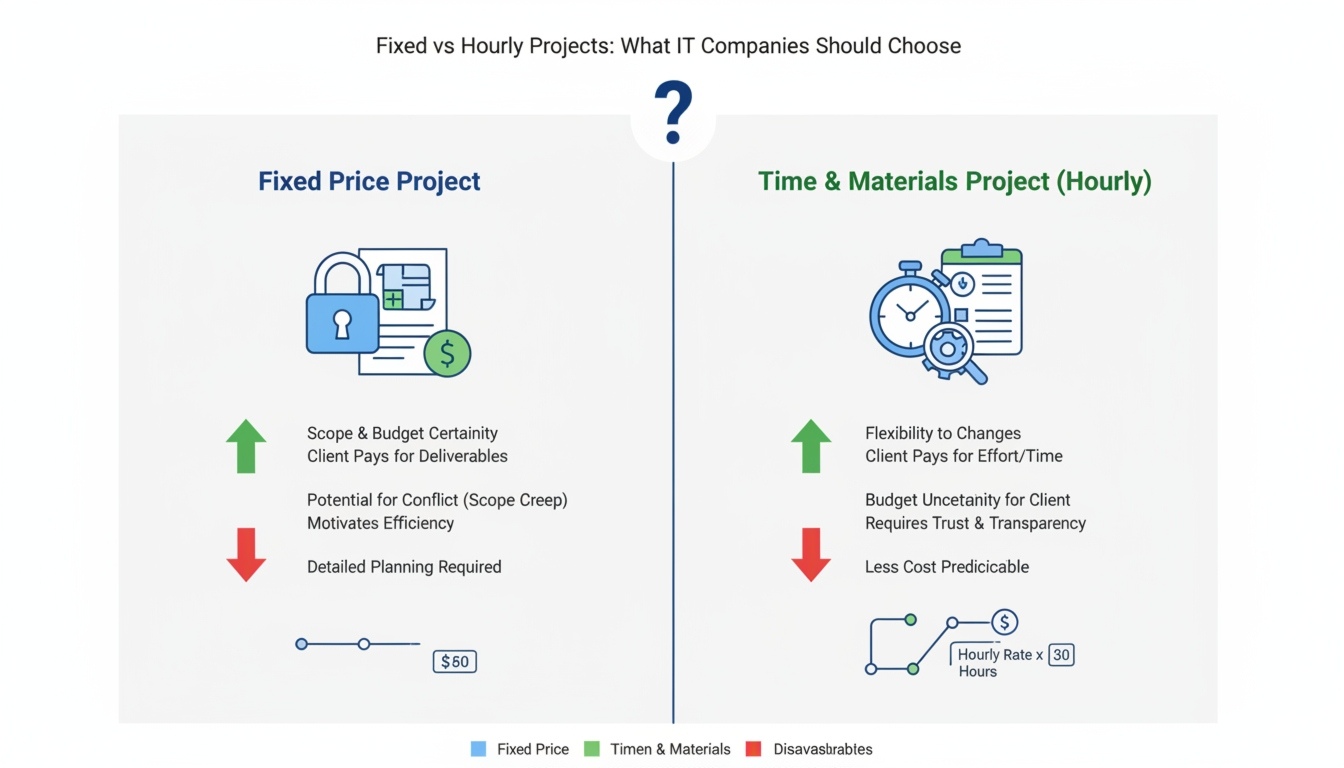
In a fixed-price model, the total cost of the project is agreed upon before development begins. This model works best when the project scope, timeline, and deliverables are clearly defined.
Advantages of Fixed-Price Projects
- Predictable Revenue: You know exactly how much you will earn
- Clear Scope: Defined requirements reduce ambiguity
- Client Confidence: Clients prefer fixed costs for budgeting
- Efficiency Focus: Faster delivery can increase profit margins
Disadvantages of Fixed-Price Projects
- Scope Creep Risk: Clients may request additional features without extra pay
- Estimation Challenges: Inaccurate estimates can reduce profitability
- Limited Flexibility: Changes during development are difficult to manage
Understanding Hourly Projects
In an hourly model, clients are billed based on the time spent on the project. This approach is more flexible and suitable for dynamic or evolving requirements.
Advantages of Hourly Projects
- Flexibility: Easy to accommodate changes in scope
- Fair Compensation: Paid for every hour worked
- Transparency: Clients can track progress and effort
- Lower Risk: No pressure to estimate everything upfront
Disadvantages of Hourly Projects
- Uncertain Budget for Clients: Costs can increase unexpectedly
- Client Trust Issues: Some clients may question time tracking
- Revenue Variability: Income depends on hours worked
- Efficiency Penalty: Faster work may reduce billable hours
Key Differences Between Fixed and Hourly Models
AspectFixed-PriceHourlyScopeClearly definedFlexibleRiskOn companySharedProfit PotentialHigh (if managed well)StableClient PreferenceHighModerateChange HandlingDifficultEasy
When Should IT Companies Choose Fixed-Price Projects?
Fixed-price projects are ideal when:
- Requirements are well-defined and stable
- Project scope is small to medium-sized
- Timeline is predictable
- You have experience in similar projects
Example:
A company developing a standard business website or a mobile app with fixed features can benefit from this model.
When Should IT Companies Choose Hourly Projects?
Hourly projects work best when:
- Requirements are unclear or evolving
- The project involves R&D or innovation
- Long-term collaboration is expected
- Continuous updates or maintenance is required
Example:
Ongoing SaaS product development, UI/UX improvements, or AI-based solutions where scope evolves over time.
Hybrid Approach: The Smart Strategy
Many successful IT companies use a hybrid model, combining both pricing strategies:
- Start with hourly billing during discovery and planning
- Switch to fixed-price for well-defined phases
- Use hourly billing again for maintenance and updates
This approach balances flexibility and predictability, reducing risk while maximizing efficiency.
Factors to Consider Before Choosing
1. Project Complexity
Complex projects with many unknowns are better suited for hourly billing.
2. Client Type
Startups may prefer flexibility, while enterprises often prefer fixed budgets.
3. Team Expertise
Experienced teams can better estimate fixed-price projects.
4. Risk Tolerance
If your company cannot afford losses due to miscalculations, hourly is safer.
5. Business Goals
If your goal is scalability and predictable income, fixed-price may be better.
Common Mistakes to Avoid
- Underestimating fixed-price projects
- Not defining scope clearly
- Poor communication with clients
- Ignoring change request processes
- Choosing a model based only on client preference
Best Practices for IT Companies
- Always document scope and requirements
- Use contracts with clear terms (especially for fixed-price)
- Track time even in fixed projects for internal analysis
- Communicate regularly with clients
- Use project management tools for transparency
Conclusion
There is no one-size-fits-all answer when it comes to choosing between fixed and hourly projects. The right choice depends on your project type, client expectations, and business strategy.
For IT companies aiming to scale and maintain profitability, the smartest approach is to understand both models deeply and apply them strategically. In many cases, a hybrid approach offers the best of both worlds—ensuring flexibility, efficiency, and long-term success.