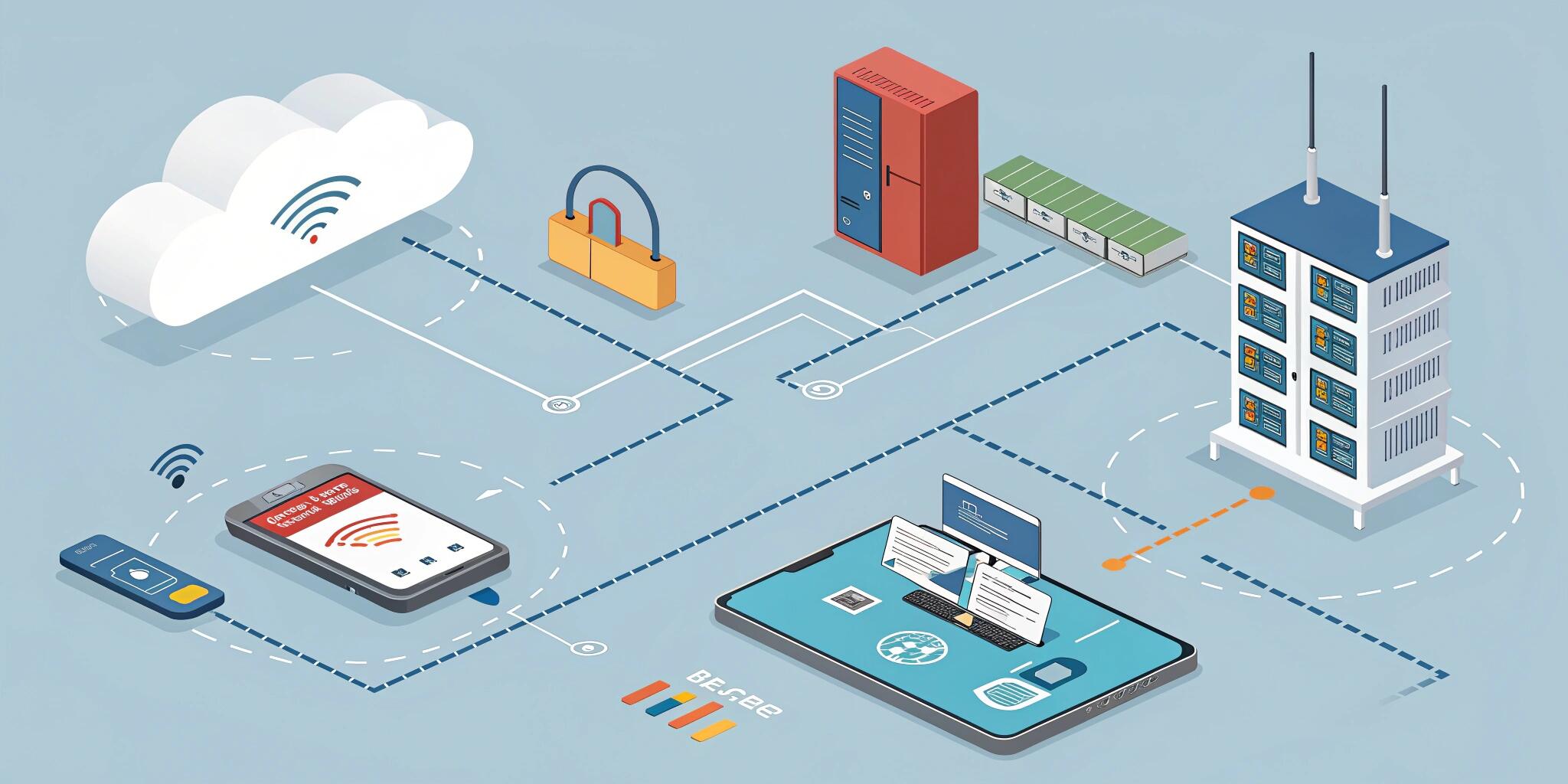
As artificial intelligence (AI) continues to revolutionize industries, one concern remains constant — data privacy. Traditional AI systems often rely on centralized cloud servers that collect and process massive amounts of user data. While this approach ensures powerful model training, it also introduces security and privacy challenges. Enter Federated Learning, a groundbreaking technique that enables AI models to learn across distributed devices — such as smartphones, IoT sensors, or edge servers — without sharing raw data.
What Is Federated Learning?
Federated learning is a decentralized machine learning approach where multiple devices collaboratively train a shared AI model while keeping data localized. Instead of uploading sensitive data to a central server, each device processes information locally and sends only model updates or gradients to a central aggregator. These updates are then combined to improve the global model, ensuring that raw data never leaves the device.
This concept was first popularized by Google in 2017 for mobile applications like predictive text, where AI models learn from millions of users’ typing behaviors without compromising individual privacy. Today, federated learning has expanded beyond mobile devices to power intelligent edge systems in industries such as healthcare, finance, manufacturing, and autonomous vehicles.
How Federated Learning Works
The process begins with a global model distributed to multiple edge devices. Each device trains this model locally using its unique data and computes improvements. These improvements (in the form of model weights) are then sent back to a central server or federated coordinator, which aggregates all updates to refine the model. Once updated, the improved model is redistributed to all devices for the next training cycle.
This iterative process continues until the global model achieves desired accuracy — all while ensuring that sensitive information, such as personal details or private transactions, never leaves the local environment.
Benefits of Federated Learning for Edge Devices
- Enhanced Privacy and Security:
- The most significant advantage of federated learning is its ability to preserve data privacy. Since raw data remains on devices, risks related to data breaches, leaks, or unauthorized access are greatly minimized.
- Reduced Latency:
- By processing data locally, federated learning reduces dependence on cloud servers. This results in faster response times, making it ideal for applications that require real-time decision-making, such as healthcare diagnostics or autonomous navigation.
- Efficient Bandwidth Usage:
- Federated learning transmits only model parameters instead of massive datasets, significantly reducing bandwidth requirements — a crucial benefit in large-scale IoT environments.
- Personalized AI Models:
- Each device can adapt the global model to its local context, creating a balance between collective intelligence and personalized performance. This means better user experiences in applications like virtual assistants or recommendation systems.
- Regulatory Compliance:
- In industries bound by data protection laws such as GDPR or HIPAA, federated learning enables organizations to train AI models without violating data residency or consent regulations.
Challenges in Federated Learning Implementation
Despite its promise, federated learning comes with certain challenges. Data heterogeneity is one — since each device collects data differently, the model may face difficulties achieving uniform accuracy. Device resource limitations such as low memory or processing power can also hinder local training performance. Furthermore, ensuring secure aggregation of updates without manipulation or bias remains a critical concern.
Researchers are addressing these issues through innovations such as federated averaging, secure multi-party computation (SMPC), and differential privacy, which add encryption and anonymization layers to ensure model integrity and confidentiality.
Real-World Applications of Federated Learning
- Healthcare:
- Hospitals can collaborate to train AI models for disease detection or patient monitoring without sharing patient records. This allows better diagnostics while complying with privacy laws.
- Finance:
- Banks and financial institutions use federated learning to detect fraud by analyzing transaction patterns locally, preventing sensitive data exposure.
- Smart Devices and IoT:
- Smart home systems, wearable devices, and connected vehicles benefit from federated learning by continuously improving without centralized data storage, enabling adaptive and intelligent user experiences.
- Telecommunications:
- Telecom companies leverage federated learning to optimize network performance by analyzing user data distributed across millions of devices securely.
The Future of Federated Learning in Edge AI
As the number of connected devices continues to grow, federated learning will become the foundation for privacy-first AI systems. With advancements in TinyML, Edge AI, and 5G, federated learning will enable seamless collaboration among devices, ensuring continuous learning and real-time intelligence.
In the coming years, we’ll see hybrid AI architectures where federated learning works alongside decentralized technologies like blockchain to enhance transparency and trust in data exchange.
Conclusion
Federated learning is more than a technical innovation — it represents a shift in how we think about AI and data. By bringing computation closer to the user and prioritizing privacy, it enables organizations to leverage the full potential of AI without compromising trust. As edge computing and AI converge, federated learning will play a vital role in shaping the next generation of secure, scalable, and privacy-preserving intelligent systems.