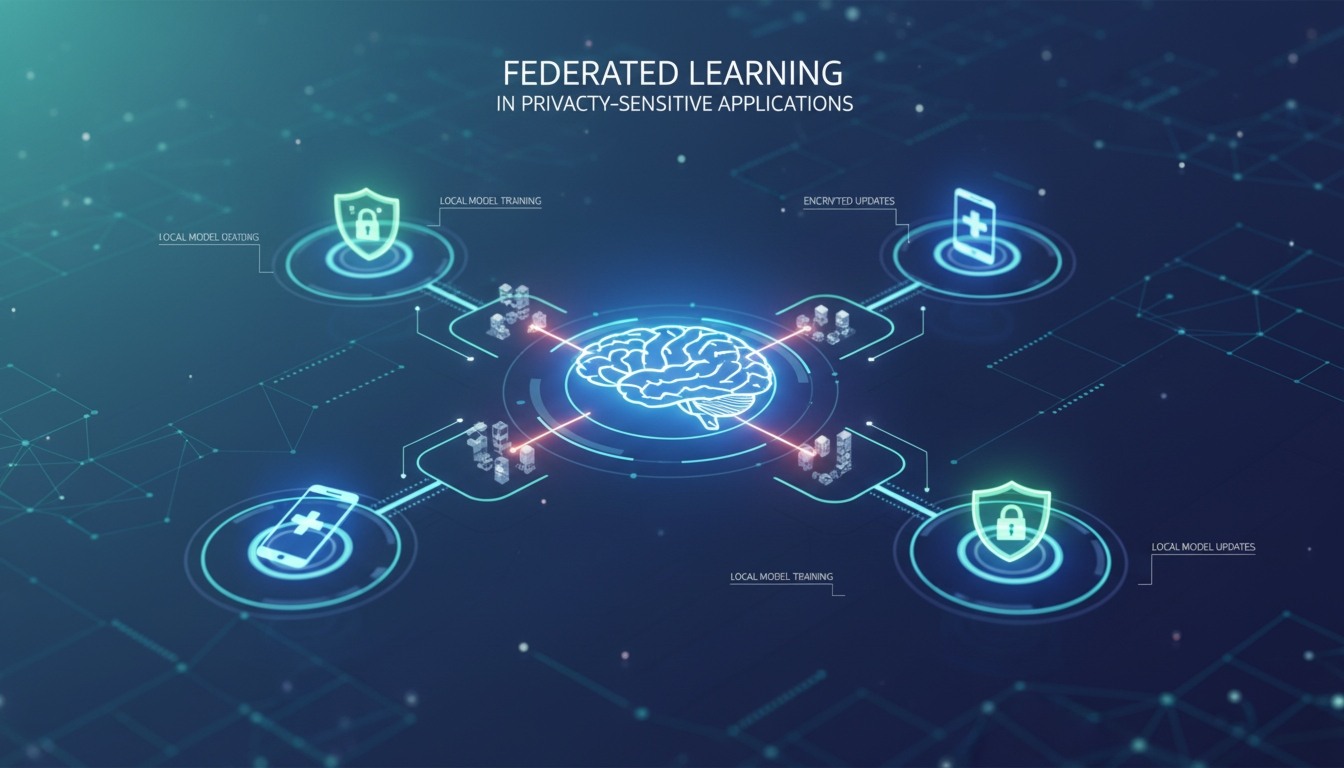
As artificial intelligence continues to reshape industries, concerns around data privacy and security have become more critical than ever. Traditional machine learning models rely on centralized data collection, which often raises serious privacy risks. This is where Federated Learning emerges as a transformative solution.
Federated learning is a decentralized approach to training machine learning models where data remains on local devices instead of being sent to a central server. This paradigm is especially valuable in privacy-sensitive applications such as healthcare, finance, and mobile ecosystems.
What is Federated Learning?
Federated learning allows multiple devices or organizations to collaboratively train a shared model without exchanging raw data. Instead of uploading sensitive information, each participant trains the model locally and only shares model updates (like gradients or weights).
These updates are then aggregated to improve the global model. This ensures that personal or sensitive data never leaves its original location, significantly enhancing privacy.
Why Privacy Matters in Modern AI
With increasing data breaches and strict regulations like GDPR, organizations are under pressure to adopt privacy-first technologies. Centralized data storage creates vulnerabilities, making it a prime target for cyberattacks.
Federated learning addresses these issues by:
- Minimizing data exposure
- Reducing the risk of data leaks
- Ensuring compliance with privacy laws
- Building user trust
In a world where data is the new currency, protecting it is no longer optional—it’s essential.
Key Benefits of Federated Learning
1. Enhanced Data Privacy
Sensitive data remains on the user’s device, eliminating the need for data transfer and reducing privacy risks.
2. Improved Security
Since data is not centralized, the attack surface is significantly smaller, making systems more secure.
3. Regulatory Compliance
Federated learning aligns well with global data protection regulations, making it easier for companies to comply.
4. Scalability
With the rise of edge devices, federated learning enables scalable AI training across millions of devices.
Real-World Applications
Healthcare
In healthcare, patient data is highly sensitive. Federated learning allows hospitals to collaborate on AI models without sharing patient records. This can improve diagnostics, treatment recommendations, and medical research.
Finance
Financial institutions can use federated learning to detect fraud patterns without exposing customer data. This ensures both security and compliance.
Mobile Applications
Smartphones generate vast amounts of personal data. Federated learning is widely used in improving keyboard predictions, voice assistants, and personalized recommendations without compromising user privacy.
Companies like Google have already implemented federated learning in their mobile ecosystems, particularly for improving on-device AI features.
Challenges of Federated Learning
Despite its advantages, federated learning is not without challenges:
- Communication Overhead: Frequent model updates between devices and servers can increase network load.
- Data Heterogeneity: Data across devices may vary significantly, affecting model performance.
- System Complexity: Managing distributed systems can be technically challenging.
- Security Risks: While data is not shared, model updates can still be vulnerable to attacks if not properly secured.
Addressing these challenges requires advanced techniques like secure aggregation, differential privacy, and robust system design.
Federated Learning vs Traditional Machine Learning
AspectTraditional MLFederated LearningData LocationCentralizedDecentralizedPrivacyLowHighSecurity RiskHigherLowerScalabilityLimitedHigh
This comparison highlights why federated learning is gaining traction, especially in industries dealing with sensitive data.
Future of Federated Learning
As AI adoption grows, federated learning is expected to become a cornerstone of privacy-preserving technologies. With advancements in edge computing, 5G, and secure AI protocols, its implementation will become more efficient and widespread.
Organizations that prioritize privacy will have a competitive advantage, and federated learning provides the perfect framework to achieve that balance between innovation and responsibility.
Conclusion
Federated learning represents a paradigm shift in how machine learning models are trained and deployed. By keeping data localized and focusing on collaborative intelligence, it addresses one of the biggest challenges in AI—privacy.
For industries handling sensitive information, adopting federated learning is not just a technological upgrade—it’s a strategic necessity. As data privacy continues to shape the future of technology, federated learning stands out as a powerful enabler of secure, scalable, and ethical AI.