Modern video games require complex interactions among game systems—player actions, physics collisions, AI behaviors, UI updates, audio triggers, and network events must operate simultaneously in a synchronized manner. Traditional programming models that rely on continuous checking (polling) can quickly become inefficient and difficult to scale. Event-driven programming solves this challenge by making gameplay reactive: instead of constantly asking whether something has changed, systems respond only when events occur.
What Is Event-Driven Programming?
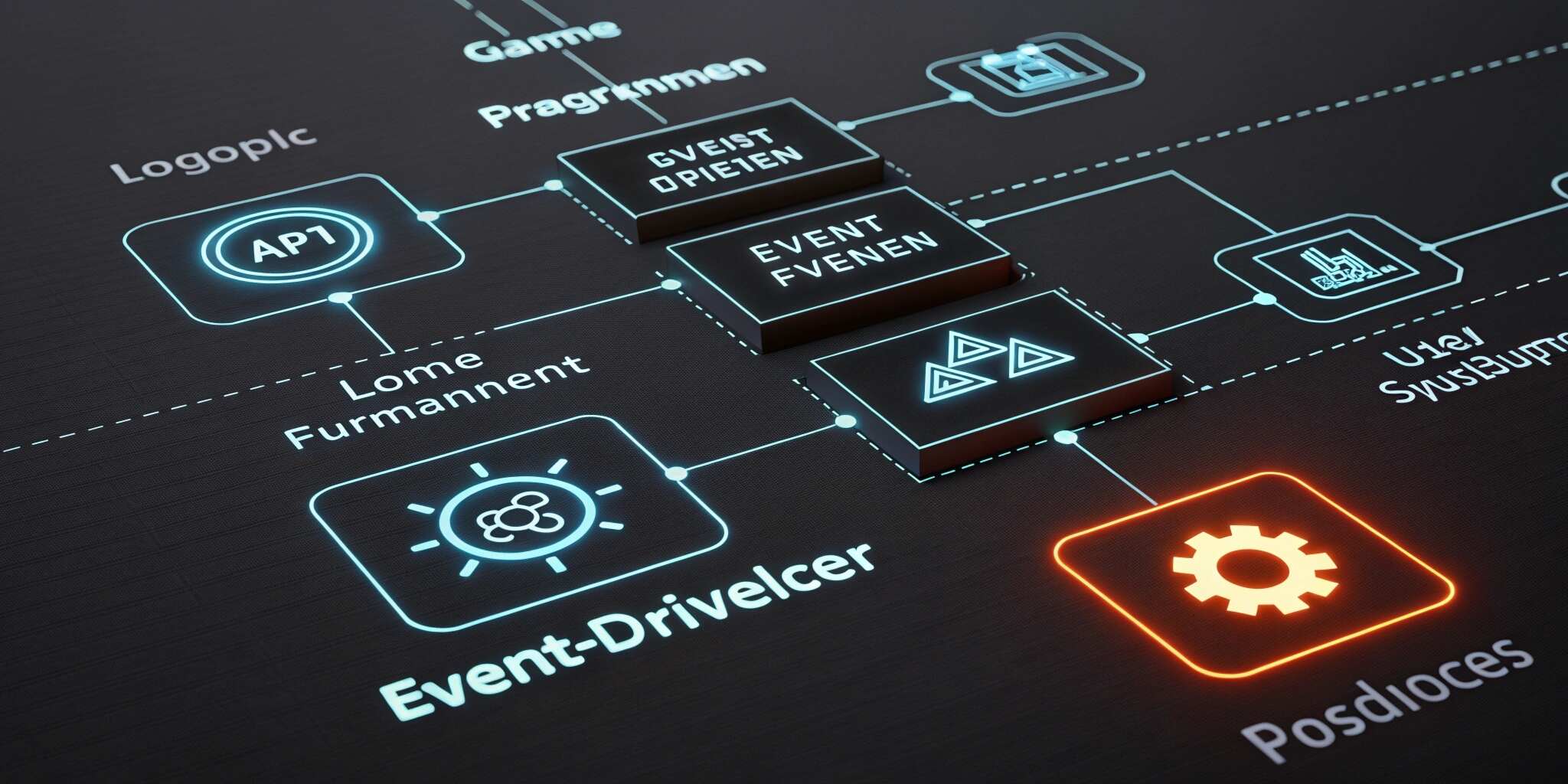
Event-driven programming is a design paradigm where the flow of execution is determined by events—such as player input, object collisions, UI interaction, or AI triggers. Events are broadcast by senders and received by listeners that react accordingly. Rather than tight coupling between systems, communication happens through a messaging pipeline.
For example:
- A player enters a trigger zone → enemy AI becomes alert
- A button is clicked → UI panel opens
- A bullet hits a surface → sound, particles, and damage events fire
These interactions occur without systems needing direct knowledge of each other.
Why Event-Driven Architecture Matters in Games
Games must handle thousands of interactions every second. Constantly checking for state changes wastes processing time. Event-driven architecture improves performance and scalability through:
1. Reduced CPU Processing
Systems act only when something happens—eliminating expensive loop-based checking.
2. Decoupled System Design
Listeners respond to events without direct dependencies. This makes code cleaner, easier to maintain, and more flexible.
3. Better Scalability for Complex Worlds
Open-world games require systems that can interact without breaking each other. Event-driven models allow independent expansion of mechanics.
4. Improved Multiplayer Synchronization
Events map naturally to network messages—e.g., shooting, ability activation, or inventory updates.
Core Components of Event-Driven Game Architecture
Event-driven systems typically rely on three main building blocks:
Events
Signals indicating that something has happened such as:
- OnPlayerJump
- OnEnemySpawn
- OnObjectDestroyed
- OnHealthChanged
Dispatchers / Event Emitters
Objects or systems that send events to listeners.
Listeners / Event Handlers
Methods or components that subscribe and respond to events.
Games may use event queues to store and process events without blocking the game loop.
Real Game Use Cases
Event-driven models are widely used in gameplay and engine systems, including:
Player and input systems
Keyboard, mouse, controller, and touchscreen actions dispatch events rather than continuously checking state.
AI Behavior
AI agents react to stimuli such as noise, vision, or damage rather than constantly scanning every frame.
Physics and Collisions
Collision callbacks trigger animation changes, sound effects, hit detection, and score updates.
UI and HUD Updates
Health bars update only when health changes—not every frame.
Quest and mission systems
Progress is driven by events such as entering locations or collecting items.
Multiplayer Networking
Each event maps cleanly to a network packet, simplifying replication.
Advantages for Game Performance
Event-driven programming reduces unnecessary computation by eliminating polling loops. This is especially critical for:
- Mobile devices with limited resources
- Massive multiplayer environments
- Real-time physics and simulations
Systems like Unity’s EventSystem, Unreal Engine Delegates, Gameplay Ability System, Blueprint Events and custom messaging frameworks all rely on event-driven thinking.
Challenges and Considerations
While event-driven design is powerful, developers must manage challenges such as:
- Debugging complex asynchronous flows
- Avoiding event storms or memory leaks from unused listeners
- Ensuring proper event ordering in critical systems
- Preventing circular event triggering
Structured event logging and profiling tools become essential in large projects.
Future of Event-Driven Game Architecture
As games grow larger, event-driven systems will integrate further with:
- Multithreaded job systems
- Reactive AI driven by machine learning
- Event-driven cloud gaming and server scaling
- Procedural event-based storytelling systems
The trend toward dynamic, evolving game worlds makes event-driven programming indispensable.