Main Content
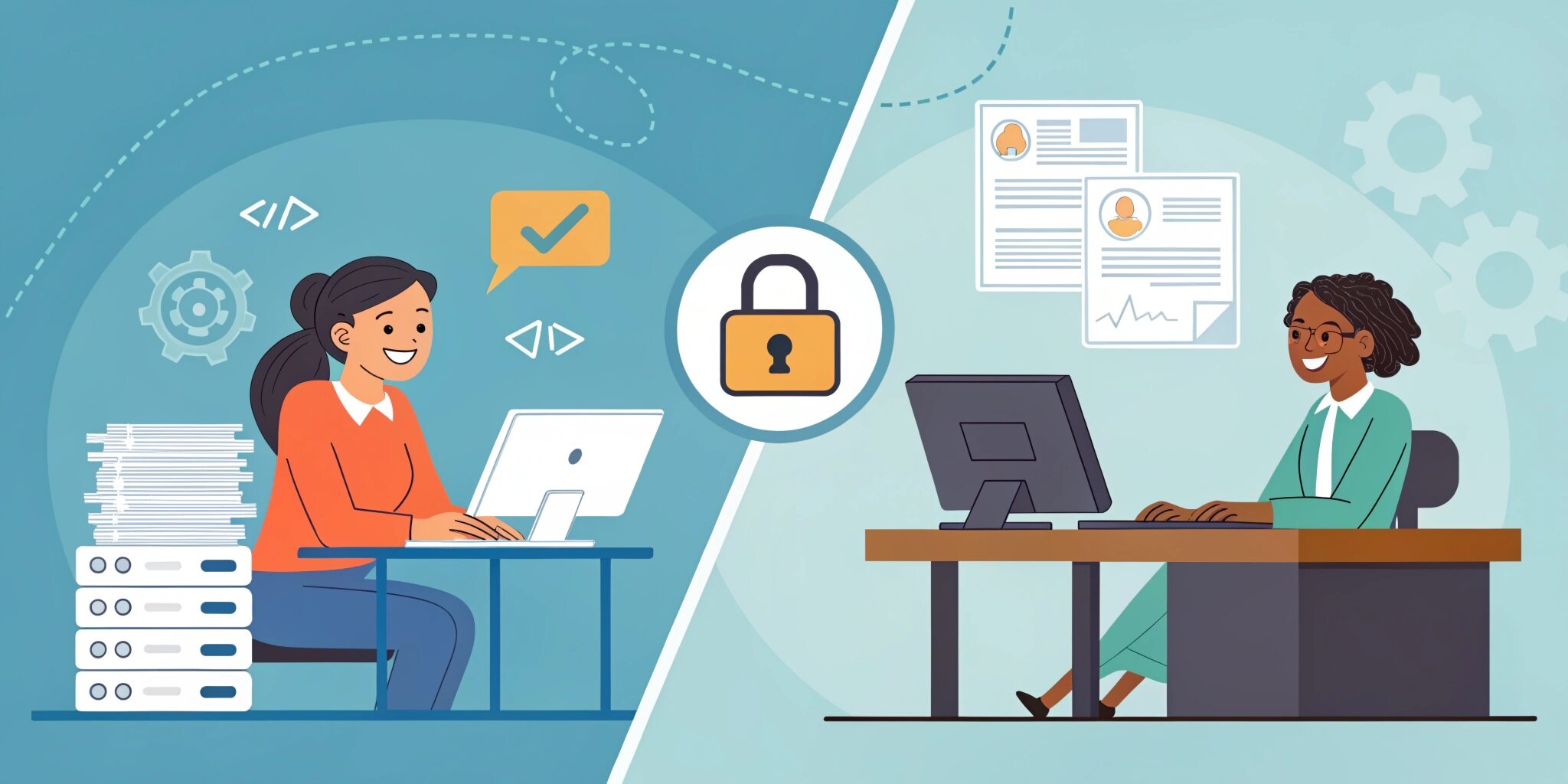
In today’s digital-first workplace, cybersecurity is no longer just a technical challenge—it’s a human one. As organizations adopt cloud platforms, remote work models, and interconnected tools, employees interact with security systems every day. This has sparked a critical debate: usability vs security. When security is too strict, productivity suffers. When usability is prioritized without safeguards, risk increases. The solution lies in an employee-centric security perspective.
The Traditional Conflict: Security vs Usability
Historically, cybersecurity strategies focused on restricting access, enforcing complex passwords, and locking down systems. While these measures reduced certain risks, they often frustrated employees. Repeated authentication prompts, rigid access controls, and unintuitive systems led to workarounds such as password reuse, unsecured file sharing, or shadow IT usage.
This conflict created a dangerous cycle—employees unintentionally weakened security to get their work done, and IT teams responded by adding even more restrictions.
Why an Employee-Centric Perspective Matters
Employees are not the weakest link; they are the most frequent users of digital systems. An employee-centric approach recognizes that security solutions must align with how people actually work.
When security tools are designed with usability in mind:
- Employees comply more willingly with policies
- Errors and risky behavior decrease
- Productivity and morale improve
- Security teams gain better visibility and control
By viewing employees as partners rather than threats, organizations can strengthen their overall security posture.
Key Principles of Employee-Centric Security
1. Frictionless Authentication
Modern authentication methods such as single sign-on (SSO), biometrics, and adaptive multi-factor authentication (MFA) reduce friction while maintaining strong protection. Instead of forcing employees to remember dozens of passwords, systems authenticate users based on context, behavior, and risk level.
2. Security That Adapts to Context
Context-aware security adjusts controls based on device type, location, and behavior patterns. For example, an employee logging in from a trusted device at the office may face fewer prompts than one accessing sensitive data from a public network.
This balance ensures protection without unnecessary interruptions.
3. Clear and Simple Security Design
Security tools should be intuitive. Confusing alerts or unclear error messages lead to mistakes or ignored warnings. Employee-centric design focuses on clarity—explaining why an action is blocked and how to proceed safely.
4. Education Over Enforcement
Instead of relying solely on strict policies, organizations should invest in ongoing security awareness training. When employees understand the “why” behind security controls, they are more likely to follow best practices and report suspicious activity.
Benefits of Balancing Usability and Security
An employee-centric approach delivers measurable business value:
- Higher Productivity: Employees spend less time navigating obstacles and more time on meaningful work
- Reduced Insider Risk: Fewer workarounds mean fewer accidental security breaches
- Improved Adoption of Security Tools: User-friendly systems are used correctly and consistently
- Stronger Security Culture: Employees feel empowered rather than restricted
Real-World Application in Modern IT Environments
In cloud-based and hybrid workplaces, employees often access systems across multiple devices and locations. Employee-centric security fits naturally into frameworks like Zero Trust, where access is continuously evaluated without disrupting workflows.
By integrating usability into security design, organizations ensure that protection scales alongside digital transformation.
The Future of Security Is Human-Centered
As cyber threats become more sophisticated, organizations cannot rely solely on technology. The human element remains central. Security that ignores employee experience will eventually fail, no matter how advanced it is.
The future belongs to organizations that understand a simple truth: security works best when it works for people.