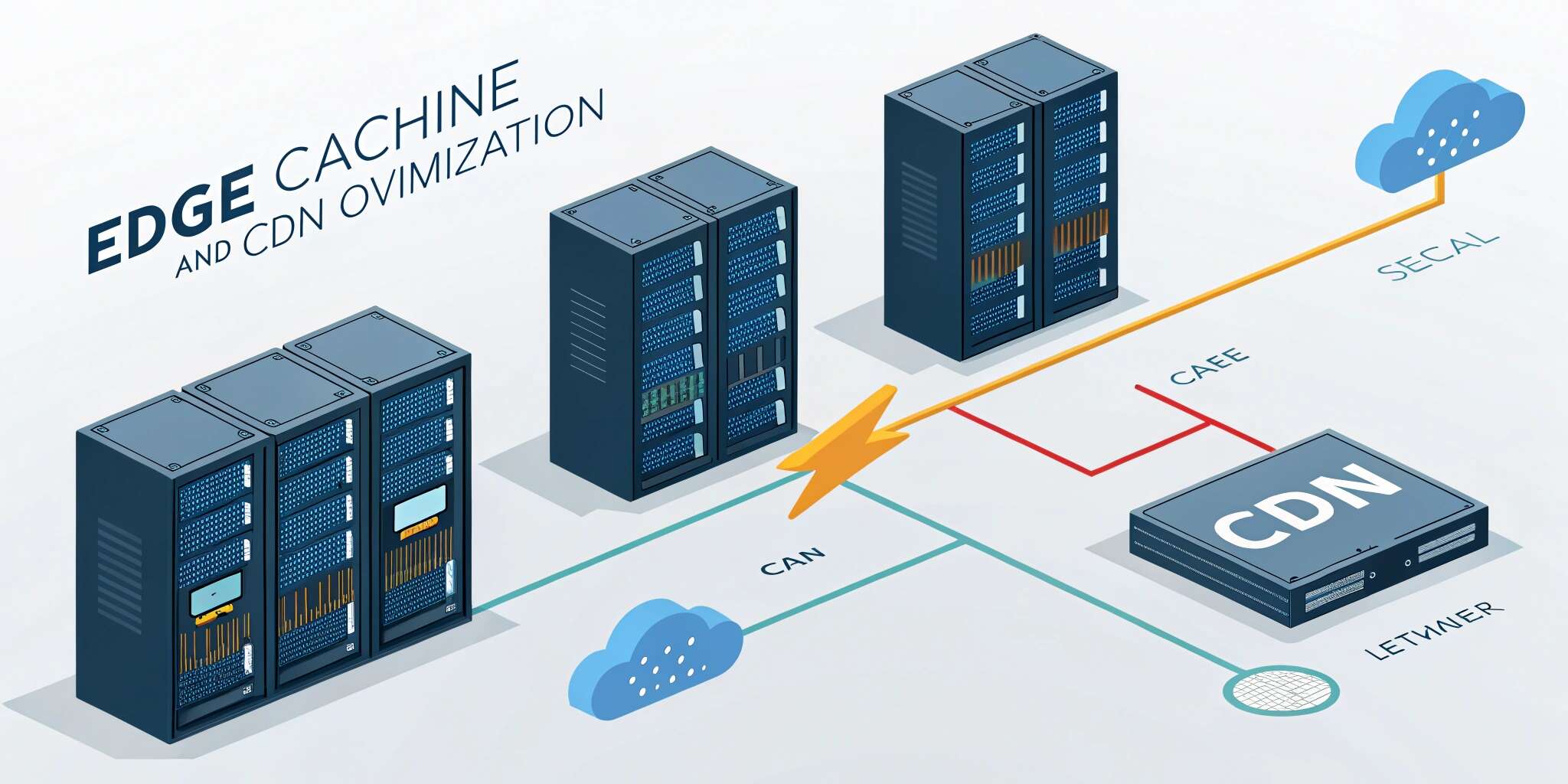
Modern users expect websites and applications to load instantly regardless of location, device, or network speed. As digital experiences grow more interactive and data-heavy, traditional server-based architectures struggle to provide consistent performance. This is where Edge Caching and CDN Optimization become essential. By distributing content closer to users and optimizing how data flows across the network, developers can drastically reduce latency, improve reliability, and deliver a seamless global experience.
What Is Edge Caching?
Edge caching refers to storing copies of static or semi-static assets—HTML, CSS, JavaScript, images, API responses—on edge nodes located geographically closer to end users. Instead of traveling long distances to reach the origin server, the browser retrieves content from the nearest edge location, reducing latency by milliseconds to seconds.
CDNs such as Cloudflare, Akamai, Fastly, AWS CloudFront, and Google CDN power this distributed caching network.
Why Edge Caching Matters
- Reduced Latency:
- Content loads faster as round-trip time (RTT) is minimized.
- Lower Origin Load:
- Fewer requests hit the server, cutting hosting costs and improving stability.
- Better Reliability:
- Even if origins go down, cached versions can keep apps running.
- SEO Advantages:
- Performance is a key ranking factor in modern search algorithms.
- Improved User Experience:
- Faster loading reduces bounce rates and boosts engagement.
Core CDN Caching Strategies
1. Cache-Control Headers
Developers must configure:
- Cache-Control: max-age
- s-maxage
- public or private
- must-revalidate
These rules define how long assets stay cached at the browser and CDN levels.
2. Asset Versioning
Instead of purging frequently, use:
- File hashing (e.g., app.3fd27.js)
- Versioned folders (v1/, v2/)
This ensures the CDN only updates content when versions change, improving consistency.
3. Smart Invalidation
Purge only what’s necessary:
- URL-based purge
- Tag-based purge
- Cache-key segmentation
CDNs like Cloudflare and Fastly allow near-real-time invalidation without impacting unrelated assets.
4. Route & Tiered Caching
Advanced CDNs support:
- Dynamic routing
- Tiered cache hierarchies
- Regional caching layers
These features reduce origin calls and optimize global latency.
Edge Compute: Beyond Simple Caching
CDNs are no longer passive storage layers—they now support edge compute functions like:
- Cloudflare Workers
- Fastly Compute@Edge
- AWS Lambda@Edge
These allow logic to run directly on the edge, such as:
- A/B testing
- Authentication
- Request rewriting
- API response caching
- Localization (language, currency, personalization)
Edge compute eliminates the need to route requests back to the server, improving efficiency.
Performance Metrics to Track
To evaluate CDN performance, developers monitor:
- TTFB (Time to First Byte)
- Cache Hit Ratio (CHR)
- Latency per region
- Bandwidth savings
- Error rates from edge nodes
Higher CHR directly correlates to better performance and reduced server strain.
Best Practices for CDN Optimization
- Enable long-term caching for static assets.
- Use hashed filenames for all static content.
- Configure CDN-level redirects instead of server-side.
- Serve next-gen image formats (WebP, AVIF).
- Cache API responses where possible.
- Use edge functions for request filtering and routing.
- Keep HTML dynamic but cache everything else aggressively.
- Use CDN logs for traffic analysis and performance tuning.
The Future of CDN Optimization
The next wave of performance engineering combines:
- AI-driven routing
- Predictive caching
- Serverless edge logic
- Real-time personalization at the edge
Web experiences will become faster, more context-aware, and increasingly distributed.