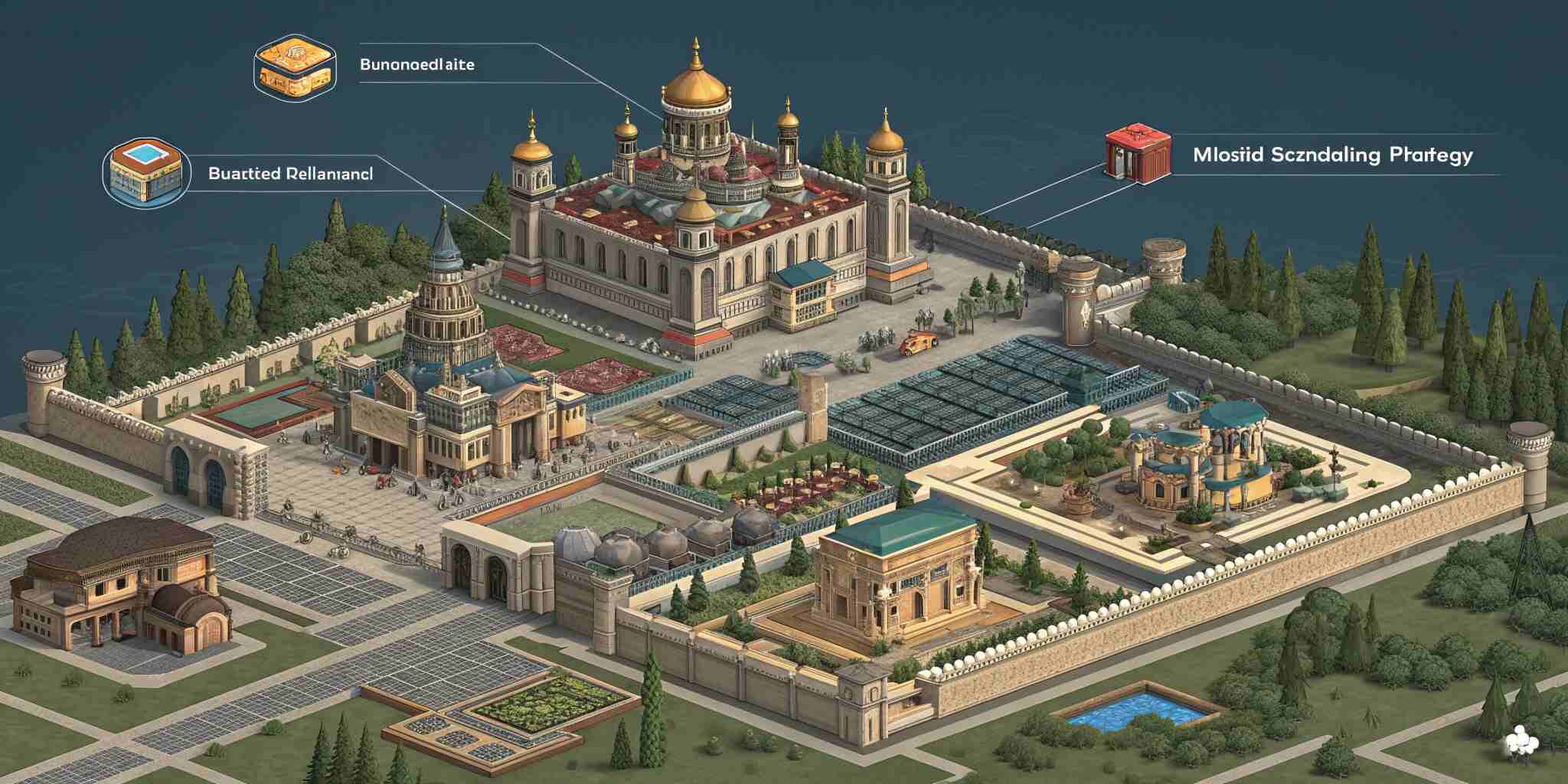
As game worlds grow larger, denser, and more interactive, traditional engine architectures struggle to keep up. Massive simulations, thousands of active entities, and real-time reactive systems need a design that prioritizes performance and scalability over classic object-oriented structures. This shift has given rise to ECS 2.0, a new generation of Entity Component System architecture built on a data-oriented micro-kernel foundation.
ECS 2.0 extends the original goals of ECS—separation of data and behavior for performance—into a more modular, memory-efficient, and parallel-ready structure. The core idea is to treat game logic not as scattered OOP objects but as continuous chunks of raw, cache-friendly data. Instead of large monolithic systems, ECS 2.0 introduces a micro-kernel layer responsible for scheduling, synchronization, and deterministic updates.
The micro-kernel acts as the brain of the simulation. It is intentionally small and efficient, designed only to manage system execution, event dispatching, job distribution, and memory access patterns. By minimizing complexity at the center, ECS 2.0 allows every system around it—AI, physics, rendering, animation, world streaming—to operate independently yet cohesively. This architecture drastically reduces coupling and eliminates bottlenecks typical in monolithic update loops.
One of the most powerful features of ECS 2.0 is its data-oriented memory layout. Entities store components in tightly packed arrays instead of scattered allocations. This ensures predictable cache usage, faster iteration, and simplified multithreading. For large game worlds containing thousands of NPCs, objects, and environmental systems, this optimization leads to dramatic performance improvements.
ECS 2.0 also enhances parallel processing. Each system can automatically run as a job, allowing the engine to take full advantage of multicore hardware. Dependency graphs ensure systems run in correct order while still maximizing concurrent execution. For example, movement, pathfinding, animation updates, and physics steps can run simultaneously, each consuming only the data they require.
Another game-changing aspect is world segmentation and streaming built directly into the ECS structure. Large, persistent worlds—similar to those in open-world RPGs or survival games—need to dynamically load, unload, and simulate entities across vast distances. ECS 2.0 supports hierarchical worlds where local simulations operate independently but communicate efficiently through event pipelines. This design prevents performance drops when players move through heavily populated regions.
Deterministic simulation is another highlight. Micro-kernel ECS ensures that all systems update in predictable patterns, making debugging easier and multiplayer synchronization more reliable. Lockstep simulation, rollback networking, and authoritative servers benefit tremendously from this consistency.
In addition, ECS 2.0 integrates seamlessly with procedural generation systems, which often create and modify large amounts of world data in real time. With fast, data-oriented loops, procedural terrain, AI spawning, environmental rules, and biome simulation can run without stuttering. This is especially important for games that generate worlds dynamically or expand them over long play sessions.
Tooling and debugging also improve under ECS 2.0. Visual inspectors can display component layouts, system timelines, and memory usage in real time, giving developers clearer insights into performance bottlenecks. Because everything exists as linear data instead of deep object hierarchies, introspection becomes far simpler.
Ultimately, ECS 2.0’s micro-kernel architecture enables game worlds that feel alive, seamless, and reactive. It supports higher entity counts, smarter AI, more complex interactions, and smoother frame rates. As more engines adopt data-oriented design—like Unreal’s Mass, Unity’s DOTS, and custom AAA engines—ECS 2.0 is becoming the new standard for building next-generation open worlds.
In summary, ECS 2.0 represents a major leap forward in performance-oriented engine design. By embracing data-oriented architectures, micro-kernel scheduling, scalable simulation patterns, and parallel-ready systems, developers can build richer, more dynamic, and more expansive game universes than ever before.