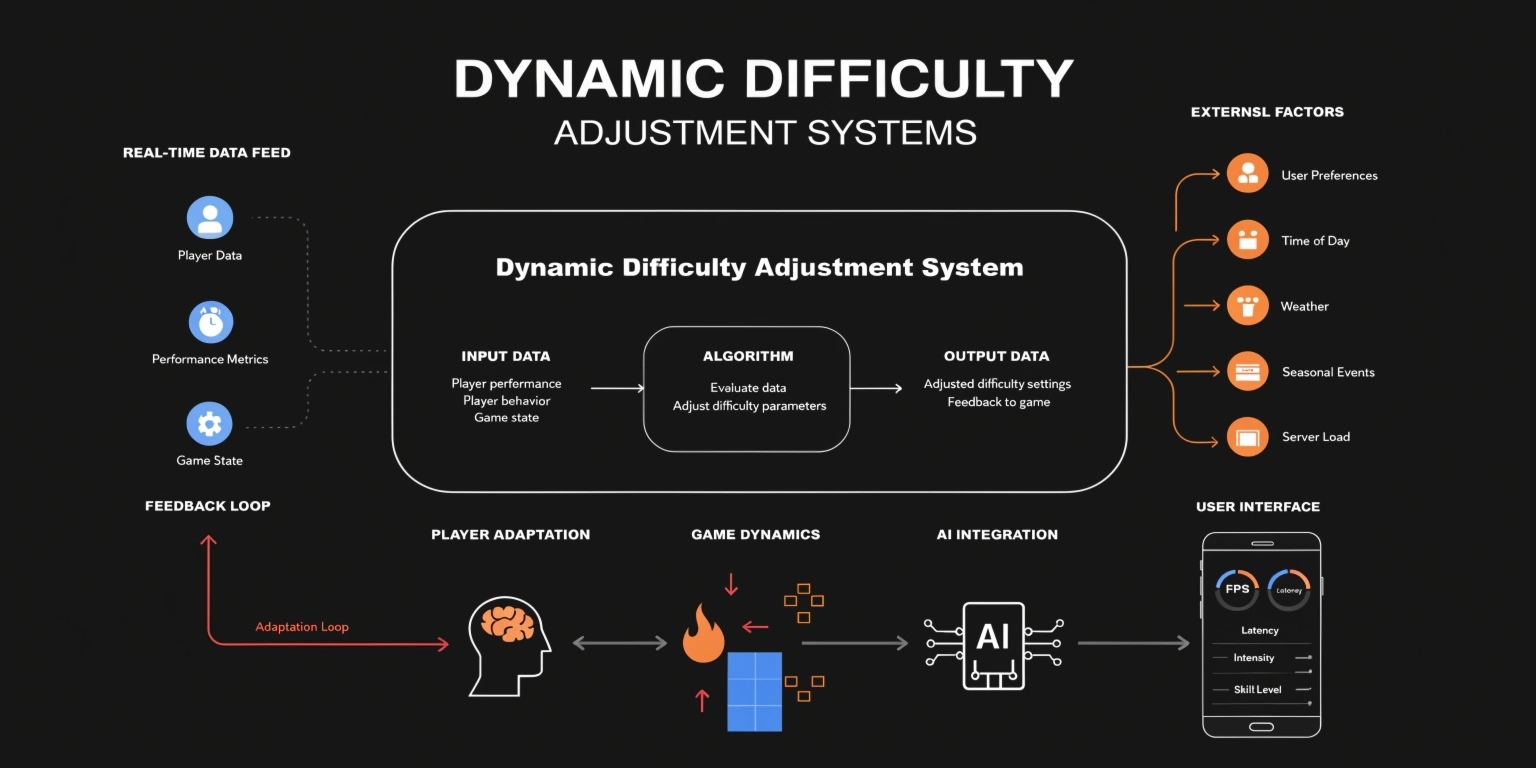
In modern game development, delivering a consistently engaging experience across a diverse player base is a major challenge. Players vary widely in skill, experience, and playstyle, making static difficulty levels often insufficient. This is where Dynamic Difficulty Adjustment (DDA) systems come into play—offering real-time adaptation of game difficulty to match individual player performance.
What is Dynamic Difficulty Adjustment (DDA)?
Dynamic Difficulty Adjustment refers to systems that automatically modify a game’s difficulty based on the player’s behavior, performance, or preferences. Unlike traditional difficulty settings (easy, medium, hard), DDA continuously evolves, ensuring that players remain challenged without feeling overwhelmed or bored.
The ultimate goal is to maintain a state often referred to as “flow”—a balance between challenge and skill that keeps players fully immersed.
Why DDA Matters in Game Development
A poorly balanced game can lead to frustration or disengagement. If a game is too difficult, players may quit early; if it’s too easy, they may lose interest. DDA systems address this by:
- Enhancing player retention
- Increasing accessibility for casual players
- Providing challenge for experienced gamers
- Personalizing gameplay experiences
- Improving overall satisfaction
In competitive markets, player experience directly impacts a game’s success, making DDA a valuable design strategy.
Core Techniques in DDA Systems
1. Performance-Based Adjustment
The system monitors metrics such as player health, score, accuracy, or completion time. Based on these, it adjusts parameters like enemy strength, spawn rates, or resource availability.
2. Behavior Analysis
Advanced DDA systems analyze player behavior patterns—such as exploration habits or combat style—to tailor the experience more precisely.
3. AI-Driven Adaptation
Machine learning models can predict player skill levels and adjust difficulty dynamically. These systems become more accurate over time as they learn from player data.
4. Rule-Based Systems
Simpler DDA implementations rely on predefined rules. For example, if a player fails a level multiple times, the game may reduce enemy difficulty or provide additional hints.
5. Procedural Content Adjustment
In procedurally generated games, DDA can influence level design, enemy placement, and rewards to match player capability.
Key Components of a DDA System
To implement effective DDA, developers need to focus on several components:
- Data Collection: Gathering real-time player data
- Evaluation Metrics: Defining what determines player skill or struggle
- Adaptation Logic: Rules or algorithms that adjust difficulty
- Feedback Loop: Continuously refining adjustments based on outcomes
Balancing these elements ensures that changes feel natural rather than forced.
Challenges in Implementing DDA
While DDA offers many benefits, it also comes with challenges:
1. Maintaining Fairness
Players may feel cheated if they notice the game adjusting too obviously. Transparency and subtlety are key.
2. Avoiding Over-Adaptation
Frequent or drastic changes can disrupt gameplay consistency. Adjustments should be gradual and balanced.
3. Data Accuracy
Incorrect interpretation of player data can lead to poor adjustments, negatively impacting the experience.
4. Complexity in Design
Advanced DDA systems require sophisticated algorithms and testing, increasing development time and cost.
Best Practices for Effective DDA
- Keep Adjustments Subtle: Ensure players don’t feel manipulated
- Provide Player Control: Allow manual difficulty settings alongside DDA
- Test Extensively: Use diverse player groups for testing
- Balance Challenge and Reward: Ensure fairness and satisfaction
- Use Hybrid Approaches: Combine rule-based and AI-driven methods
These practices help create a seamless and enjoyable experience.
Real-World Applications
DDA is widely used across various game genres:
- Action Games: Adjust enemy AI and damage levels
- Racing Games: Modify opponent speed and aggression
- Puzzle Games: Provide hints or simplify challenges
- RPGs: Scale enemy levels and rewards
For example, in racing games, opponents may slow down slightly if a player falls behind, keeping the competition engaging without being discouraging.
Future of DDA Systems
The future of DDA lies in deeper integration with AI and player analytics. Emerging trends include:
- Real-time personalization using advanced machine learning
- Cross-platform player profiling
- Emotion-based adaptation using biometric data
- Integration with cloud gaming systems
These innovations will push the boundaries of personalized gaming experiences.
Conclusion
Dynamic Difficulty Adjustment systems are transforming how games are designed and experienced. By adapting to individual player needs, DDA ensures that games remain engaging, challenging, and enjoyable for everyone.
As the gaming industry continues to evolve, mastering DDA will be essential for developers aiming to create immersive and player-centric experiences. When implemented effectively, it not only enhances gameplay but also builds long-term player loyalty.