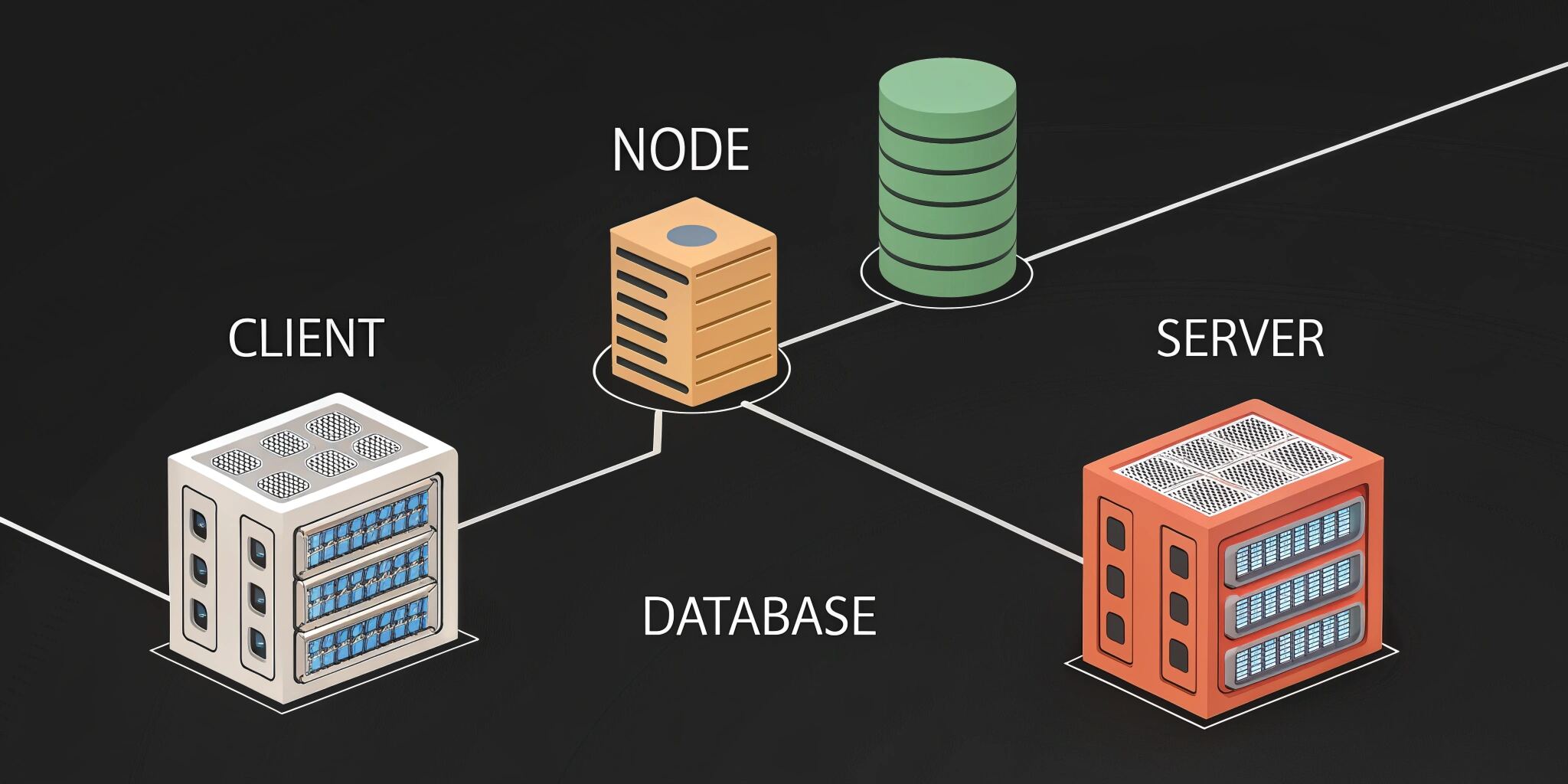
Many developers begin their journey by building applications that run on a single server — a frontend, backend, and database all hosted together. This architecture is called a monolith.
It works perfectly… until users grow.
Once traffic increases, the application becomes slow, crashes frequently, or stops responding. At this point, companies move toward Distributed Systems.
Understanding distributed systems is no longer optional. Today, even a medium-sized startup uses multiple servers, APIs, and services.
1. What is a Distributed System?
A distributed system is a collection of multiple computers (servers) that work together and appear as a single system to the user.
Example:
When you open Netflix:
- One server handles login
- Another recommends movies
- Another streams video
- Another stores user data
But for you, it feels like one website.
That is a distributed system.
2. Why Modern Applications Need It
Single servers fail due to:
• Limited CPU power
• Memory limits
• Database overload
• Traffic spikes
• Hardware crashes
If one server handles 10 users → fine
If one server handles 1,00,000 users → impossible
Distributed systems solve this by sharing workload across multiple machines.
3. Horizontal vs Vertical Scaling
Vertical Scaling (Scale Up)
Increase server power:
- More RAM
- Better CPU
Problem: Expensive and has limits.
Horizontal Scaling (Scale Out)
Add more servers.
Instead of:
1 big server
You use:
10 medium servers
Modern web applications always prefer horizontal scaling.
4. Load Balancing
When multiple servers exist, users must be distributed among them. This is handled by a Load Balancer.
The load balancer acts like a traffic police officer.
User requests → Load balancer → Available servers
Benefits:
• Prevents overload
• Improves performance
• Increases availability
Common tools:
- Nginx
- HAProxy
- Cloud Load Balancers (AWS ELB, Cloudflare)
5. Stateless vs Stateful Servers
To scale properly, servers should be stateless.
Stateful Server
Stores user session inside the server memory.
Problem:
If server crashes → user logged out.
Stateless Server
Stores session in:
- Database
- Redis cache
- JWT token
Now any server can handle the user request.
This is the foundation of scalable web apps.
6. Data Replication
Databases become the first bottleneck.
If every request hits one database, it slows down.
Solution → Replication
Primary DB → Writes
Replica DB → Reads
This is called Read/Write splitting.
Benefits:
• Faster queries
• Better performance
• Backup availability
7. Caching
Many requests repeat.
Example:
Home page
Product list
Trending posts
Instead of querying database every time, data is stored in cache.
Popular cache systems:
- Redis
- Memcached
- CDN cache
Result:
Response time drops from 500ms → 40ms.
Caching is one of the biggest performance improvements in distributed systems.
8. Service Communication
In distributed systems, services talk to each other.
There are two main methods:
Synchronous Communication
Service waits for response (HTTP REST APIs)
Asynchronous Communication
Service sends message and continues (Message Queues)
Tools:
- RabbitMQ
- Kafka
- Redis Queue
Asynchronous systems improve reliability and speed.
9. The CAP Theorem (Very Important)
CAP theorem says a distributed system cannot guarantee all three simultaneously:
C — Consistency
All users see same data
A — Availability
System always responds
P — Partition Tolerance
System works despite network failures
You can only choose two out of three.
Example:
Banking system → Consistency + Partition (Accuracy important)
Social media → Availability + Partition (Speed important)
This tradeoff is a core principle of system design.
10. Fault Tolerance
Servers fail. Disks crash. Networks disconnect.
A distributed system must continue working even if parts fail.
Techniques:
• Replication
• Health checks
• Auto-restart containers
• Circuit breakers
This is called fault tolerance — the system survives failure.
Conclusion
Distributed systems power every modern platform — Google, Amazon, YouTube, Instagram, and even small SaaS products.
For a web developer, learning frameworks is not enough anymore. Understanding how applications scale, communicate, and recover from failures is equally important.
By learning load balancing, caching, replication, stateless design, and CAP theorem, you move from being just a coder to a software engineer who can design real-world systems.
The future of web development is not just writing endpoints — it is building systems that handle millions of users reliably.