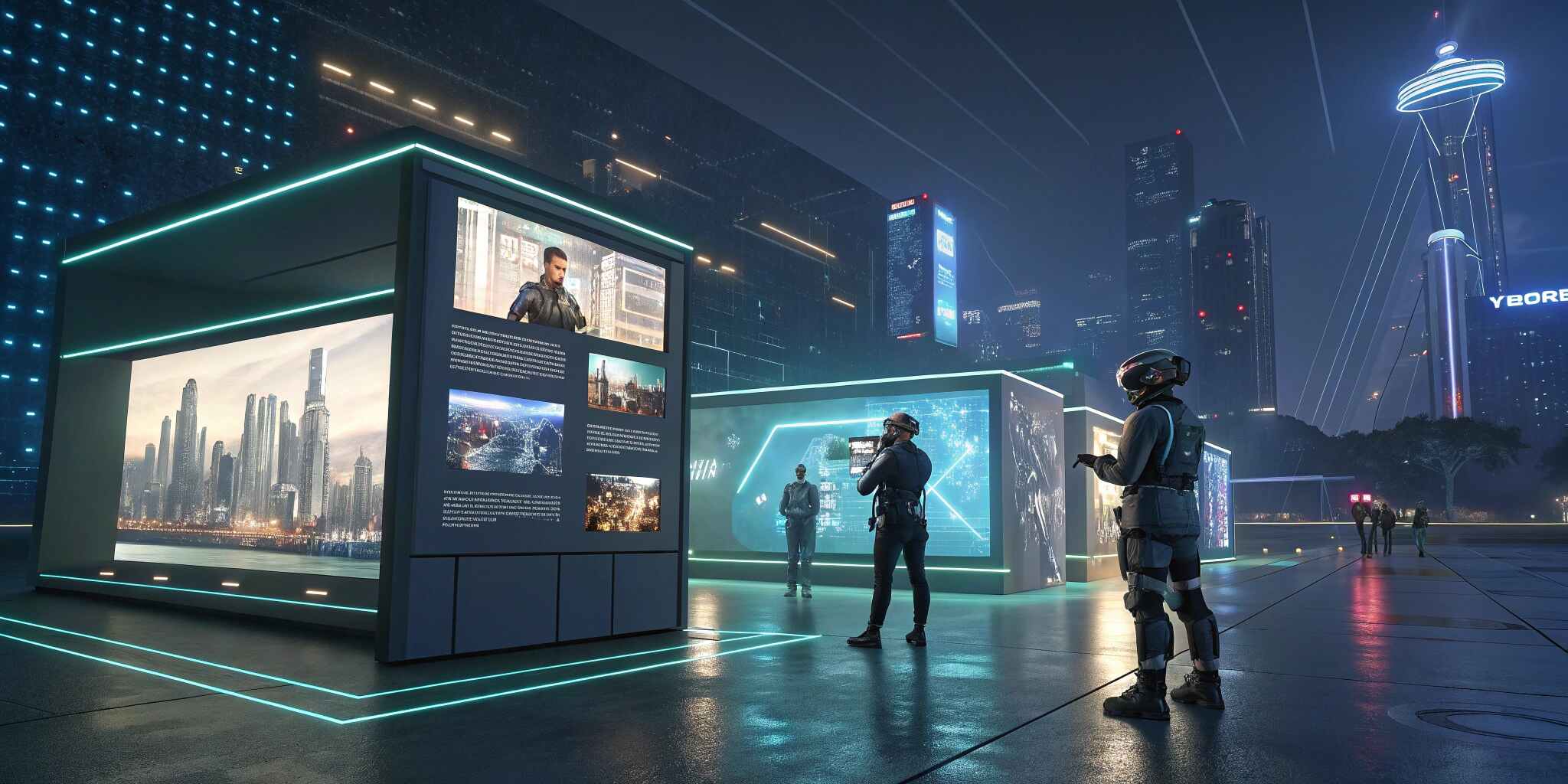
The world of artificial intelligence (AI) has entered a new era of creativity and innovation, largely fueled by the emergence of diffusion models — a groundbreaking advancement in generative AI. These models have redefined how machines create, interpret, and manipulate visual content, enabling hyper-realistic AI-generated images and videos that are almost indistinguishable from reality. From digital art and film production to medical imaging and data synthesis, diffusion models are transforming how humans and AI collaborate in the creative and analytical realms.
What Are Diffusion Models?
At their core, diffusion models are a type of generative model that learns to create data by gradually transforming random noise into coherent, structured output — such as an image, video, or even audio. The concept is inspired by the physical process of diffusion, where particles spread out over time. In reverse diffusion, the model learns how to start from noise and iteratively “denoise” it, step by step, until it produces a meaningful image.
This method contrasts with older generative approaches like Generative Adversarial Networks (GANs), which rely on a generator-discriminator setup. While GANs were revolutionary, they often suffered from instability, mode collapse, and inconsistent quality. Diffusion models, on the other hand, offer superior training stability, diversity, and realism, making them the new standard in generative AI research and production.
How Diffusion Models Work
The process begins by taking a real image and gradually adding random noise over several steps until it becomes pure noise. The model then learns the reverse process — predicting how to remove that noise to reconstruct the original image. After sufficient training, the model can generate new, unseen images by reversing this diffusion process starting from random noise.
One of the most well-known architectures based on this principle is the Latent Diffusion Model (LDM), used in tools like Stable Diffusion and Midjourney. LDMs operate in a compressed latent space, allowing them to generate high-quality visuals efficiently without requiring extreme computational power. This innovation made diffusion-based models scalable and accessible for real-world applications.
Applications of Diffusion Models
The capabilities of diffusion models extend far beyond AI art generation. Their precision and adaptability make them valuable across multiple industries:
- Creative Industries: Artists and designers use diffusion-based systems like DALL·E 3 and Stable Diffusion XL to create unique digital artwork, concept visuals, and design prototypes.
- Film and Animation: Filmmakers can use diffusion AI to automate background generation, scene enhancement, and even video frame interpolation, reducing production time and costs.
- Healthcare: In medical imaging, diffusion models assist in reconstructing high-quality scans from low-resolution or incomplete data, improving diagnostics and research accuracy.
- Gaming: Developers use diffusion AI to design textures, characters, and environments dynamically, accelerating creative workflows in game development.
- Data Augmentation: Diffusion models help generate synthetic training data for machine learning, supporting AI systems in domains with limited real-world samples.
Advantages Over Traditional Methods
Diffusion models offer several advantages that make them superior to GANs and VAEs (Variational Autoencoders):
- Stability in Training: Unlike GANs, which often collapse during training, diffusion models are more predictable and consistent.
- Higher Image Quality: They produce sharp, detailed, and realistic visuals with fewer artifacts.
- Scalability: They can be fine-tuned for text-to-image, video, or audio generation using domain-specific datasets.
- Ethical Control: With proper dataset curation, diffusion systems can be more easily aligned with ethical guidelines, avoiding biased or harmful outputs.
Challenges and Ethical Considerations
Despite their potential, diffusion models are not without challenges. Their ability to generate photorealistic images raises ethical concerns around deepfakes, copyright infringement, and misinformation. As these models become more powerful, the need for robust AI governance and watermarking technologies becomes crucial to ensure responsible use. Additionally, the computational resources required for training large-scale diffusion models remain a barrier for smaller organizations.
The Future of Generative AI with Diffusion Models
As diffusion models continue to evolve, their integration with multi-modal AI systems — combining text, images, audio, and video — will create more interactive and intelligent applications. Future versions will likely be more energy-efficient, interpretable, and user-controllable, allowing individuals and enterprises to customize outputs while ensuring transparency and accountability.
Conclusion
Diffusion models have revolutionized the field of AI-driven image and video generation, setting a new benchmark for realism, creativity, and control. Their applications span from entertainment to enterprise innovation, proving that AI is not just a tool for automation but also a medium for artistic and scientific exploration. As we move forward, the challenge will be to harness this power responsibly, ensuring that the revolution in visual AI benefits society while preserving ethical integrity.