Introduction
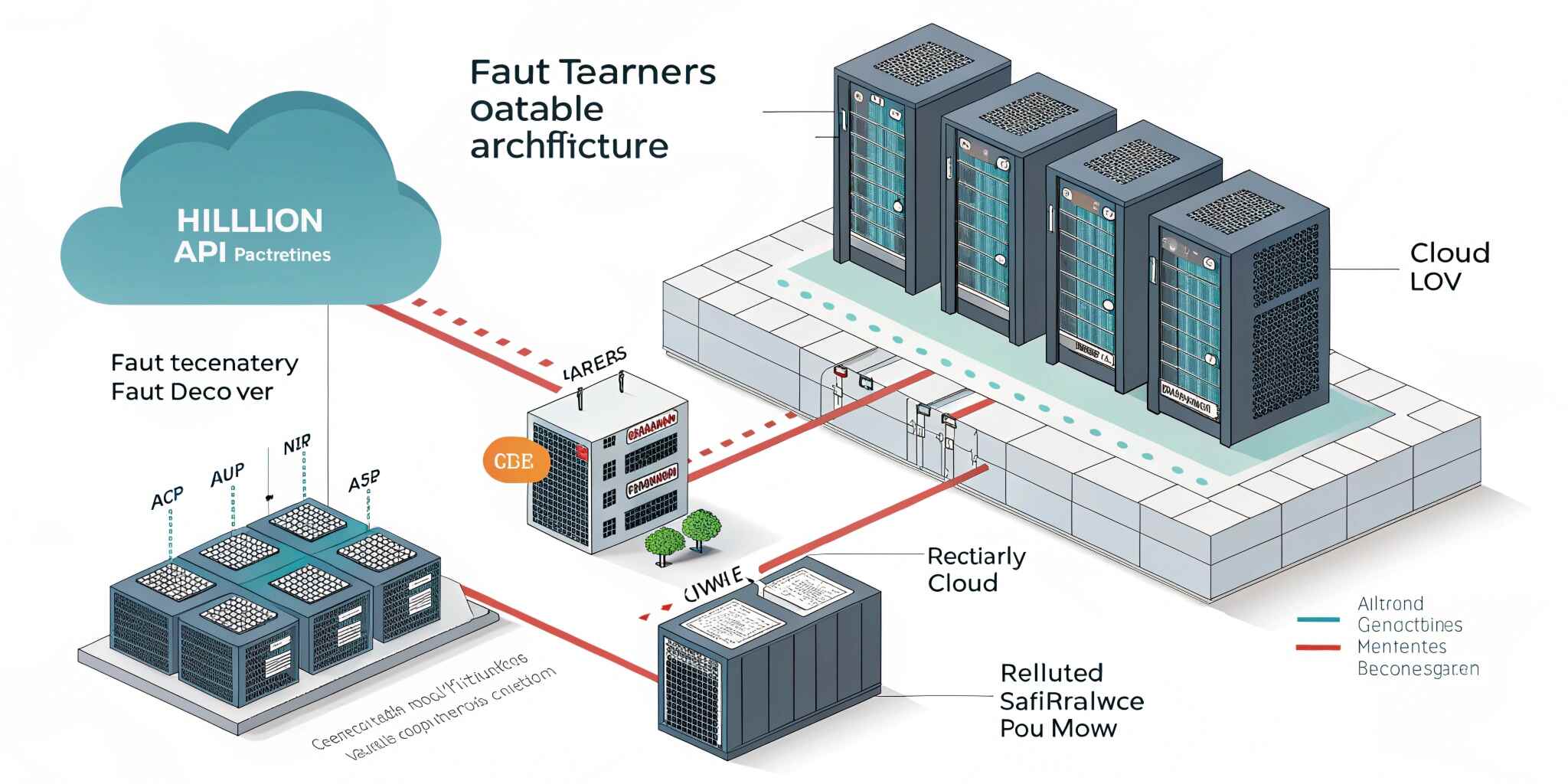
Modern digital platforms such as social media networks, fintech systems, and SaaS products serve millions of users simultaneously. APIs are the backbone of these systems, enabling communication between services, applications, and users. However, as user traffic increases, APIs become vulnerable to failures, latency spikes, and system crashes.
Designing fault-tolerant APIs ensures that systems remain operational even when components fail. When dealing with 1 million or more concurrent users, fault tolerance becomes a critical architectural requirement rather than an optional enhancement.
This article explores practical strategies for designing scalable and fault-tolerant APIs capable of handling massive traffic loads.
1. Build APIs with Scalable Architecture
The first step toward fault tolerance is choosing the right architecture. Traditional monolithic systems struggle with scalability and failure isolation.
Instead, modern systems rely on microservices architecture where each service operates independently. If one service fails, the entire system does not collapse.
Key architectural approaches include:
- Microservices architecture
- Event-driven systems
- Containerized deployments
- Service mesh communication
Platforms such as Kubernetes enable automatic scaling and fault isolation, making them ideal for high-traffic APIs.
2. Implement Load Balancing
Handling 1M+ concurrent users requires distributing traffic across multiple servers.
Load balancers act as the entry point that distributes incoming API requests across backend services. This prevents a single server from becoming overloaded.
Common load balancing strategies include:
- Round-robin distribution
- Least connection routing
- Geographic load balancing
- Weighted traffic distribution
Cloud providers such as AWS, Google Cloud, and Azure provide managed load balancing services that automatically scale based on traffic demand.
3. Use Circuit Breaker Patterns
In distributed systems, one failing service can cascade failures across the entire system.
The circuit breaker pattern prevents this by stopping requests to failing services temporarily.
It operates in three states:
- Closed – Requests flow normally.
- Open – Requests are blocked due to repeated failures.
- Half-open – A limited number of requests are allowed to test recovery.
Popular tools for implementing circuit breakers include:
- Hystrix
- Resilience4j
- Envoy
This pattern significantly improves API resilience under heavy traffic conditions.
4. Implement Intelligent Caching
Caching is one of the most effective techniques to reduce system load.
Instead of repeatedly querying databases or microservices, frequently requested data can be stored in high-speed caches.
Common caching layers include:
- CDN caching for static responses
- In-memory caches such as Redis or Memcached
- Application-level caching
For example, product catalogs, user preferences, or configuration data can be cached to reduce backend processing.
Caching improves latency, scalability, and reliability simultaneously.
5. Introduce Rate Limiting and Throttling
When APIs serve millions of users, traffic spikes can overwhelm backend systems.
Rate limiting protects the system by restricting the number of requests a user or client can send within a specific time window.
Common strategies include:
- Token bucket algorithm
- Fixed window rate limiting
- Sliding window algorithms
API gateways such as Kong, Apigee, and AWS API Gateway provide built-in rate limiting capabilities.
This ensures fair usage and prevents malicious attacks such as API abuse or DDoS attempts.
6. Design for Graceful Degradation
In high-traffic environments, it is unrealistic to expect every service to function perfectly at all times.
Instead of crashing completely, APIs should degrade gracefully.
Examples include:
- Returning cached data if a service fails
- Disabling non-critical features temporarily
- Providing fallback responses
For instance, if a recommendation engine fails, an e-commerce platform can still display basic product listings.
This approach maintains core functionality while minimizing user impact.
7. Use Distributed Databases
A single database server cannot handle millions of concurrent queries efficiently.
Large-scale APIs use distributed database architectures that support replication and sharding.
Key strategies include:
- Database replication for high availability
- Horizontal sharding for scalability
- Read replicas for query distribution
Technologies commonly used include:
- Cassandra
- CockroachDB
- MongoDB
- Amazon Aurora
Distributed databases eliminate single points of failure and improve system performance.
8. Implement Monitoring and Observability
Fault tolerance is impossible without proper visibility into system performance.
Monitoring tools track system health, traffic patterns, and failures in real time.
Essential observability components include:
- Metrics monitoring (Prometheus, Grafana)
- Centralized logging (ELK stack)
- Distributed tracing (Jaeger, Zipkin)
These tools help engineers detect issues early and resolve them before they affect users.
Conclusion
Designing APIs for 1 million concurrent users requires careful planning, modern architecture, and proactive failure management. By combining microservices architecture, load balancing, caching, rate limiting, distributed databases, and monitoring, organizations can build highly resilient systems.
Fault-tolerant APIs ensure that even during failures, applications continue to deliver reliable performance and seamless user experiences.
As digital platforms continue to scale globally, investing in robust API design and resilience engineering will remain essential for maintaining uptime, user satisfaction, and business continuity.