Modern organizations rely on data from applications, APIs, databases, IoT devices, cloud services, and third-party platforms. As this information moves through complex pipelines, maintaining its accuracy, reliability, and transparency becomes increasingly difficult. Teams need to understand where data originated, how it was transformed, which systems depend on it, and whether it can be trusted for business decisions.
This is where data lineage and data provenance become essential. They provide visibility into the lifecycle of data, helping organizations build accountable, observable, and well-governed data platforms.
What Is Data Lineage?
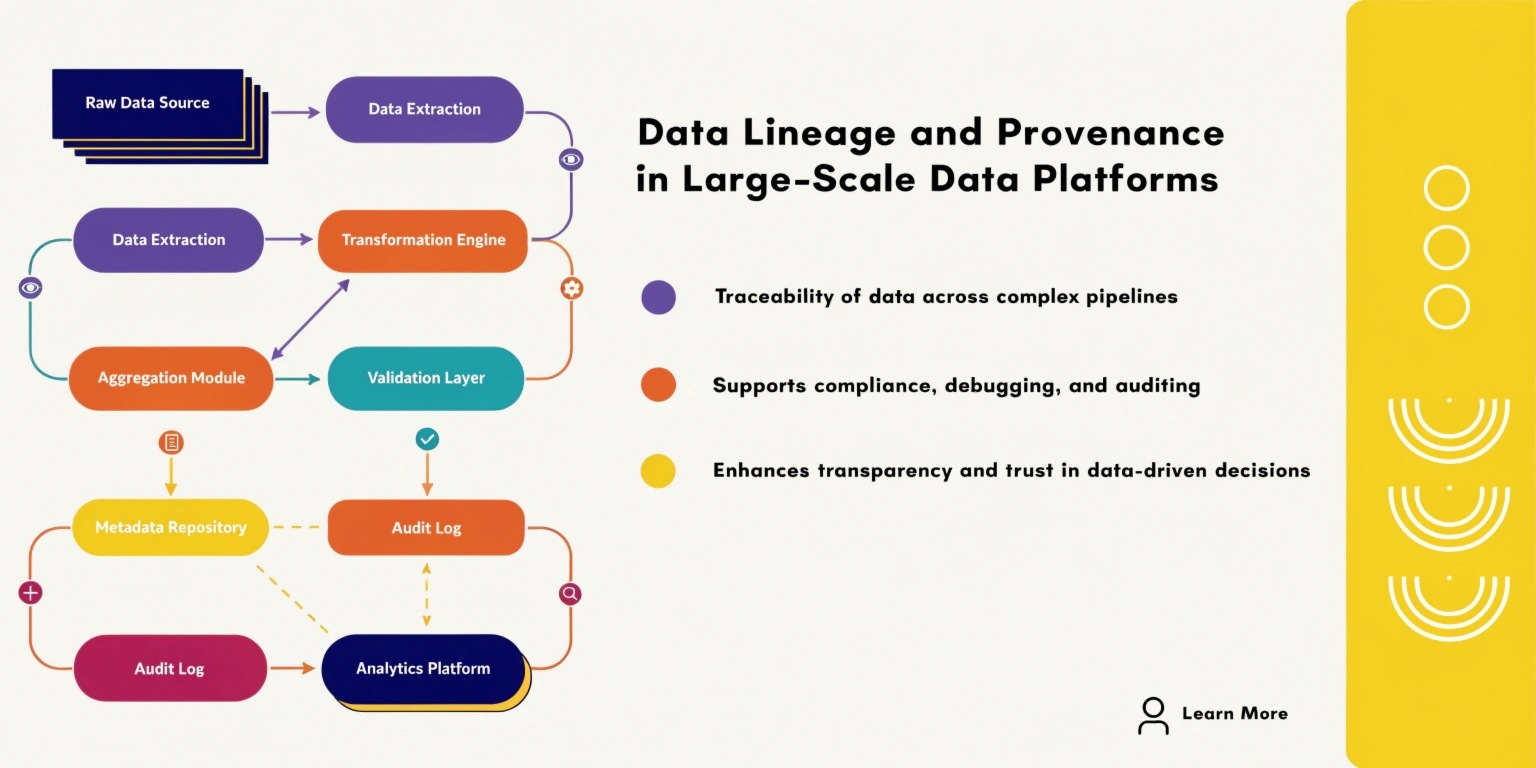
Data lineage describes how data moves between systems and how it changes throughout its lifecycle. It identifies relationships between source datasets, processing jobs, intermediate tables, analytical models, and final reports.
For example, an e-commerce company might collect order information from its website, process it through an ETL pipeline, store it in a cloud data warehouse, and use it to generate sales dashboards. Data lineage maps these relationships and shows which transformations produced the final figures.
There are three common levels of lineage:
- Dataset-level lineage: Shows relationships between tables, files, databases, and other datasets.
- Column-level lineage: Tracks how individual fields move and transform between source and destination datasets.
- Job-level lineage: Connects data processing tasks, workflows, and orchestration systems.
Column-level lineage is particularly valuable when a business metric changes unexpectedly. Instead of inspecting an entire pipeline, engineers can identify the specific source field or transformation responsible for the difference.
What Is Data Provenance?
Data provenance focuses on the origin, history, and context of a particular data asset or value. It helps answer questions such as where the data came from, when it was collected, which process generated it, and whether it was modified or validated.
Although lineage and provenance overlap, they emphasize different perspectives. Lineage primarily describes data movement and transformation relationships, while provenance records the evidence and context behind data creation and processing.
For example, a machine learning model may generate a prediction using customer records, engineered features, and a specific model version. Provenance can capture the source dataset version, feature-generation process, model version, and relevant execution metadata. This information helps teams investigate unexpected predictions and reproduce earlier results.
Together, lineage and provenance provide a more complete understanding of data reliability and accountability.
Why Large-Scale Data Platforms Need Them
Enterprise data environments often contain hundreds of pipelines, distributed storage systems, streaming services, and analytical applications. Without traceability, even a small upstream change can create unexpected downstream failures.
Data lineage and provenance deliver several benefits.
Faster root-cause analysis: When a dashboard displays incorrect revenue, engineers can trace the metric back through transformations and source datasets to identify the likely cause.
Improved data quality: Teams can locate where records were filtered, duplicated, enriched, or modified. This makes it easier to validate transformations and detect quality issues.
Stronger governance and compliance: Organizations can document how sensitive information moves between systems, supporting access reviews, audit investigations, and applicable regulatory obligations.
Safer change management: Before modifying a database column or removing a table, developers can identify downstream reports, applications, and models that depend on it.
Greater trust in analytics: Business users can understand how metrics are calculated and which source systems contribute to reported results.
Implementing Data Lineage Across Modern Architectures
Building reliable lineage requires consistent metadata collection across the data ecosystem.
1. Identify Data Sources and Processing Components
Start by inventorying databases, object storage, message brokers, ETL jobs, transformation frameworks, orchestration tools, and BI platforms. Document the relationships between these components and identify critical datasets.
A clear inventory establishes the foundation for collecting lineage metadata across otherwise disconnected systems.
2. Capture Metadata Automatically
Manual documentation becomes difficult to maintain as pipelines change. Automated metadata collection can extract information from SQL queries, job configurations, pipeline definitions, and execution logs.
Tools and standards such as Apache Atlas and OpenLineage can support metadata discovery, lineage tracking, and integration between data infrastructure components. The appropriate solution depends on existing technologies, scalability requirements, and governance needs.
3. Track Transformations and Dependencies
Recording that one table depends on another is useful, but understanding the transformation itself provides greater value. Capture SQL operations, joins, filters, aggregations, and field mappings wherever supported.
For example, if a revenue metric excludes refunded orders, lineage should help identify the transformation that applies this rule. This improves transparency and makes analytical results easier to validate.
4. Integrate Lineage with Data Quality Monitoring
Lineage becomes more powerful when connected to data quality checks. Record metrics such as null rates, schema changes, freshness, duplicate records, and validation failures.
When a quality check fails, the system can help identify affected downstream datasets and reports. This enables teams to prioritize incidents according to business impact rather than treating every pipeline failure equally.
5. Maintain Historical Provenance
Current lineage shows the latest relationships, but historical metadata is necessary to investigate past incidents and reproduce earlier results. Store relevant dataset versions, transformation versions, execution timestamps, and model versions.
For sensitive workflows, apply appropriate access controls and retention policies to metadata because lineage information itself may reveal confidential business relationships or sensitive data structures.
Common Challenges and Best Practices
Large-scale lineage implementation can face incomplete metadata, inconsistent naming conventions, unsupported connectors, and complex dynamic SQL. Streaming architectures and machine learning workflows introduce additional challenges because schemas, features, and processing logic may evolve frequently.
Organizations should begin with business-critical datasets instead of attempting to map every asset immediately. Establish consistent metadata standards, integrate lineage collection into development workflows, and validate captured relationships regularly.
It is also important to distinguish observed lineage from inferred lineage. Automatically inferred dependencies may be useful, but teams should know when a relationship is incomplete or uncertain. Assign clear ownership to critical datasets and review lineage coverage as systems evolve.
Conclusion
Data lineage and provenance are essential capabilities for organizations operating complex, large-scale data platforms. They make data movement, transformation history, and source relationships more transparent, helping teams investigate failures, protect data quality, manage dependencies, and support governance requirements.
By combining automated metadata collection, transformation tracking, historical records, and data quality monitoring, businesses can create more trustworthy data ecosystems. A practical implementation should prioritize critical assets, maintain accurate metadata, and integrate traceability into everyday engineering processes.
As enterprise analytics and AI adoption continue to grow, reliable lineage and provenance will remain important foundations for responsible data use and confident decision-making.