Main Content :-
Modern web applications are becoming increasingly complex, handling large volumes of data, users, and real-time interactions. As systems grow, traditional architectures often struggle with performance bottlenecks and maintainability issues. This is where the CQRS (Command Query Responsibility Segregation) pattern comes into play.
What is CQRS?
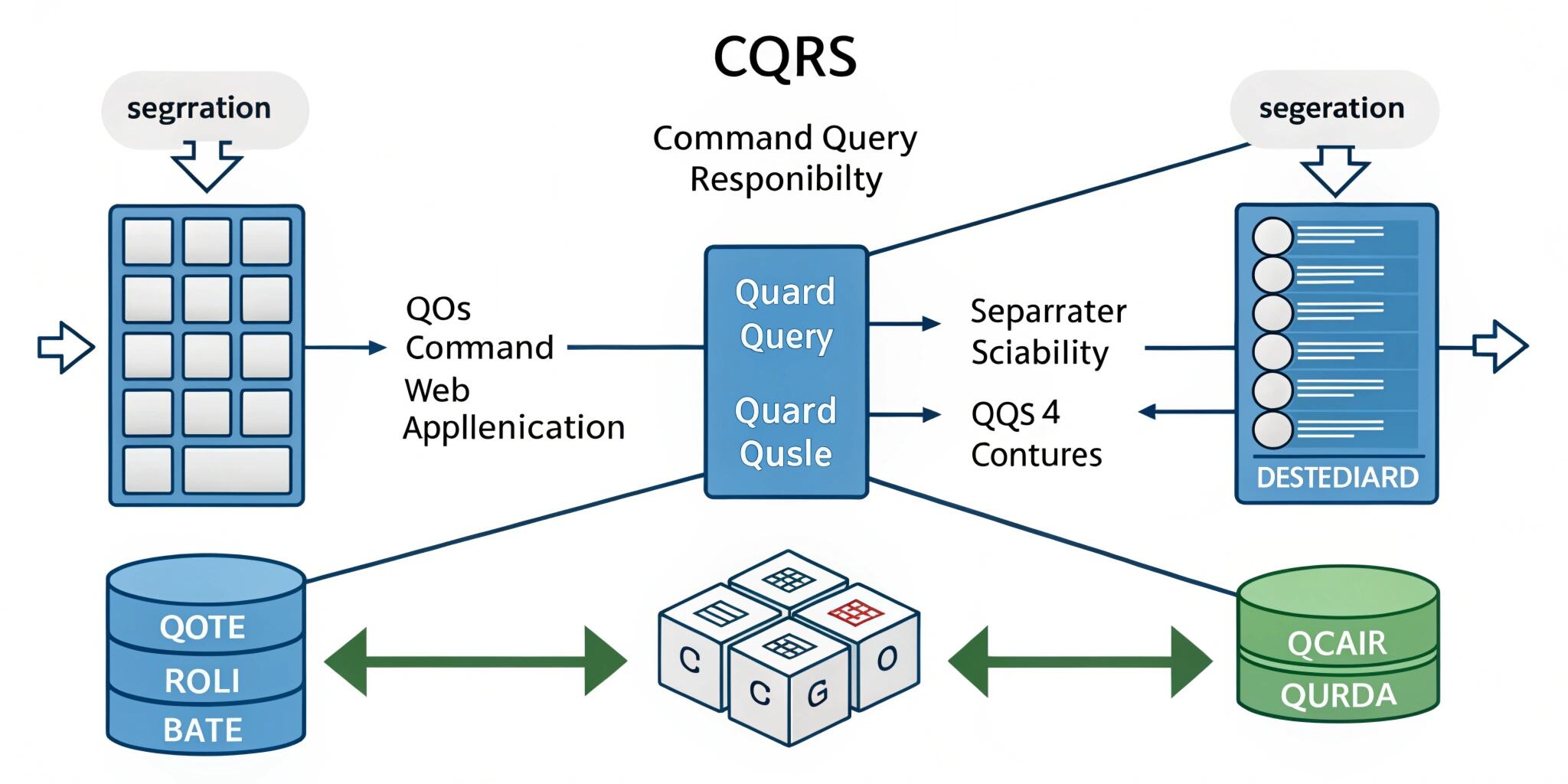
CQRS is a design pattern that separates read operations (queries) from write operations (commands). Instead of using a single model for both reading and writing data, CQRS uses different models optimized for each purpose.
- Command side: Handles data modification (Create, Update, Delete)
- Query side: Handles data retrieval (Read)
This separation allows developers to optimize each side independently, leading to better performance and scalability.
Why Use CQRS?
CQRS is not just a trend—it solves real problems in complex systems. Here are the key benefits:
1. Improved Performance
Read-heavy applications can scale query models independently. For example, you can use caching or optimized databases for fast data retrieval.
2. Better Scalability
You can scale read and write operations separately. If your application has more reads than writes (which most apps do), CQRS is highly beneficial.
3. Flexibility in Data Models
You can design different schemas for reads and writes. The read model can be denormalized for faster queries, while the write model ensures data consistency.
4. Easier Maintenance
Separating responsibilities reduces complexity, making the system easier to maintain and extend.
When You Actually Need CQRS
CQRS is powerful, but not every application needs it. Here are situations where it truly shines:
1. High Traffic Applications
If your system handles thousands or millions of requests, especially read-heavy workloads, CQRS helps distribute load efficiently.
2. Complex Business Logic
Applications with complicated workflows (like financial systems or booking platforms) benefit from separating command and query logic.
3. Microservices Architecture
CQRS fits naturally with microservices, where services can independently manage read and write operations.
4. Real-Time Systems
Applications like dashboards, live tracking, or analytics platforms can use CQRS to deliver faster read responses.
5. Event-Driven Systems
CQRS often pairs well with event sourcing, where changes are stored as events and used to update read models.
When NOT to Use CQRS
Despite its advantages, CQRS is not a one-size-fits-all solution.
1. Simple Applications
If your app is small or CRUD-based, CQRS adds unnecessary complexity.
2. Limited Development Resources
CQRS requires more effort in design, development, and maintenance.
3. No Scalability Requirements
If your application does not face performance or scaling issues, CQRS may be overkill.
Real-World Example
Consider an e-commerce platform:
- The command side handles order placement, payment processing, and inventory updates.
- The query side handles product listings, search results, and order history.
The read model can be optimized for fast searches, while the write model ensures data accuracy and consistency.
CQRS vs Traditional CRUD
FeatureTraditional CRUDCQRSData ModelSingleSeparateScalabilityLimitedHighComplexityLowHighPerformanceModerateOptimizedUse CaseSimple appsComplex systems
Challenges of CQRS
Before adopting CQRS, consider these challenges:
- Increased Complexity: Two models instead of one
- Data Synchronization: Keeping read and write models consistent
- Eventual Consistency: Data may not be instantly updated across models
- Learning Curve: Requires understanding of advanced architecture patterns
Final Thoughts
CQRS is a powerful pattern that can significantly improve the performance and scalability of web applications—but only when used in the right context. It is best suited for large-scale, complex, or high-performance systems where separating reads and writes provides clear benefits.
If you're building a simple application, stick with traditional CRUD. But if you're scaling a system with heavy traffic and complex logic, CQRS might be exactly what you need.