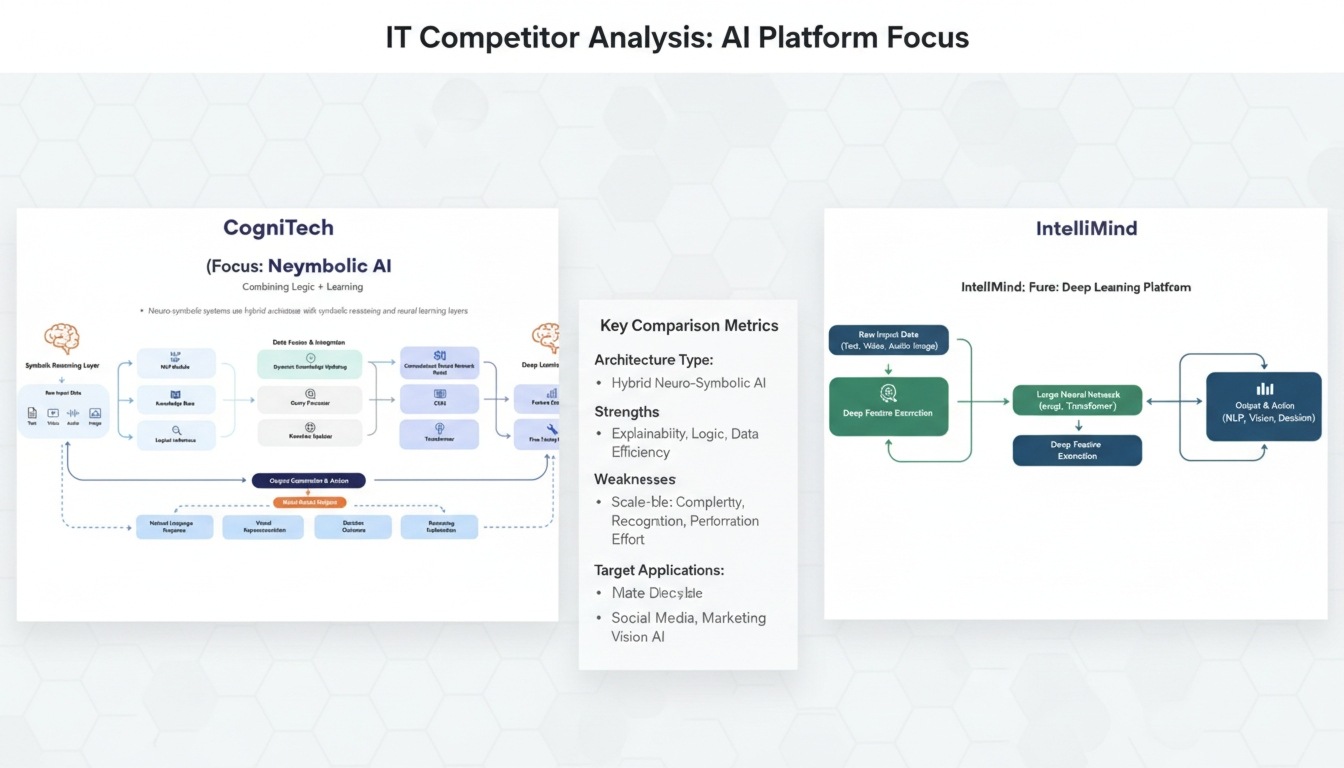
In today’s fast-evolving technology landscape, staying competitive requires more than just innovation—it demands strategic awareness. Competitor analysis is a critical process that helps IT companies understand their market position, identify opportunities, and make informed decisions.
Whether you are a startup or an established enterprise, analyzing competitors allows you to refine your offerings and stay ahead in a crowded marketplace.
What is Competitor Analysis?
Competitor analysis involves evaluating your competitors’ strengths, weaknesses, strategies, and performance. It provides insights into:
- Market trends
- Pricing strategies
- Product offerings
- Customer engagement approaches
By understanding what others are doing, IT companies can identify gaps and differentiate themselves effectively.
Why Competitor Analysis is Crucial for IT Companies
The IT industry is highly dynamic, with constant innovation and disruption. Companies like Microsoft and Infosys continuously analyze competitors to maintain their leadership positions.
Key benefits include:
- Identifying market opportunities
- Improving product development
- Enhancing marketing strategies
- Benchmarking performance
- Reducing business risks
Without competitor analysis, companies risk falling behind or missing emerging trends.
Step-by-Step Competitor Analysis Process
1. Identify Your Competitors
Start by categorizing competitors into:
- Direct competitors: Offer similar products/services
- Indirect competitors: Solve the same problem differently
- Emerging competitors: New entrants in the market
Use search engines, industry reports, and platforms like LinkedIn to discover key players.
2. Analyze Their Products and Services
Evaluate what your competitors offer:
- Features and functionalities
- Pricing models
- Unique selling propositions (USPs)
This helps you understand how your offerings compare and where improvements can be made.
3. Study Their Marketing Strategies
Analyze how competitors position themselves in the market:
- Website messaging
- SEO and content strategy
- Social media presence
- Paid advertising campaigns
Tools like SEMrush can provide valuable insights into competitor keywords, traffic sources, and advertising strategies.
4. Evaluate Strengths and Weaknesses (SWOT Analysis)
A SWOT analysis helps structure your findings:
- Strengths: What they do well
- Weaknesses: Areas they lack
- Opportunities: Market gaps
- Threats: Competitive risks
This framework allows you to create actionable strategies based on data.
5. Analyze Customer Feedback
Customer reviews reveal real-world insights about competitors:
- What customers like
- Common complaints
- Feature requests
Platforms like Glassdoor and review websites can help you understand user sentiment.
6. Benchmark Performance Metrics
Compare key performance indicators (KPIs):
- Website traffic
- Conversion rates
- Customer acquisition cost
- Retention rates
Benchmarking helps measure your performance against industry standards.
Tools for Competitor Analysis
Several tools can streamline the analysis process:
- Ahrefs (SEO and backlinks)
- SimilarWeb (traffic insights)
- Crunchbase (company data)
These tools provide data-driven insights to support strategic decisions.
Common Mistakes to Avoid
While competitor analysis is essential, avoid these pitfalls:
- Copying competitors blindly: Focus on differentiation
- Ignoring smaller competitors: They can disrupt the market
- Relying on outdated data: Ensure information is current
- Overanalyzing without action: Insights must lead to execution
Turning Insights into Strategy
The real value of competitor analysis lies in applying insights:
- Develop unique value propositions
- Improve product features
- Optimize pricing strategies
- Enhance customer experience
By acting on insights, IT companies can create a strong competitive advantage.
Conclusion
Competitor analysis is not a one-time activity—it’s an ongoing process. In the rapidly changing IT industry, staying informed about competitors is essential for growth and sustainability.
By leveraging the right tools, frameworks, and strategies, IT companies can make smarter decisions, identify new opportunities, and stay ahead of the competition.
In a world driven by innovation, understanding your competitors is the first step toward outperforming them.