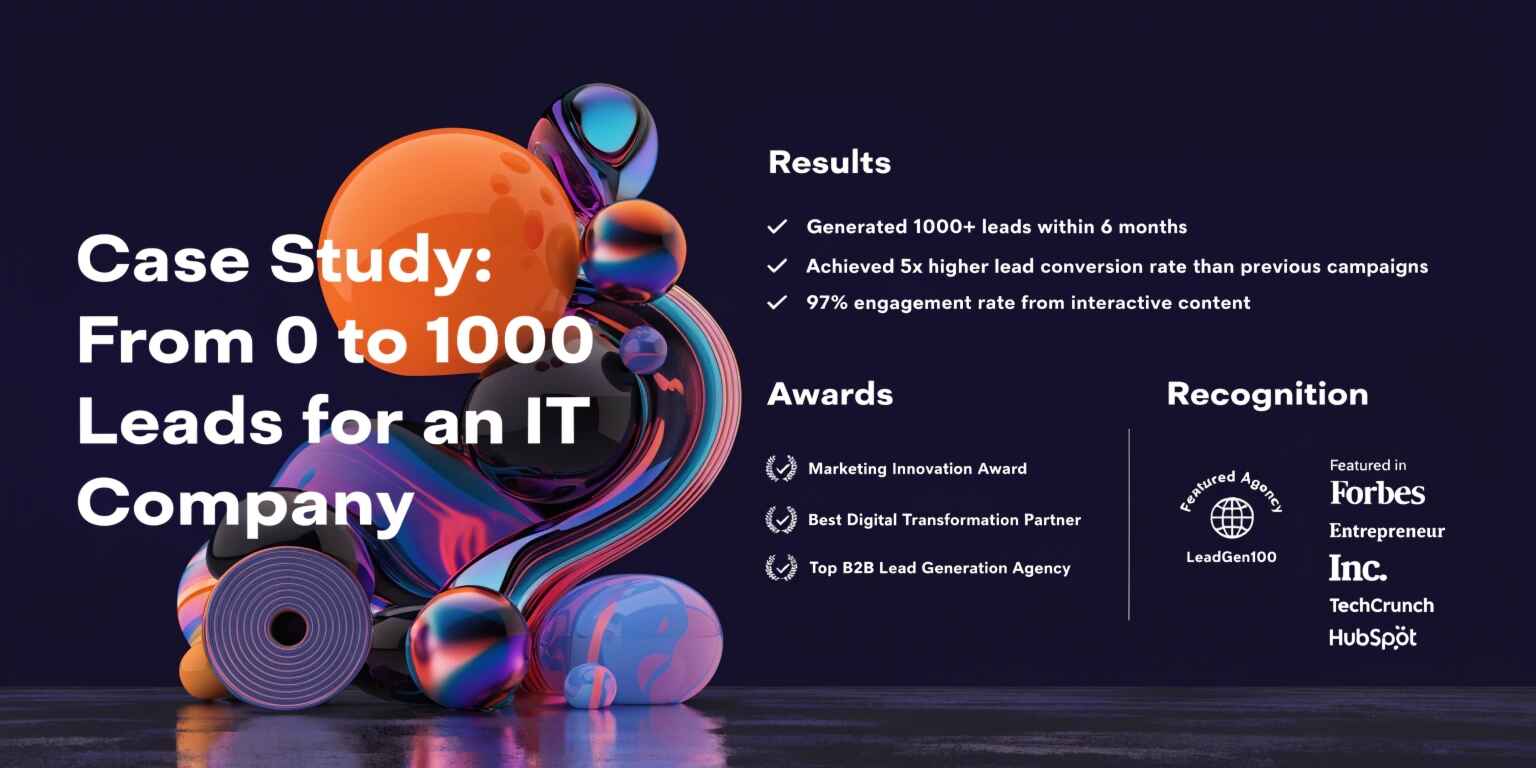
Generating consistent leads is one of the biggest challenges for IT companies, especially in competitive markets. This case study explores how a mid-sized IT services company went from zero online leads to generating over 1000 qualified leads in just six months using a structured, data-driven digital marketing approach.
Client Background
The company offered services in web development, mobile app development, and custom software solutions. Despite having strong technical expertise, they struggled with:
- Low online visibility
- No structured lead generation funnel
- Dependency on referrals
- Poor website conversion rates
The goal was clear: build a scalable and predictable lead generation system.
Step 1: Building a Strong Foundation (Month 1)
Website Optimization
The first step was revamping the website to make it conversion-focused:
- Clear service pages with targeted keywords
- Strong CTAs (Call-to-Actions)
- Landing pages for each service
- Faster loading speed and mobile responsiveness
SEO Setup
- Keyword research targeting high-intent queries
- On-page SEO optimization
- Technical SEO fixes
Result: Website became search-engine friendly and ready for traffic.
Step 2: Content Marketing Strategy (Month 2–3)
Content became the backbone of the strategy.
Blog Creation
- 3–4 blogs per week targeting long-tail keywords
- Topics focused on client pain points (e.g., “cost of app development,” “best tech stack”)
Lead Magnets
- Free guides (e.g., “Complete Guide to Building a SaaS Product”)
- Checklists and templates
SEO Impact
Organic traffic started increasing steadily as blogs ranked on search engines.
Result:
- 3x increase in website traffic
- First 100 organic leads generated
Step 3: Paid Advertising (Month 3–5)
To accelerate results, paid campaigns were launched.
Google Ads
- Targeted high-conversion keywords
- Focus on service-based landing pages
LinkedIn Ads
- Targeted decision-makers (CEOs, CTOs, founders)
- Sponsored content and lead generation forms
Retargeting Campaigns
- Visitors who didn’t convert were retargeted with ads
Result:
- Rapid increase in qualified leads
- Cost per lead reduced over time with optimization
Step 4: Conversion Rate Optimization (CRO)
Driving traffic is only half the battle—converting it is crucial.
Key Improvements:
- A/B testing of landing pages
- Improved CTA placements
- Chatbots for instant engagement
- Exit-intent popups
Outcome:
Conversion rate improved from 1.5% to 4.8%
Step 5: Social Media & LinkedIn Outreach
Organic LinkedIn Strategy
- Posting case studies, insights, and industry trends
- Personal branding for founders
Cold Outreach
- Personalized connection requests
- Value-driven messaging (not spammy sales pitches)
Result:
- High-quality B2B leads
- Increased brand credibility
Step 6: Marketing Automation & CRM Integration
To manage growing leads efficiently:
- CRM tools were implemented
- Automated email nurturing sequences
- Lead scoring based on behavior
Result:
- Better lead tracking
- Higher conversion from leads to clients
Final Results (After 6 Months)
- 1000+ qualified leads generated
- 5x increase in website traffic
- 3x improvement in conversion rate
- Significant boost in revenue pipeline
Key Learnings from the Case Study
1. Multi-Channel Approach Works Best
Relying on a single channel limits growth. Combining SEO, ads, and social media delivers better results.
2. Content is a Long-Term Asset
Blogs and resources continue to generate leads even after months of publishing.
3. CRO is a Game-Changer
Small improvements in conversion rates can lead to massive growth in leads.
4. Targeting Matters More Than Budget
Well-targeted campaigns outperform high-budget generic campaigns.
5. Consistency is Key
Results didn’t happen overnight—it required continuous effort and optimization.
Conclusion
This case study proves that generating 1000+ leads is not about luck—it’s about strategy, execution, and consistency. By combining SEO, paid marketing, content creation, and conversion optimization, IT companies can build a scalable lead generation engine.
If implemented correctly, these strategies can help any IT business move from zero visibility to predictable growth.