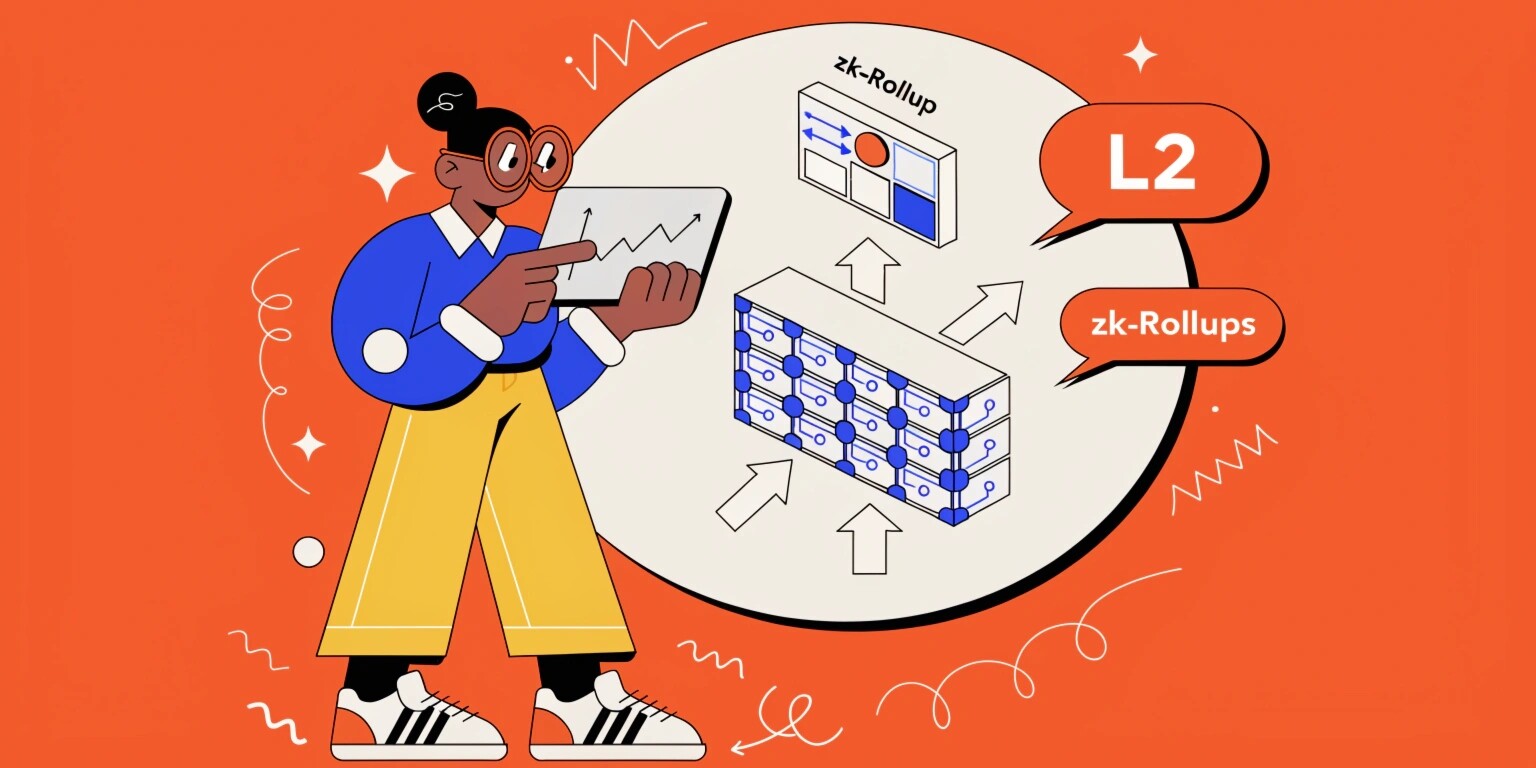
Learn how Layer 2 solutions and zk-Rollups address blockchain scalability challenges by improving speed, reducing fees, and enabling the next generation of decentralized applications.
Blockchain technology has revolutionized digital transactions by enabling decentralized, transparent, and secure systems. From cryptocurrencies and decentralized finance (DeFi) to NFTs and smart contracts, blockchain networks have unlocked new possibilities across industries. However, as adoption continues to grow, scalability has emerged as one of the biggest challenges facing blockchain ecosystems.
Popular blockchain networks often experience congestion, slow transaction speeds, and high transaction fees during periods of heavy usage. These limitations make it difficult for blockchains to support millions of users and enterprise-scale applications. To address this issue, developers have introduced innovative scalability solutions, with Layer 2 networks and zk-Rollups emerging as two of the most promising approaches.
Understanding the Blockchain Scalability Problem
Most blockchains prioritize three core characteristics:
- Security
- Decentralization
- Scalability
Balancing these three factors is commonly referred to as the "Blockchain Trilemma." Improving one aspect often affects the others. For example, increasing transaction speed may reduce decentralization, while maintaining strong security can limit throughput.
Networks such as Ethereum process transactions directly on the main blockchain (Layer 1). While this approach provides strong security guarantees, it limits the number of transactions that can be processed per second.
Common scalability issues include:
- Network congestion
- High gas fees
- Slow transaction confirmations
- Limited throughput
- Poor user experience
As blockchain adoption expands, solving these challenges becomes critical for long-term growth.
What Are Layer 2 Solutions?
Layer 2 solutions are secondary frameworks built on top of existing blockchain networks. Instead of processing every transaction directly on the main blockchain, Layer 2 systems handle transactions off-chain and then submit results back to the primary network.
The goal is simple:
- Reduce congestion on Layer 1
- Increase transaction throughput
- Lower transaction costs
- Maintain blockchain security
Layer 2 solutions allow the base blockchain to focus on security and consensus while secondary layers handle large volumes of transactions.
Benefits of Layer 2 Networks
Layer 2 solutions offer several advantages:
Faster Transactions
Processing transactions off-chain significantly increases speed and reduces waiting times.
Lower Fees
Users pay lower transaction fees because multiple transactions are grouped together before being submitted to the main chain.
Improved Scalability
Layer 2 networks can process thousands of transactions per second compared to the limited capacity of Layer 1 networks.
Better User Experience
Faster confirmations and lower costs encourage broader adoption of decentralized applications.
Types of Layer 2 Solutions
Several Layer 2 technologies have been developed to improve scalability.
State Channels
State channels allow participants to conduct multiple transactions off-chain and only record the final result on the blockchain.
Common use cases include:
- Micropayments
- Gaming
- Real-time interactions
Sidechains
Sidechains operate independently from the main blockchain while maintaining interoperability.
Benefits include:
- Customizable functionality
- Reduced network load
- Faster transaction processing
Rollups
Rollups have become one of the most popular Layer 2 solutions because they inherit security from the underlying blockchain while significantly improving scalability.
There are two primary types:
- Optimistic Rollups
- zk-Rollups
What Are zk-Rollups?
zk-Rollups (Zero-Knowledge Rollups) are advanced Layer 2 solutions that bundle hundreds or thousands of transactions into a single batch and generate a cryptographic proof verifying the validity of those transactions.
Instead of storing every transaction individually on the main blockchain, only the compressed data and proof are submitted.
This dramatically reduces:
- Storage requirements
- Network congestion
- Transaction costs
while maintaining high levels of security.
How zk-Rollups Work
The process typically follows these steps:
- Users submit transactions to the zk-Rollup network.
- Transactions are processed off-chain.
- A Zero-Knowledge Proof is generated.
- The proof is submitted to the Layer 1 blockchain.
- The blockchain verifies the proof and updates the network state.
Because the blockchain only needs to verify the proof rather than every transaction individually, scalability improves significantly.
Advantages of zk-Rollups
High Throughput
Thousands of transactions can be processed in a single batch.
Strong Security
Security is inherited from the Layer 1 blockchain.
Faster Finality
Transactions can be confirmed quickly without long challenge periods.
Lower Costs
Users benefit from significantly reduced gas fees.
Better Scalability
Applications can support larger user bases without sacrificing performance.
Real-World Applications
Layer 2 solutions and zk-Rollups are enabling new possibilities across blockchain ecosystems.
Decentralized Finance (DeFi)
Lower transaction fees make trading, lending, and staking more accessible.
NFT Platforms
Creators and collectors benefit from cheaper minting and transfer costs.
Blockchain Gaming
High transaction volumes required by games become practical through Layer 2 networks.
Enterprise Solutions
Businesses can deploy scalable blockchain applications without performance bottlenecks.
Payment Systems
Layer 2 technologies enable faster and more affordable digital payments.
Challenges of zk-Rollups
Despite their advantages, zk-Rollups still face several challenges.
Development Complexity
Building and maintaining zero-knowledge systems requires specialized expertise.
Infrastructure Requirements
Generating cryptographic proofs can require significant computational resources.
User Education
Many users are unfamiliar with Layer 2 technologies and how they operate.
Interoperability
Seamless movement of assets between Layer 1 and Layer 2 networks remains an ongoing area of development.
The Future of Blockchain Scalability
The future of blockchain scalability is likely to involve a combination of:
- Layer 1 improvements
- Layer 2 networks
- zk-Rollups
- Cross-chain interoperability
- Advanced cryptographic techniques
As blockchain adoption continues to grow, scalable infrastructure will become essential for supporting millions of users and enterprise-grade applications.
Many experts believe that Layer 2 solutions, particularly zk-Rollups, will become a foundational component of the Web3 ecosystem due to their ability to balance security, scalability, and decentralization.
Conclusion
Blockchain technology has enormous potential, but scalability remains a critical hurdle to mainstream adoption. Layer 2 solutions provide an effective way to increase transaction throughput while reducing fees and network congestion. Among these solutions, zk-Rollups stand out as one of the most innovative approaches, leveraging zero-knowledge proofs to deliver high performance without compromising security.
As decentralized applications, digital assets, and Web3 platforms continue to expand, Layer 2 technologies and zk-Rollups will play a crucial role in creating scalable, efficient, and user-friendly blockchain ecosystems capable of supporting the next generation of digital innovation.
We build scalable web, mobile, and game products for clients worldwide — combining modern frameworks, cloud infrastructure, and best engineering practices.
.jpg)
.jpg)
.jpg)