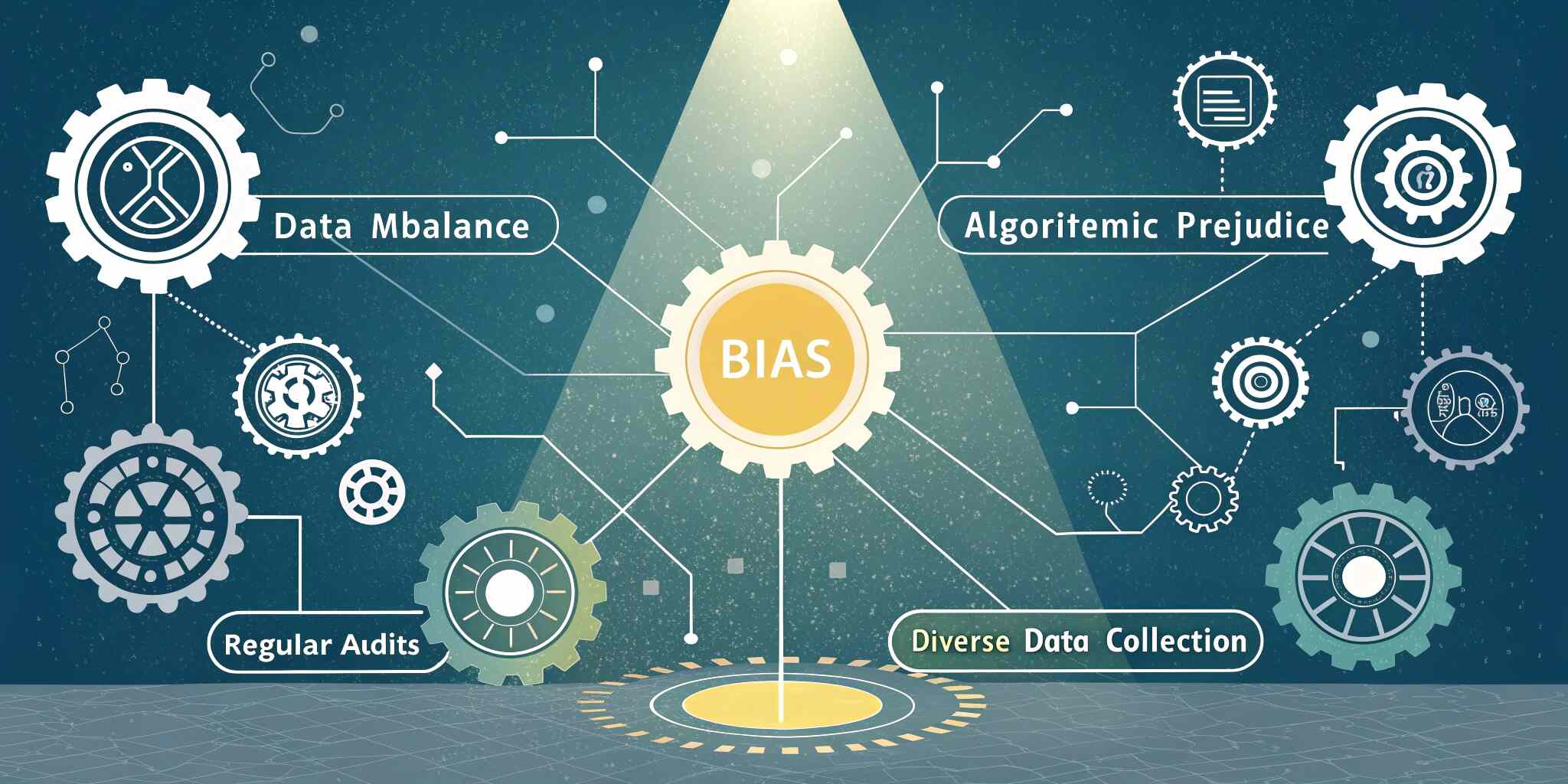
Machine learning (ML) has revolutionized industries with its ability to make accurate predictions, automate processes, and deliver insights. However, when models are biased, they risk producing unfair outcomes that can reinforce societal inequalities. Addressing bias is essential to ensure AI systems are ethical, transparent, and trustworthy.
What is Bias in Machine Learning?
Bias in machine learning refers to systematic errors in predictions caused by flawed data, model design, or human oversight. It occurs when certain groups or outcomes are unfairly favored over others.
Causes of Bias in ML Models
- Data Bias
- Poorly collected, imbalanced, or incomplete datasets can misrepresent reality.
- Example: A facial recognition system trained mostly on lighter-skinned faces may underperform on darker-skinned individuals.
- Sampling Bias
- When datasets don’t represent the target population, models fail to generalize.
- Example: A healthcare model trained on data from one region may not work for global populations.
- Historical Bias
- If past data reflects inequalities (e.g., gender pay gaps), models will replicate them.
- Algorithmic Bias
- Certain algorithms may favor accuracy over fairness, unintentionally amplifying biases.
- Human Bias in Labeling
- Human annotators may introduce subjective judgments into datasets, skewing predictions.
Why Bias Matters
- Ethical Risks: Reinforces discrimination and inequality.
- Business Risks: Leads to mistrust and reputational damage.
- Legal Risks: May violate compliance and anti-discrimination regulations.
Mitigation Techniques
- Diverse & Balanced Data
- Collect representative datasets across demographics and scenarios.
- Data Preprocessing
- Use resampling, data augmentation, or synthetic data to reduce imbalance.
- Bias Detection Tools
- Leverage tools like IBM AI Fairness 360, Fairlearn, or Google’s What-If Tool.
- Fairness-Constrained Algorithms
- Modify algorithms to include fairness metrics alongside accuracy.
- Regular Auditing & Monitoring
- Continuously test deployed models for biased outcomes and retrain with improved data.
- Explainable AI (XAI)
- Use interpretability techniques (e.g., SHAP, LIME) to identify biased decision paths.
Real-World Example
- In hiring platforms, biased algorithms once favored male candidates over female candidates due to historical training data. After identifying the issue, companies redesigned their models with fairness constraints and gender-balanced datasets.
Conclusion
Bias in machine learning is not just a technical flaw—it’s an ethical and societal concern. By understanding its causes and implementing robust mitigation strategies, businesses and researchers can build fair, transparent, and reliable AI systems that serve everyone equally.