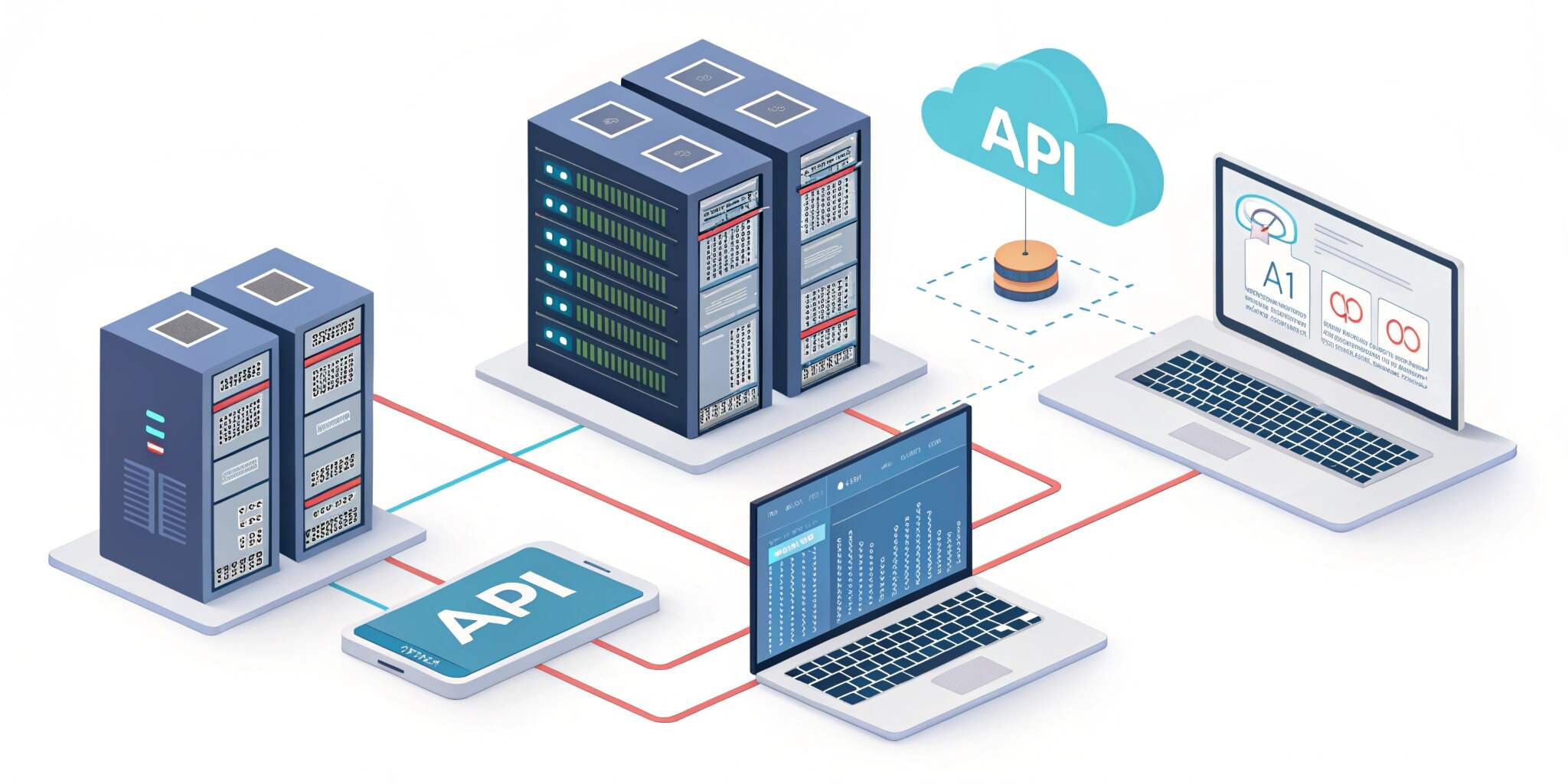
API-first development is redefining software by making backend systems the core product. This approach enhances scalability, integration, and speed, enabling businesses to deliver seamless multi-platform experiences and stay competitive in modern digital ecosystems.
Main Content :-
In today’s rapidly evolving digital ecosystem, software development is undergoing a significant transformation. Traditionally, applications were designed with a frontend-first mindset, where the user interface dictated how the backend would function. However, with the rise of multi-platform applications, cloud computing, and integrations, a new approach has taken center stage —
API-first development.
This paradigm shift is changing how businesses think about software, where the backend is no longer just a support system but the actual product itself.
What is API-First Development?
API-first development is an approach where application programming interfaces (APIs) are designed and developed before building the frontend or user interface. Instead of treating APIs as an afterthought, they become the foundation of the entire system.
This approach ensures that all services, platforms, and applications interact seamlessly through well-defined APIs. Whether it's a web app, mobile app, or third-party integration, everything communicates via these APIs.
Why Backend is Becoming the Product
1. Multi-Platform Demand
Modern users access applications through various platforms — websites, mobile apps, smart devices, and even IoT systems. API-first architecture allows businesses to build a single backend that serves multiple frontends efficiently.
Instead of duplicating logic for each platform, developers create APIs once and reuse them across channels. This makes the backend the central product powering all user experiences.
2. Faster Development and Deployment
With APIs defined upfront, frontend and backend teams can work simultaneously. This parallel development significantly reduces time-to-market.
Additionally, teams can iterate quickly without affecting the entire system, making it easier to release updates and new features.
3. Scalability and Flexibility
API-first systems are inherently scalable. Built often on microservices architecture, each service can be scaled independently based on demand.
For example, payment services, authentication, or content delivery can operate as independent modules. This flexibility ensures better performance and resource optimization.
4. Seamless Integrations
In today’s interconnected ecosystem, applications rarely operate in isolation. Businesses rely heavily on third-party services such as payment gateways, CRMs, analytics tools, and cloud services.
API-first development makes integration effortless. Well-documented APIs allow external systems to connect easily, enabling businesses to expand their capabilities without rebuilding from scratch.
5. Improved Developer Experience
Developers benefit greatly from API-first strategies. Clear API documentation, standardized endpoints, and predictable responses make development more efficient.
Tools like Swagger and Postman further enhance testing and collaboration, allowing teams to build robust applications with fewer errors.
6. Enables Headless Architecture
Headless architecture separates the frontend from the backend entirely. This means the backend delivers data via APIs, while the frontend can be built using any technology.
This flexibility allows businesses to experiment with different user interfaces without modifying the backend, further reinforcing the backend as the core product.
Real-World Use Cases
- SaaS Platforms: Many SaaS companies now offer APIs as their primary product. Customers integrate these APIs directly into their systems.
- E-commerce: Platforms use APIs to connect inventory, payments, shipping, and user interfaces.
- Fintech Applications: Secure and scalable APIs power transactions, user authentication, and financial data processing.
- Mobile Apps: Mobile applications rely entirely on APIs for fetching and sending data.
Challenges of API-First Development
While API-first development offers numerous benefits, it also comes with challenges:
- Initial Planning Effort: Designing APIs requires careful planning and understanding of long-term requirements.
- Version Management: Maintaining backward compatibility while updating APIs can be complex.
- Security Concerns: APIs must be secured properly to prevent unauthorized access and data breaches.
- Documentation Maintenance: Keeping API documentation up to date is critical but often overlooked.
Future of API-Driven Development
As digital transformation accelerates, API-first development will continue to dominate. Technologies like GraphQL, serverless computing, and AI-driven APIs are further enhancing this approach.
Moreover, businesses are increasingly monetizing APIs, turning them into revenue-generating products. Companies like Stripe and Twilio have already demonstrated how powerful API-based products can be.
In the future, we can expect APIs to become even more standardized, secure, and intelligent, enabling faster innovation across industries.
Conclusion
API-first development is not just a technical approach — it’s a strategic shift in how software is built and delivered. By treating the backend as the product, businesses can achieve scalability, flexibility, and faster innovation.
In a world where connectivity and speed define success, API-first architecture empowers organizations to stay ahead of the competition. As more companies adopt this approach, the backend will continue to evolve from a supporting component into the heart of digital products.
We build scalable web, mobile, and game products for clients worldwide — combining modern frameworks, cloud infrastructure, and best engineering practices.
.jpg)
.jpg)
.jpg)