The rise of artificial intelligence (AI) has significantly transformed the e-commerce industry, especially in the area of personalization. Today’s customers expect more than just a transactional shopping experience—they want relevance, convenience, and engagement. AI enables businesses to meet these expectations by delivering highly personalized experiences that drive customer satisfaction and revenue growth.
What is AI in E-commerce Personalization?
AI in e-commerce personalization refers to the use of machine learning algorithms and data analytics to tailor the shopping experience for individual users. It involves analyzing user behavior, preferences, purchase history, and browsing patterns to deliver customized product recommendations, targeted marketing campaigns, and dynamic website experiences.
How AI Powers Personalization
- Product Recommendations
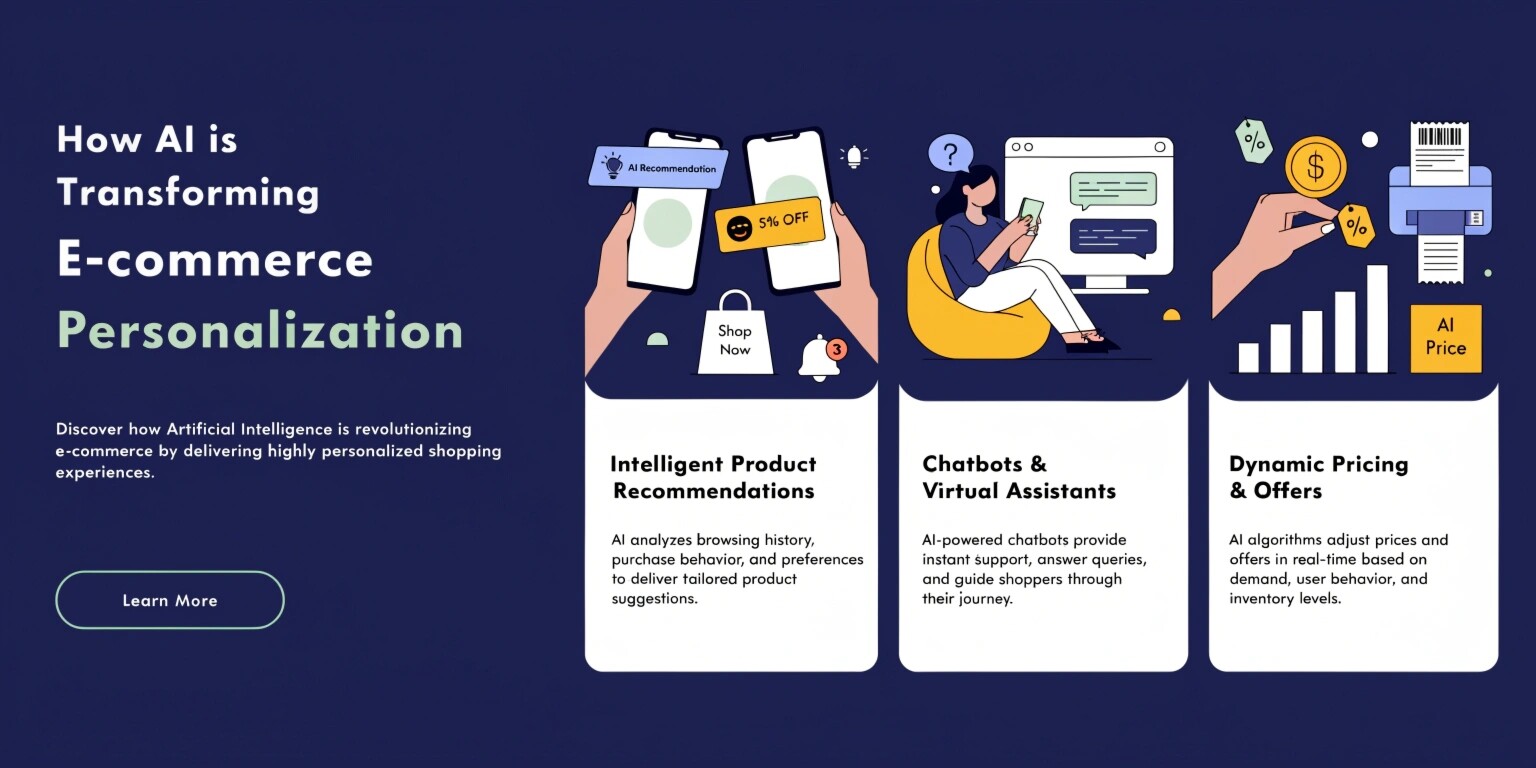
- AI-driven recommendation engines analyze customer data to suggest products that align with their interests. These systems consider past purchases, browsing history, and even similar user behavior to present highly relevant suggestions. This not only improves user experience but also increases the likelihood of conversions.
- Customer Segmentation
- AI helps segment customers into different groups based on their behavior, demographics, and preferences. Unlike traditional segmentation, AI continuously updates segments in real time, allowing businesses to target users more effectively with personalized content and offers.
- Dynamic Pricing
- AI enables businesses to adjust product prices dynamically based on demand, competition, customer behavior, and market trends. This ensures competitive pricing while maximizing profit margins.
- Personalized Search Results
- Search results can be tailored to each user using AI. For instance, two customers searching for the same product may see different results based on their preferences and previous interactions with the platform.
- Chatbots and Virtual Assistants
- AI-powered chatbots provide personalized assistance by understanding user queries and offering relevant suggestions. They enhance customer service by providing instant responses and guiding users through their shopping journey.
Benefits of AI in E-commerce Personalization
- Improved Customer Experience
- Personalization makes customers feel valued, leading to higher satisfaction and loyalty. When users see relevant products and content, their overall shopping experience improves.
- Increased Conversion Rates
- Personalized recommendations and targeted offers significantly boost conversion rates. Customers are more likely to purchase products that align with their interests.
- Higher Customer Retention
- AI helps businesses build long-term relationships by consistently delivering relevant experiences, encouraging repeat purchases.
- Better Marketing ROI
- With AI, marketing campaigns become more efficient and targeted, reducing wasted spend and increasing return on investment.
Real-World Applications
Many leading e-commerce platforms leverage AI to enhance personalization. For example, recommendation engines suggest products based on user activity, while personalized emails and push notifications keep customers engaged. AI also powers visual search, allowing users to upload images and find similar products instantly.
Challenges in AI Personalization
While AI offers numerous advantages, it also comes with challenges:
- Data Privacy Concerns
- Collecting and analyzing user data raises privacy issues. Businesses must ensure compliance with data protection regulations.
- Implementation Complexity
- Integrating AI into existing systems can be technically challenging and resource-intensive.
- Data Quality Issues
- AI systems rely heavily on data. Poor-quality or incomplete data can lead to inaccurate recommendations.
Future of AI in E-commerce
The future of AI in e-commerce personalization looks promising. Advancements in deep learning, natural language processing, and predictive analytics will further enhance personalization capabilities. Businesses will be able to anticipate customer needs even before they arise, creating seamless and intuitive shopping experiences.
Voice commerce, augmented reality shopping, and hyper-personalized content are expected to become mainstream, driven by AI innovations. As technology evolves, the line between online and offline shopping experiences will continue to blur.
Conclusion
AI in e-commerce personalization is no longer a luxury—it is a necessity for businesses aiming to stay competitive. By leveraging AI technologies, companies can deliver meaningful, personalized experiences that resonate with customers and drive growth. Despite challenges, the benefits far outweigh the drawbacks, making AI a key driver of the future of online retail.