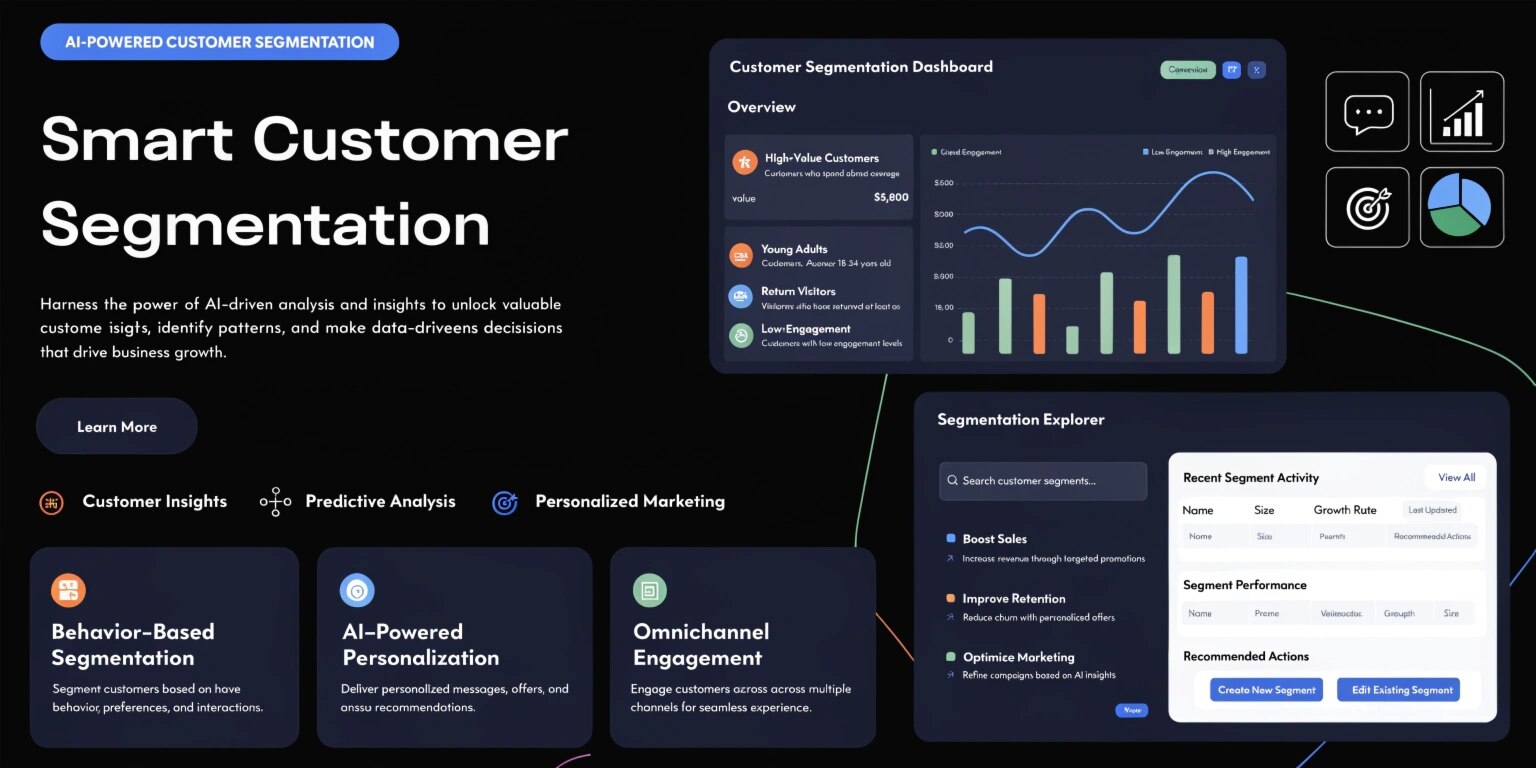
In today’s highly competitive digital landscape, understanding your customers is no longer optional—it’s essential. Traditional Customer Relationship Management (CRM) systems store vast amounts of customer data, but without intelligent analysis, that data often goes underutilized. This is where Artificial Intelligence (AI) is transforming CRM, especially in the area of customer segmentation.
AI-powered segmentation enables businesses to group customers more accurately, predict behavior, and deliver highly personalized experiences that drive engagement and growth.
What is Smart Customer Segmentation?
Customer segmentation is the process of dividing a customer base into groups based on shared characteristics such as demographics, behavior, preferences, or purchasing patterns.
Traditional segmentation methods rely on static rules like age, location, or purchase history. While useful, these methods lack depth and adaptability.
AI-driven segmentation, on the other hand, uses advanced algorithms from Machine Learning to identify hidden patterns, making segmentation more dynamic and precise.
How AI Enhances CRM Segmentation
AI adds intelligence and automation to CRM systems in several ways:
1. Behavioral Analysis
AI tracks user interactions across multiple touchpoints—websites, apps, emails—and identifies patterns in behavior. This helps businesses understand what customers want even before they explicitly express it.
2. Predictive Segmentation
Using historical data, AI can predict future actions such as likelihood to purchase, churn risk, or product preferences. This allows businesses to proactively target customers.
3. Real-Time Segmentation
Unlike traditional methods, AI continuously updates segments based on real-time data, ensuring marketing efforts remain relevant.
4. Hyper-Personalization
AI enables highly personalized experiences by tailoring content, offers, and recommendations for each segment or even individual users.
Key Benefits of AI in CRM
Improved Customer Understanding
AI processes massive datasets quickly, uncovering insights that humans might miss.
Higher Conversion Rates
Targeted campaigns based on AI segmentation are more effective, leading to better ROI.
Enhanced Customer Retention
Predictive models help identify at-risk customers, allowing businesses to take preventive action.
Automation and Efficiency
AI reduces manual effort in data analysis and segmentation, saving time and resources.
Real-World Applications
Many leading companies use AI-driven CRM systems to optimize their operations:
- E-commerce platforms recommend products based on browsing behavior
- Streaming services suggest content tailored to user preferences
- Financial institutions detect customer needs and offer personalized services
For example, platforms like Salesforce and HubSpot integrate AI features to enhance customer segmentation and marketing automation.
Types of AI-Based Segmentation
1. Demographic Segmentation
Enhanced with AI to uncover deeper insights beyond basic attributes.
2. Behavioral Segmentation
Analyzes user actions such as clicks, purchases, and engagement levels.
3. Predictive Segmentation
Uses AI models to forecast future behavior and trends.
4. Value-Based Segmentation
Identifies high-value customers and prioritizes them for targeted campaigns.
Challenges to Consider
While AI offers numerous advantages, there are challenges:
Data Quality Issues
AI is only as good as the data it processes. Poor data quality leads to inaccurate insights.
Privacy Concerns
Handling customer data responsibly is critical to maintain trust and comply with regulations.
Implementation Complexity
Integrating AI into existing CRM systems requires technical expertise and strategic planning.
How to Implement AI in CRM
To successfully adopt AI-driven segmentation:
- Start with Clean Data – Ensure your CRM data is accurate and well-organized
- Choose the Right Tools – Select AI-enabled CRM platforms
- Define Clear Goals – Identify what you want to achieve (e.g., higher conversions, better retention)
- Train Your Team – Equip your team with knowledge to use AI tools effectively
- Monitor and Optimize – Continuously analyze results and refine strategies
Future of AI in CRM
The future of CRM lies in deeper integration with AI technologies. With advancements in natural language processing and predictive analytics, CRM systems will become even more intuitive and proactive.
Businesses will move from reactive strategies to fully predictive and prescriptive models, where AI not only suggests actions but also automates decision-making processes.
Final Thoughts
AI in CRM is revolutionizing how businesses understand and engage with customers. Smart segmentation allows companies to move beyond generic marketing and deliver personalized, meaningful experiences.
Organizations that leverage AI-driven CRM systems gain a competitive edge by making data-driven decisions, improving customer satisfaction, and driving sustainable growth.