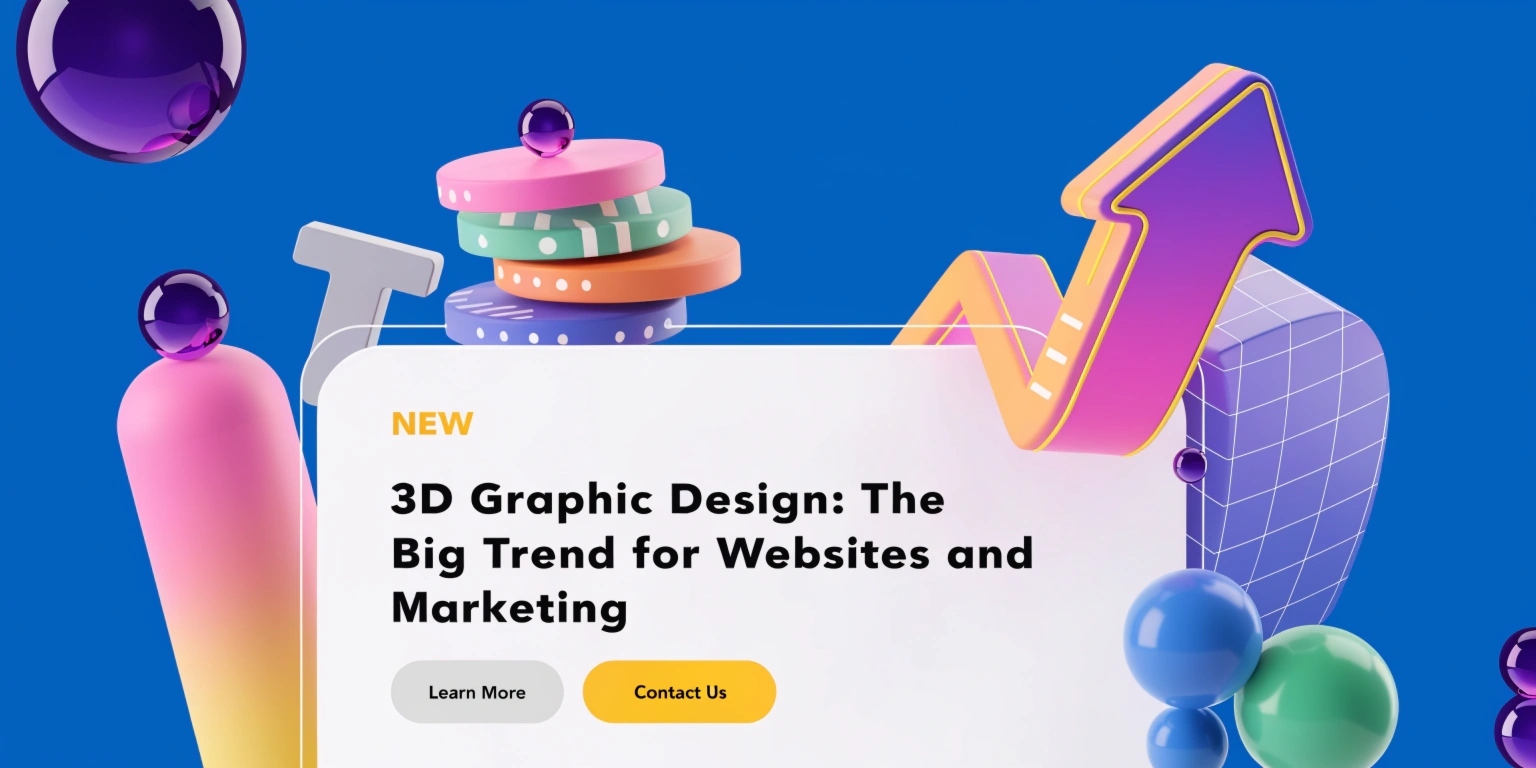
3D Graphic Design: The Next Big Trend for Websites and Marketing
The digital world is evolving rapidly, and businesses are constantly searching for innovative ways to attract visitors, increase engagement, and strengthen their online presence. One of the biggest design trends shaping modern websites and digital marketing is 3D graphic design.
Unlike traditional flat graphics, 3D elements create depth, realism, and interactive experiences that immediately capture users' attention. Whether it's a rotating product model, animated illustrations, interactive icons, or immersive website backgrounds, 3D design helps brands create unforgettable digital experiences.
As internet users become more visually driven, companies that embrace 3D design are gaining a competitive advantage through better engagement, improved storytelling, and higher conversion rates.
Why 3D Design Is Becoming So Popular
Today's users expect more than static images and plain layouts. They want experiences that feel dynamic and interactive.
3D graphics allow businesses to:
- Create visually impressive websites
- Showcase products from every angle
- Improve customer engagement
- Increase the time visitors spend on a website
- Deliver memorable brand experiences
Modern web technologies like WebGL, Three.js, and improved browser performance have made it easier than ever to integrate high-quality 3D elements without sacrificing website performance.
Benefits of 3D Graphic Design for Websites
1. Better User Engagement
Interactive 3D visuals naturally encourage users to explore a website. Instead of simply reading content, visitors can rotate products, interact with animations, and experience the brand in a more engaging way.
This increases session duration while reducing bounce rates.
2. Improved Product Visualization
For industries such as eCommerce, furniture, real estate, automotive, and manufacturing, 3D models provide customers with realistic product views.
Instead of relying on multiple photographs, users can inspect products from every angle before making purchasing decisions.
3. Stronger Brand Identity
Unique 3D illustrations help businesses establish a premium and modern brand image.
Custom-designed 3D graphics make brands instantly recognizable and differentiate them from competitors using generic stock visuals.
4. Better Storytelling
Brands can explain complex services and products through engaging 3D animations.
Instead of reading lengthy paragraphs, customers understand concepts through visual experiences.
5. Higher Conversion Rates
Interactive landing pages often lead to better customer engagement.
When users remain interested longer, they are more likely to complete purchases, submit inquiries, or sign up for services.
How 3D Design Is Transforming Digital Marketing
Digital marketing relies heavily on grabbing user attention within seconds.
3D visuals help marketers create eye-catching campaigns across multiple platforms:
- Interactive social media advertisements
- Animated promotional videos
- Product launch campaigns
- Landing pages
- Email marketing graphics
- Online advertisements
- Brand presentations
Because 3D content is visually distinctive, it typically generates higher engagement than traditional static graphics.
Industries Using 3D Graphic Design
Many industries are rapidly adopting 3D design, including:
- E-commerce
- Real Estate
- Healthcare
- Education
- Gaming
- Automotive
- Architecture
- Fashion
- Interior Design
- Technology Companies
- Manufacturing
- Tourism
Each industry benefits from realistic visual presentations that improve customer understanding and trust.
Popular Tools for Creating 3D Graphics
Professional designers commonly use tools such as:
- Blender
- Cinema 4D
- Autodesk Maya
- Adobe Substance 3D
- Adobe Dimension
- Unreal Engine
- Unity
- Three.js
- Spline
- Figma (with 3D plugins)
These tools help designers create realistic models, animations, product renders, and interactive website elements.
Best Practices for Using 3D Graphics
Although 3D visuals are attractive, balance is important.
Follow these best practices:
- Optimize models for faster loading.
- Compress textures and images.
- Ensure mobile responsiveness.
- Use lazy loading for heavy assets.
- Avoid excessive animations.
- Keep navigation simple.
- Maintain accessibility standards.
- Test performance across browsers and devices.
A beautiful website should also remain fast, responsive, and user-friendly.
The Future of 3D Website Design
As technologies such as AI, AR, VR, and spatial computing continue to evolve, 3D graphics will become even more common.
Future websites may feature:
- AI-generated 3D content
- Interactive virtual shopping experiences
- AR product previews
- Personalized 3D interfaces
- Real-time product customization
- Immersive brand storytelling
Businesses that adopt these innovations early will be better positioned to meet evolving customer expectations and stand out in increasingly competitive markets.
Conclusion
3D graphic design is no longer limited to gaming or entertainment. It has become a powerful tool for businesses looking to create visually engaging websites and impactful digital marketing campaigns. By combining creativity with modern technology, brands can offer immersive experiences that capture attention, build trust, and encourage users to take action.
Whether you're redesigning your website, launching a new product, or strengthening your online presence, investing in high-quality 3D design can help your business stand out. As web technologies continue to advance, 3D graphics are set to become a standard feature of exceptional digital experiences rather than just a passing trend.