Python has evolved from a simple scripting language into one of the most powerful technologies driving modern software development. Its simplicity, flexibility, and extensive ecosystem have made it the preferred choice for developers, startups, enterprises, and researchers worldwide.
From artificial intelligence and cloud computing to automation and web development, Python continues to lead technological innovation. As businesses increasingly adopt digital transformation strategies, understanding the key Python technologies shaping the future becomes essential.
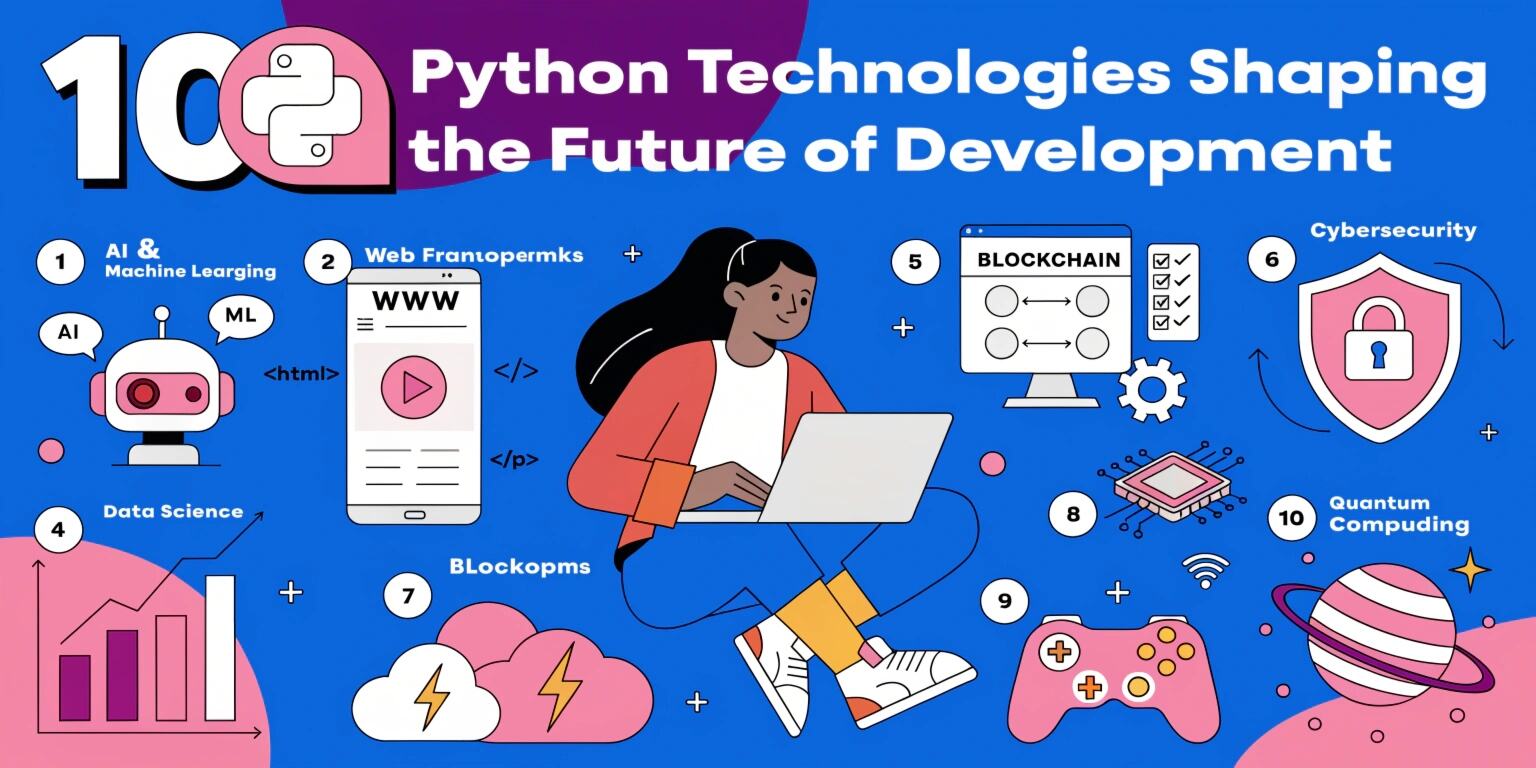
Here are ten Python technologies that are expected to play a significant role in the future of software development.
1. Artificial Intelligence (AI)
Artificial Intelligence remains one of Python's strongest domains.
Python powers many AI applications due to its extensive collection of libraries and frameworks, including:
- TensorFlow
- PyTorch
- Keras
- Scikit-learn
AI applications built with Python are used for:
- Natural Language Processing (NLP)
- Computer Vision
- Predictive Analytics
- Recommendation Systems
- Virtual Assistants
As AI adoption continues to grow across industries, Python will remain at the center of intelligent software development.
2. Machine Learning and Deep Learning
Machine learning has become essential for businesses seeking data-driven insights.
Python provides powerful ML ecosystems that simplify:
- Data preprocessing
- Model training
- Evaluation
- Deployment
Deep learning technologies support advanced use cases such as:
- Image recognition
- Speech processing
- Autonomous systems
- Generative AI
Python's dominance in machine learning ensures its continued relevance in future development.
3. FastAPI for High-Performance APIs
FastAPI has rapidly emerged as one of the most popular Python frameworks.
Key advantages include:
- High performance
- Async support
- Automatic API documentation
- Type validation
- Modern architecture
FastAPI is increasingly used for:
- AI model deployment
- Microservices
- SaaS platforms
- Cloud-native applications
Its ability to build scalable APIs efficiently makes it a future-ready technology.
4. Django for Enterprise Applications
Despite the rise of newer frameworks, Django remains a cornerstone of Python development.
Its strengths include:
- Robust security
- Built-in authentication
- ORM support
- Administrative interfaces
- Rapid development capabilities
Django continues to power:
- Enterprise platforms
- E-commerce systems
- Content management solutions
- Business applications
Its mature ecosystem ensures long-term adoption.
5. Data Science and Analytics
Organizations generate massive amounts of data daily.
Python dominates data science through libraries such as:
- Pandas
- NumPy
- Matplotlib
- Seaborn
- SciPy
Businesses use Python for:
- Business intelligence
- Data visualization
- Statistical analysis
- Predictive modeling
Data-driven decision-making will continue increasing demand for Python expertise.
6. Cloud Computing and Serverless Development
Cloud-native development is reshaping software architecture.
Python integrates seamlessly with major cloud platforms such as:
- AWS
- Microsoft Azure
- Google Cloud Platform
Common cloud applications include:
- Serverless functions
- API services
- Data pipelines
- Cloud automation
Python's simplicity and portability make it ideal for distributed cloud environments.
7. DevOps and Infrastructure Automation
Automation has become critical for modern software delivery.
Python plays a major role in:
- Infrastructure management
- Continuous Integration (CI)
- Continuous Deployment (CD)
- Monitoring systems
- Configuration management
Popular DevOps tools often support Python-based scripting and automation.
This enables organizations to improve deployment speed and operational efficiency.
8. Internet of Things (IoT)
The Internet of Things continues connecting devices across industries.
Python supports IoT development through:
- Raspberry Pi projects
- Sensor integration
- Device communication
- Edge computing applications
Industries benefiting from Python-powered IoT solutions include:
- Manufacturing
- Healthcare
- Smart homes
- Agriculture
- Logistics
As connected devices multiply, Python's role in IoT development will expand.
9. Cybersecurity and Ethical Hacking
Cybersecurity threats continue increasing globally.
Python is widely used for:
- Security testing
- Vulnerability assessments
- Threat detection
- Network monitoring
- Security automation
Security professionals value Python because it enables rapid development of custom tools and scripts.
Future cybersecurity innovations will likely continue relying heavily on Python technologies.
10. Generative AI and Intelligent Automation
Generative AI has become one of the most disruptive technologies of recent years.
Python powers many generative AI systems through frameworks that support:
- Large Language Models (LLMs)
- Chatbots
- Content generation
- Code generation
- AI assistants
Businesses are increasingly using Python-based AI solutions to automate processes and improve productivity.
As generative AI advances, Python will remain a foundational technology behind intelligent automation.
Why Python Continues to Lead
Several factors contribute to Python's ongoing success:
Simplicity
Its readable syntax reduces development complexity.
Extensive Ecosystem
Thousands of libraries accelerate development.
Community Support
A massive global community provides resources, tutorials, and open-source contributions.
Cross-Industry Adoption
Python is used in:
- Finance
- Healthcare
- Education
- Manufacturing
- Retail
- Technology
This versatility strengthens its long-term future.
Emerging Trends in Python Development
Looking ahead, several trends will shape Python's evolution:
- AI-driven development
- Edge computing applications
- Quantum computing research
- Advanced automation systems
- Cloud-native architectures
- Low-code and no-code integrations
- Real-time data processing
Python's adaptability allows it to evolve alongside these technological advancements.
Conclusion
Python continues to be one of the most influential technologies in modern software development. Its role in artificial intelligence, machine learning, cloud computing, web development, automation, cybersecurity, and data science ensures its relevance for years to come.
The ten technologies highlighted above demonstrate how Python is shaping the future of digital innovation. Businesses and developers that invest in Python expertise today will be well-positioned to take advantage of emerging opportunities and build next-generation applications that drive growth and competitive advantage.